The Joint Institute for Nuclear Research is an international intergovernmental research organization established under the Convention signed on 26 March 1956 by eleven founding States and registered with the United Nations on 1 February 1957.
JINR is located in the city of Dubna (Russian Federation, Moscow Region). A world-renowned scientific centre, it serves as a unique example of the successful integration of the Member States’ efforts, as well as scientific and material potential, for studying the fundamental properties of matter, conducting applied studies, developing cutting-edge technologies, and training highly qualified personnel. JINR is currently the world’s second largest international intergovernmental scientific organization after CERN.
Since its establishment, the cooperation between the Member and Partner States and the Joint Institute for Nuclear Research has been based on a programme for the development of a multidisciplinary complex of large-scale research infrastructure in Dubna and in the Member States’ territories, as well as large-scale studies at the forefront of science.
Member States and Associate Members
In accordance with the Charter, in its activities, JINR adheres to the principles of equal and mutually beneficial cooperation between the Member States and openness for all interested countries to join the multilateral scientific, technical and educational cooperation implemented by the Institute.
JINR currently comprises 15 Member States: the Republic of Azerbaijan, the Republic of Armenia, the Republic of Belarus, the Republic of Bulgaria, the Socialist Republic of Vietnam, Georgia, the Arab Republic of Egypt, the Republic of Kazakhstan, the Democratic People’s Republic of Korea, the Republic of Cuba, Mongolia, the Russian Federation, Romania, the Slovak Republic, and the Republic of Uzbekistan. Brazil, China, Germany, Hungary, Italy, Mexico, Serbia, and South Africa are Associate Members and Partner States of the Institute.
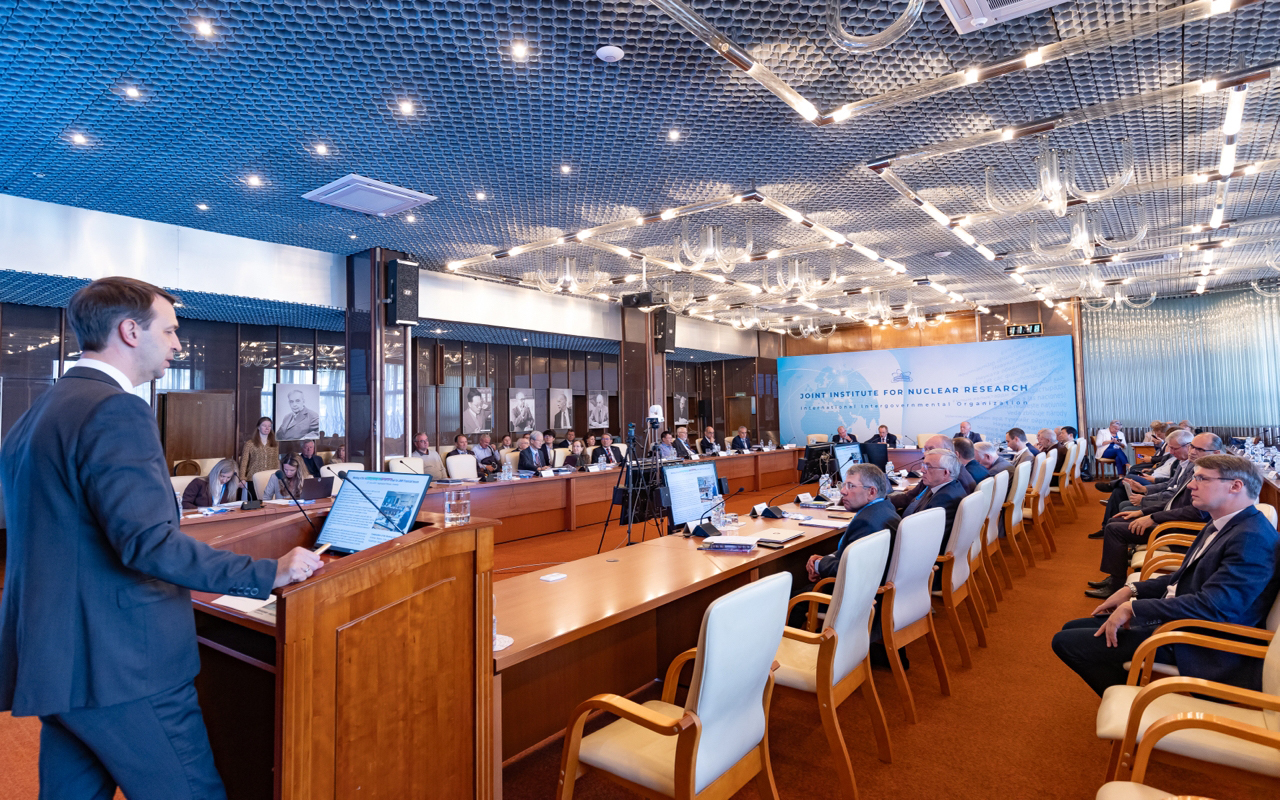
Key decisions on JINR’s activities are made by its highest governing body, the Committee of Plenipotentiaries of the Governments of the Member States. The body responsible for recommendations on improving financial activities is the Finance Committee. The JINR Scientific Council develops the scientific policy and forms strategic, medium-term, and annual research plans, relying on specialised expert Programme Advisory Committees.
On 22 November 2021, at a session of the Committee of Plenipotentiaries held in Bulgaria, a Declaration was adopted emphasising the value of international scientific and technological integration for the peaceful research, technological, socio-economic, and cultural development of countries on all continents of the Earth – our shared home.
Research areas
The development concept of the Joint Institute for Nuclear Research as an international multidisciplinary scientific center provides for fundamental physical research based on a large research infrastructure (NICA Accelerator Complex, Superheavy Element Factory, IBR-2 Reactor, Baikal-GVD Neutrino Telescope, Multifunctional Information and Computing Complex), as well as applied research and development using nuclear physics methods in life sciences, materials science, ecology, and other fields.
The Institute’s development strategy is defined by the JINR Long-term Development Plan and implemented through a Seven-Year Plan for the Development of JINR for 2024-2030. The main document regulating the ongoing studies and international activities of the Institute is the annual Topical Plan.
JINR Laboratories
JINR comprises seven laboratories: the Veksler and Baldin Laboratory of High Energy Physics, the Dzhelepov Laboratory of Nuclear Problems, the Bogoliubov Laboratory of Theoretical Physics, the Frank Laboratory of Neutron Physics, the Flerov Laboratory of Nuclear Reactions, the Meshcheryakov Laboratory of Information Technologies, and the Laboratory of Radiation Biology. Each laboratory is comparable with a large institute in the scale and scope of studies.
Research infrastructure
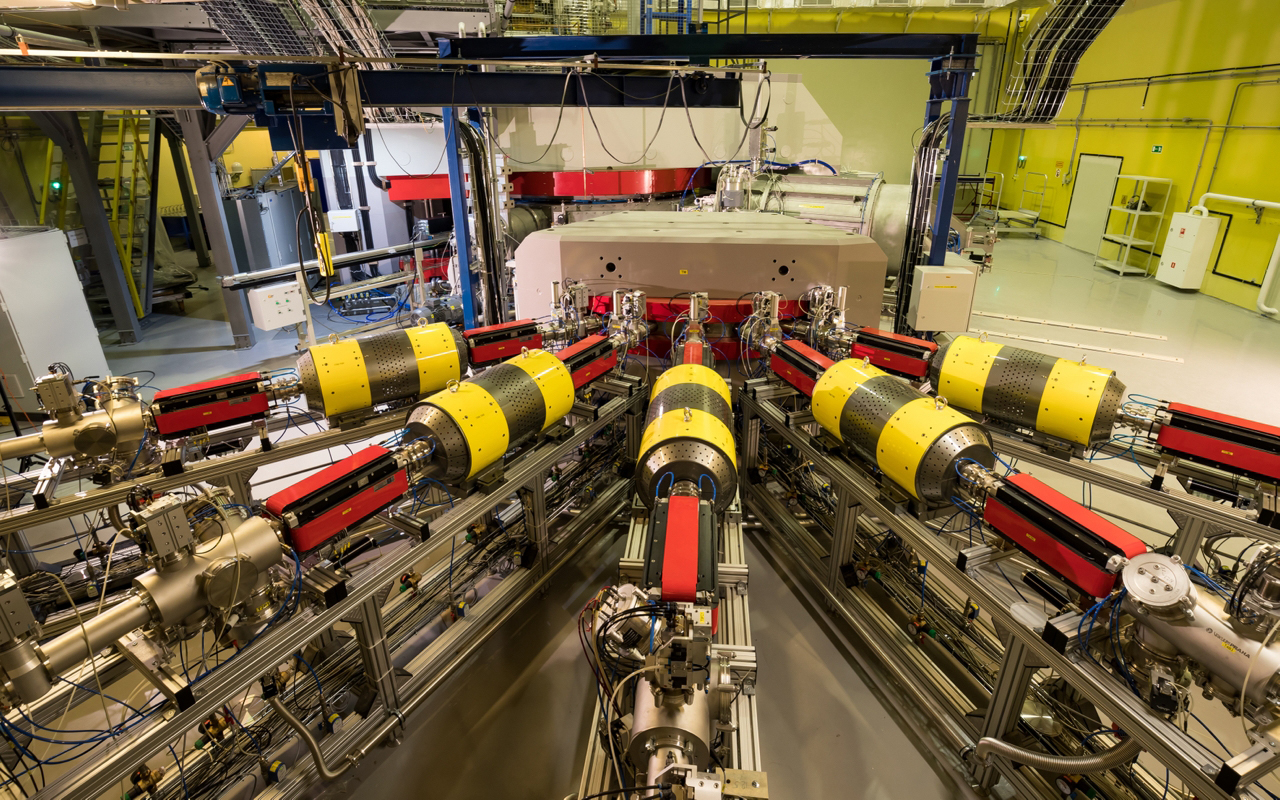
The Institute has a unique complex of experimental physics facilities. Among them are the NICA Collider, designed for the studies of the properties of dense baryonic matter; the Superheavy Elements Factory, a new-generation cyclotron complex for synthesising new elements of Mendeleev’s Periodic Table; the deep underwater Baikal—GVD Neutrino Telescope, the largest in the Northern Hemisphere; the IBR-2 Pulsed Fast Neutron Reactor used for research in neutron nuclear physics, condensed matter physics, environment, materials science, life sciences, and ecology. In addition, in the past decade, special attention has been paid to the development of an applied research programme based on JINR’s large scientific infrastructure.
The experimental scientific programme of the Institute is based on well-developed methods of physical experiments and modern information technologies. BLTP at JINR, the world’s largest theoretical physics institute, which unites more than 200 researchers from all over the world, is knows as a unique scientific infrastructure. JINR’s computing infrastructure has powerful resources integrated into global networks through high-speed communication channels. Its core is the Multifunctional Information and Computing Complex (MICC), which includes cloud and grid infrastructure, a central cluster, and a high-performance heterogeneous HybriLIT Platform with the Govorun Supercomputer.
Being an international intergovernmental organization implies the complete openness of the JINR infrastructure and the accessibility of the JINR research programme to the global scientific community.
International cooperation
JINR implements the integration format of international cooperation, which is a crucial part of all the Institute’s activities. It maintains contacts and carries out joint activities with hundreds of scientific organizations and universities in dozens of countries around the world, along with major international organizations (IAEA, UNESCO, CERN, etc.).
Educational activities
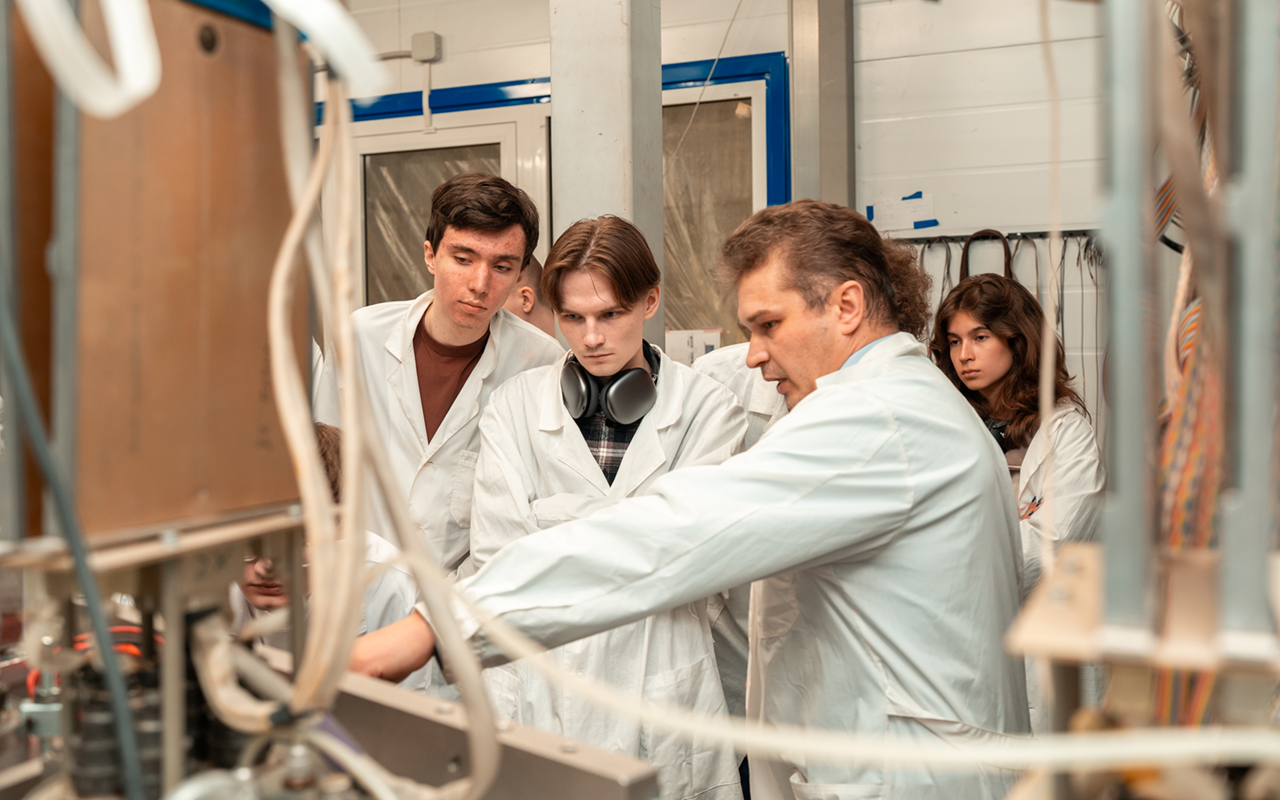
JINR created all the necessary conditions for the professional education of talented young specialists. The JINR Univercity Centre (UC) trains highly qualified scientists and engineers using the unique infrastructure of the Institute. Opportunities for representatives of the Member States include international student internships, educational programmes, engineering and physics workshops and internships. Another area of the UC work is organizing annual scientific schools for physics teachers.
There are 14 JINR-based departments of universities of the Russian Federation. Faculty members include leading JINR researchers and world-class scientists. The Institute cooperates closely with Dubna State University and the Dubna branch of Moscow State University, which offers three master’s degree programmes:
- “Particle physics”;
- “Fundamental and applied nuclear physics”;
- “Methods and technologies of data processing in heterogeneous computing environments”.
JINR-based departments at Dubna University:
- “Distributed information and computing systems”;
- “Biophysics”;
- “Nanotechnology and new materials”;
- “Physical and technical systems”;
- “Electronics design for megascience facilities”;
- “Fundamental problems of microworld physics”;
- “Nuclear physics”.
Publications
Every year, scientific works of the Institute’s employees are sent to the editorial offices of many leading international journals. According to the Web of Science abstract scientometric platform, JINR employees publish an average of 1300-1,00 articles.
JINR scientific programme development strategy
The key trend in the development of world science in the last decade is the growth of interdisciplinarity in natural science studies. The integration of astronomy, physics, chemistry, and life sciences methods, supported by the revolutionary development of IT technologies, opens up qualitatively new opportunities for both fundamental discoveries and applied tasks. Solving such large-scale problems requires the unity of the effort of experts from different fields and active international cooperation, which determines the special role of large multidisciplinary research organizations in the global scientific landscape.
Since its establishment, the Joint Institute for Nuclear Research has been developing precisely as a international centre. JINR’s scientific programme covers a wide range of fields, from particle and nuclear physics to condensed matter physics, radiation biology, and information technologies. The Institute’s Charter occupies a priority position on the global scientific agenda, harmoniously combining fundamental studies with applied research aimed, among other things, at achieving the sustainable development goals.
The strategic goal of the Institute is to ensure unconditional leadership at the forefront of science in the fields it works with. The basis for this is the flagship research infrastructure that JINR is developing: the NICA Accelerator Complex, the Superheavy Element Factory, the Baikal-GVD Neutrino Telescope, and the IBR-2 Pulsed Reactor. These projects not only complement the global map of research infrastructure, but also serve as a cornerstone for the formation of global scientific collaborations.