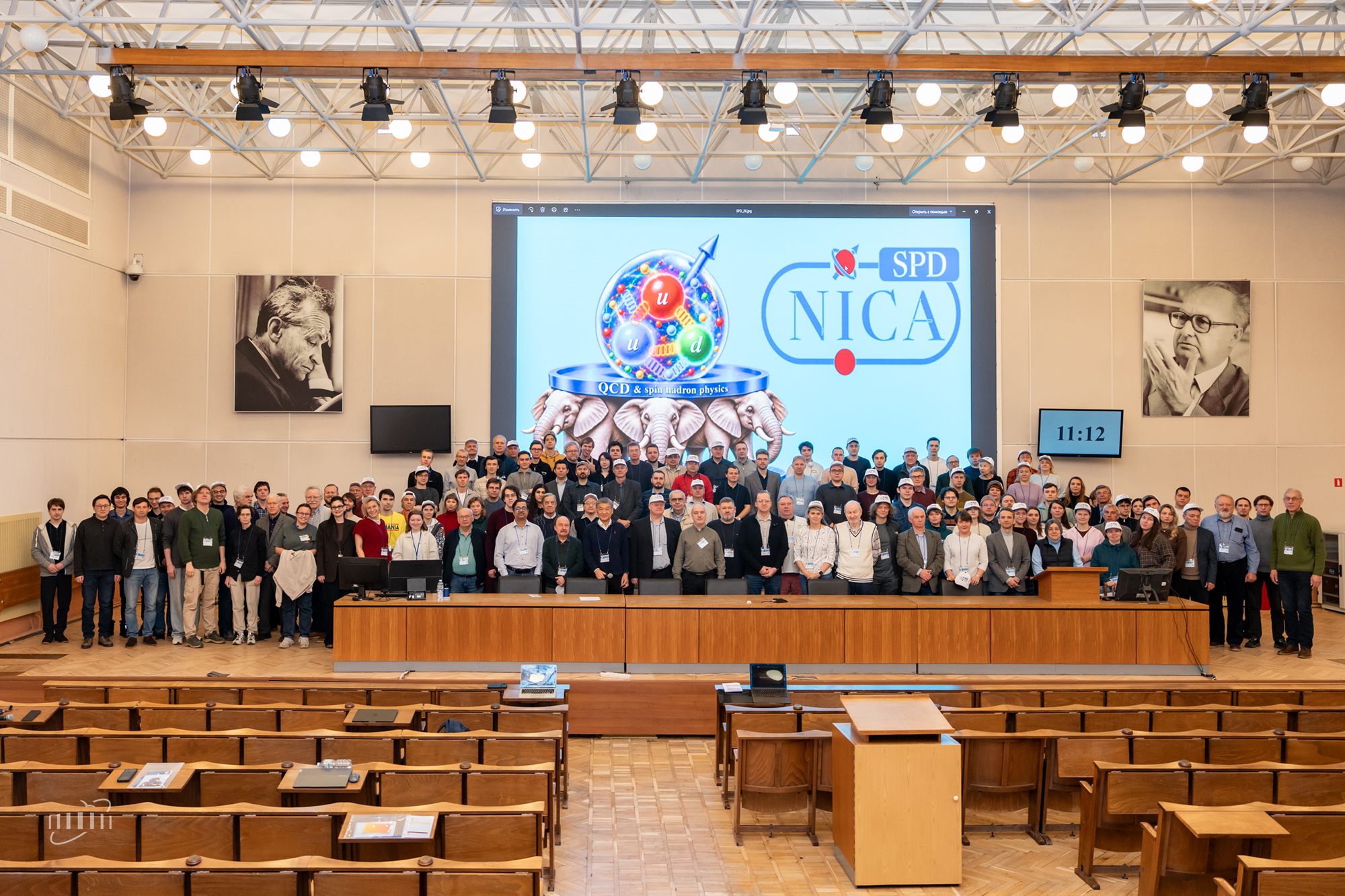
On 17–20 November 2026, the 12th international SPD (Spin Physics Detector) Collaboration Meeting is taking place at the Veksler and Baldin Laboratory of High Energy Physics at JINR in a hybrid format. The participants are discussing the progress of the SPD Detector, the physics programme, and the IT infrastructure of the future spin physics experiment at the NICA Accelerator Complex.


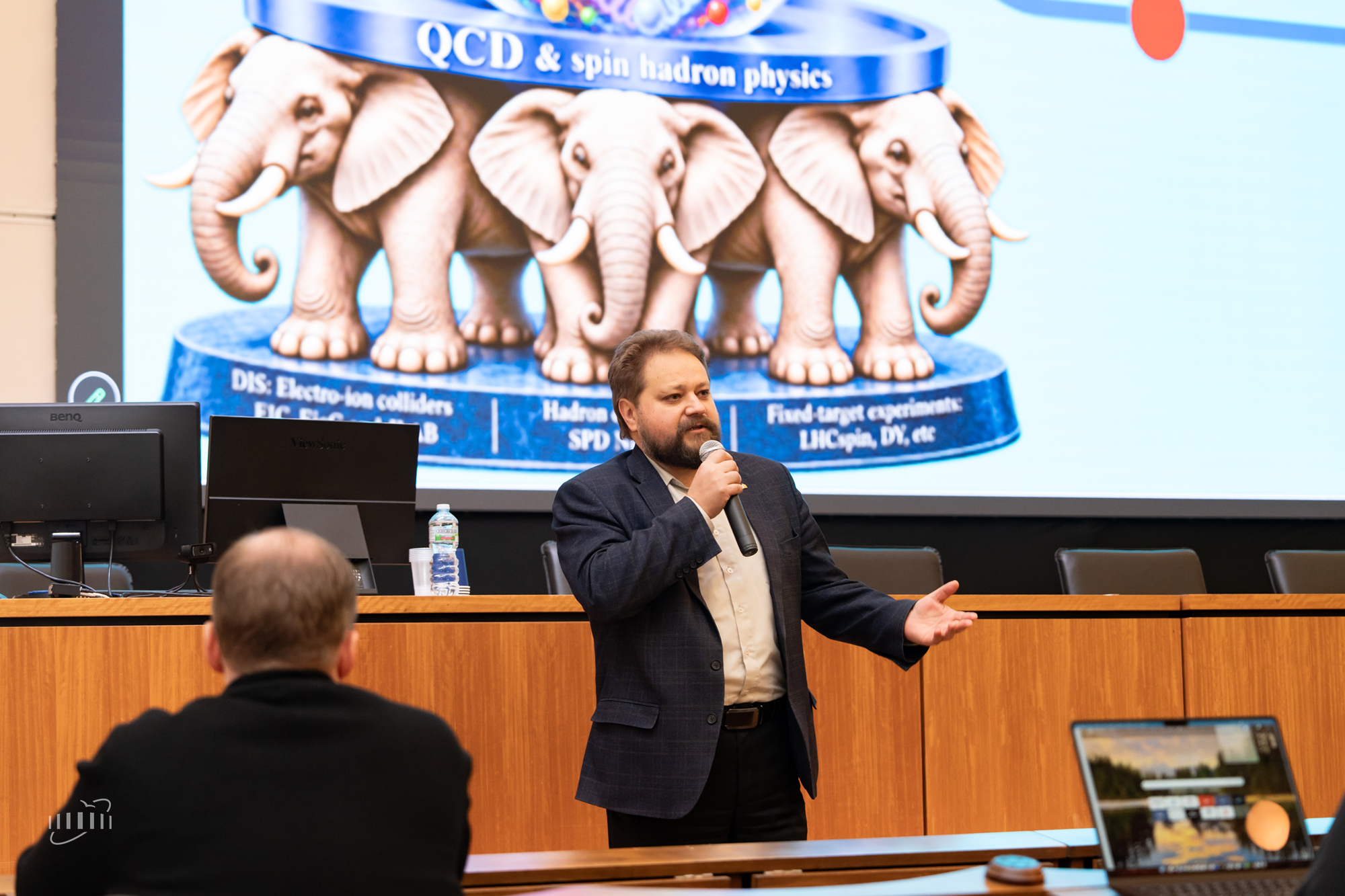


VBLHEP Acting Director Andrey Butenko gave a welcome speech. He congratulated the collaboration on the start of the meeting and noted the particular importance of face-to-face discussions for promptly tackling current tasks.
The first scientific talk was delivered by Chair of the SPD Collaboration Board, leading researcher at the Alikhanyan National Science Laboratory Armen Tumasyan. He commented on the Board’s 2026 results.
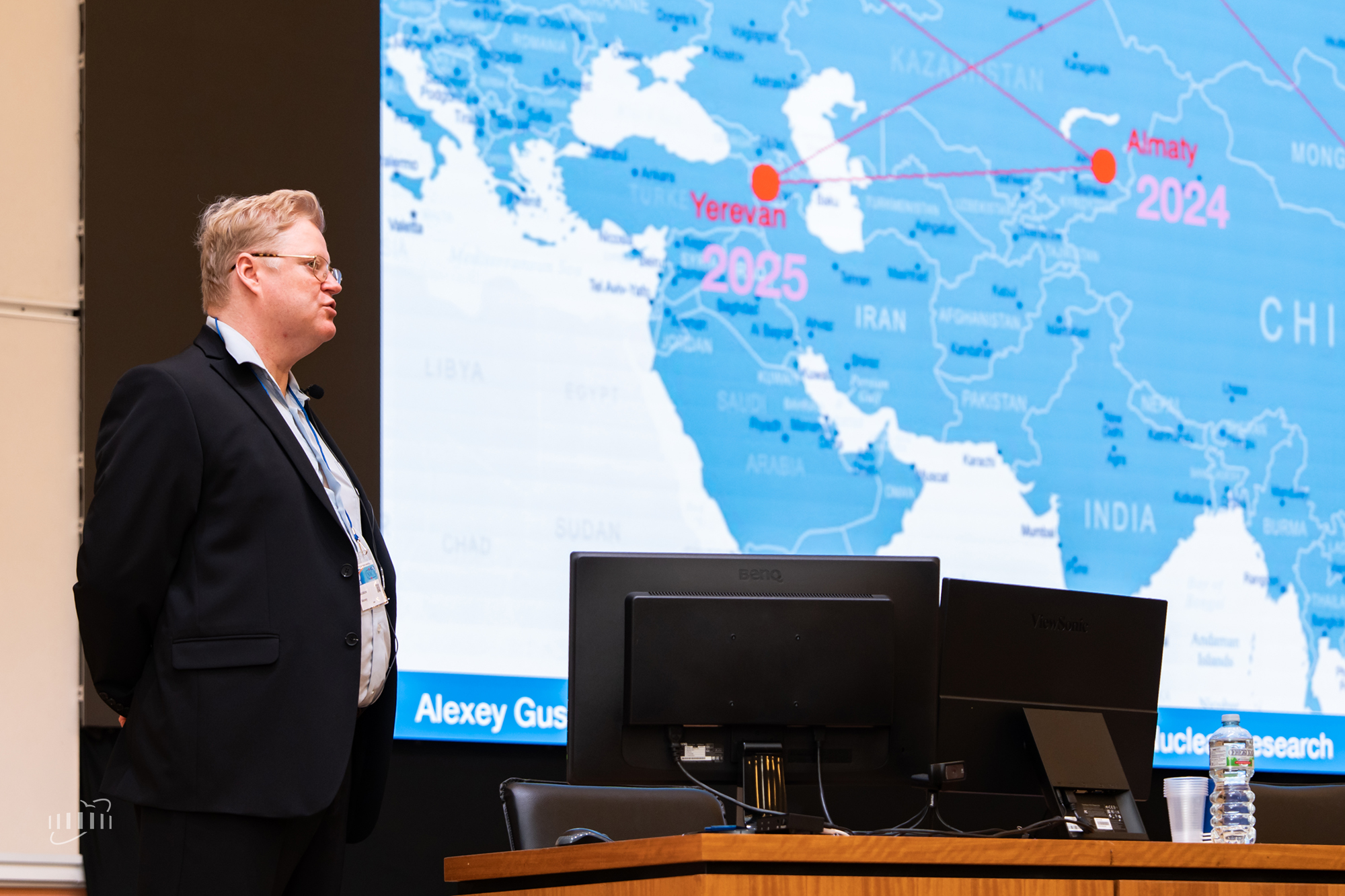
SPD Collaboration Co-Spokesperson, Deputy Director for Science at the Laboratory of Nuclear Problems at JINR Alexey Guskov provided an update on the project. He noted that in the year of the Joint Institute’s 70th anniversary, the collaboration is celebrating its first jubilee. The SPD Constitution was adopted five years ago, in summer 2021.
The scientist noted that with the start of Run 2 at the NICA Accelerator Complex, prototypes of the SPD detector subsystems – the beam-beam counter and the zero degree calorimeter – were installed at the beam interaction point. They are undergoing testing in realistic conditions as part of Phase 0 – the preparatory phase of the experiment.
In regard to current priorities, Alexey Guskov highlighted the creation of the facility’s magnetic system. The collaboration is preparing an updated specification for the production of the magnet yoke and is considering various technological solutions for manufacturing the magnet itself. Furthermore, plans include completing an important stage in the IT infrastructure development – switching to the new Sampo software environment designed for working with real physics data.
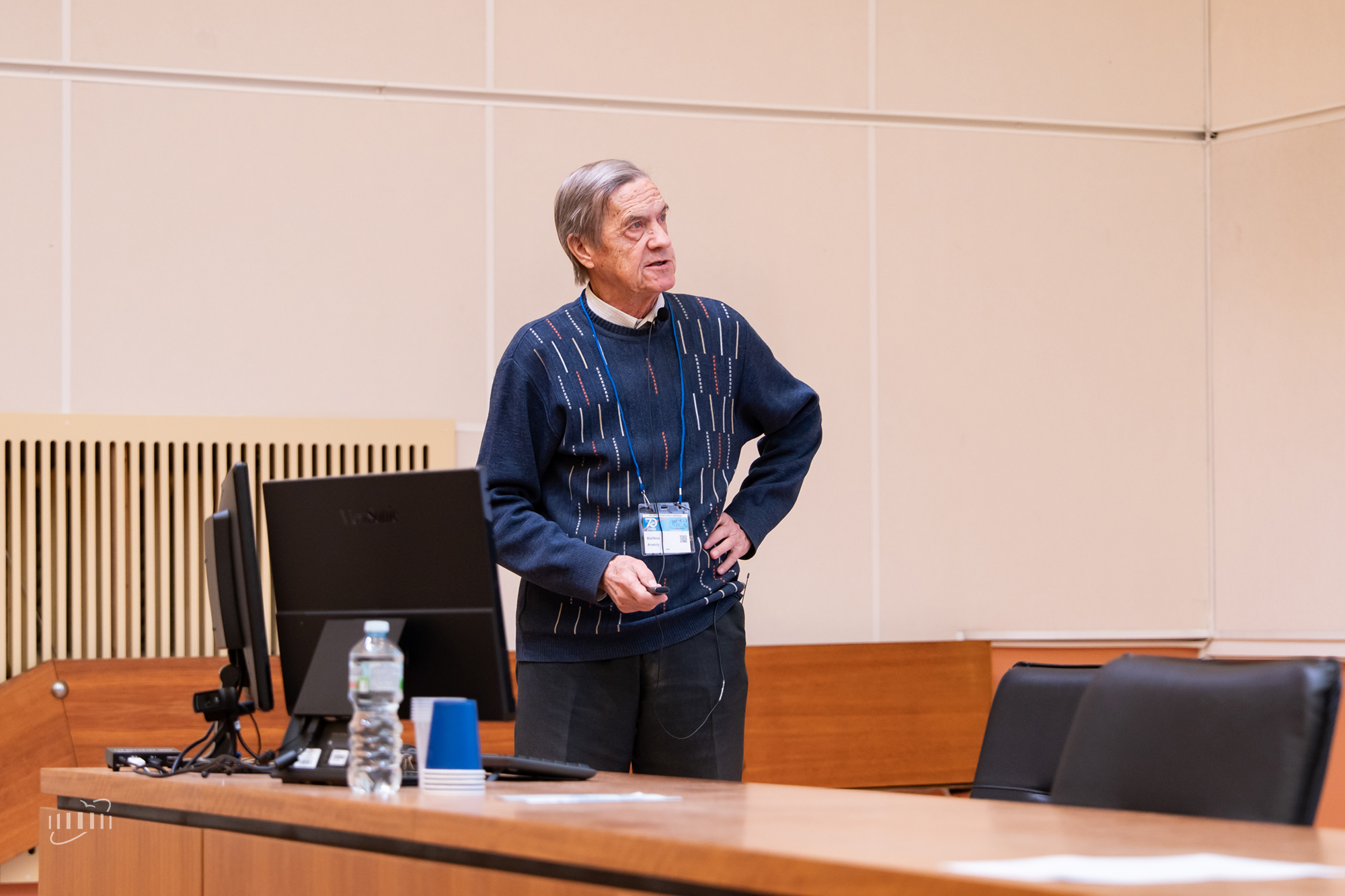
Chair of the SPD Publication Committee, Advisor to the DLNP JINR Directorate Anatoly Kulikov presented the collaboration’s publication activity in 2026. NICA Chief Engineer Evgeny Syresin provided an update on the work carried out at the accelerator complex. Shandong University Professor Teng Li announced the next Collaboration Meeting, which will take place in the Chinese city of Qingdao, in May 2027.
The plenary session continued with coordinators’ talks. Amaresh Datta (DLNP JINR) and Evgeny Soldatov (MEPhI University) discussed the preparation of the physics research programme. Amaresh Datta provided an overview of the current studies of spin-spin correlations, the search for dibaryon resonances, and exotic states. One of the most complex tasks facing the working group of the SPD physics programme is the adaptation of track reconstruction algorithms to changes in detector subsystem design. In addition, the scientist noted the successful offline generation of simulated events required for assessing background processes.
The collaboration is paying special attention to preparation for the first phase of the experiment. As noted by Evgeny Soldatov, at this stage, the facility will operate in a basic configuration, sufficient for debugging systems and conducting the first significant measurements with polarised beams. The first-stage physics programme group already collected over 20 proposals from the SPD participating organizations. Among the most promising directions are the study of elastic scattering, analysis of vector meson production near the energy threshold, measurement of single-spin asymmetries at low energies, and the search for six-quark states.
VBLHEP JINR Department Head Alexander Korzenev discussed the the experimental facility’s progress and plans for the creation of its key subsystems. He discussed updates on the construction and installation work underway in the SPD Experimental Hall.
Significant progress was made in the development of detector subsystems as well. Tests of the full-scale prototype Micromegas Detector successfully finished at CERN, demonstrating the facility’s high efficiency. During beam tests at the U-70 Accelerator Complex at the Institute for High Energy Physics, the high accuracy of particle identification of the prototype FARICH Cherenkov Detector was confirmed. Alongside this, the production of electronics for the muon system is in preparatory stage, the assembly of electromagnetic calorimeter (ECal) modules is progressing rapidly, and the creation of a multi-section straw tracker prototype is underway.
Senior researcher at the Laboratory of Information Technologies at JINR Danila Oleynik made a presentation on the development of the experiment’s computing infrastructure. To test the performance of the Production System under high load, specialists ran a campaign to generate one billion test events. The computing clusters of JINR, Saint Petersburg State University, Petersburg Nuclear Physics Institute, and Samara University processed this entire dataset of approximately 840 terabytes. At the same time, active development of new software based on the Sampo environment is underway.
For four days, the meeting participants will discuss updates on all facility’s subsystems, electronics, and software. Special attention will be paid to the physics research programme of the experiment’s first stage. The 12th SPD Collaboration Meeting programme features over 70 scientific talks.