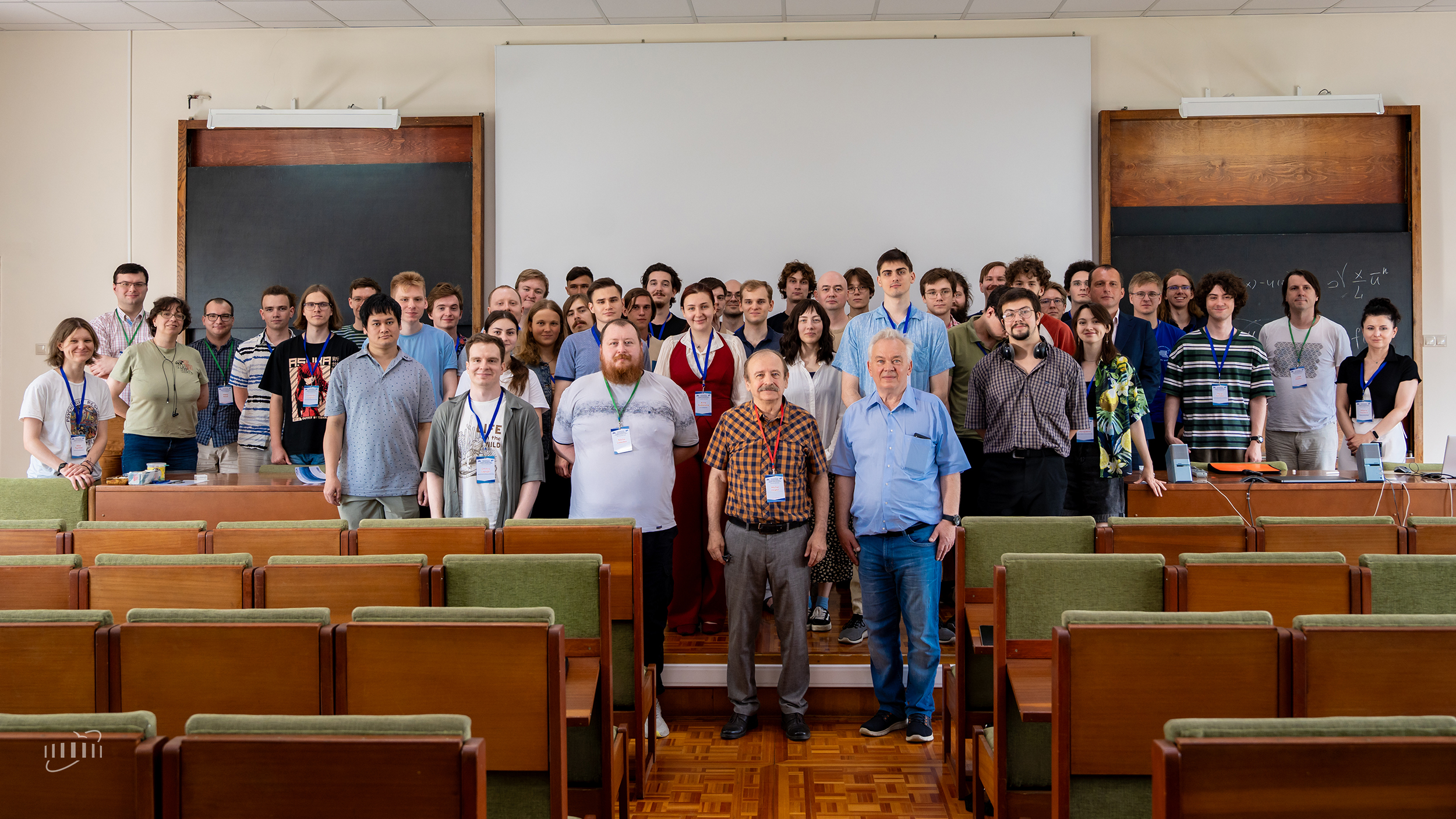
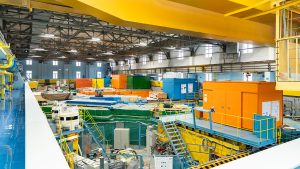
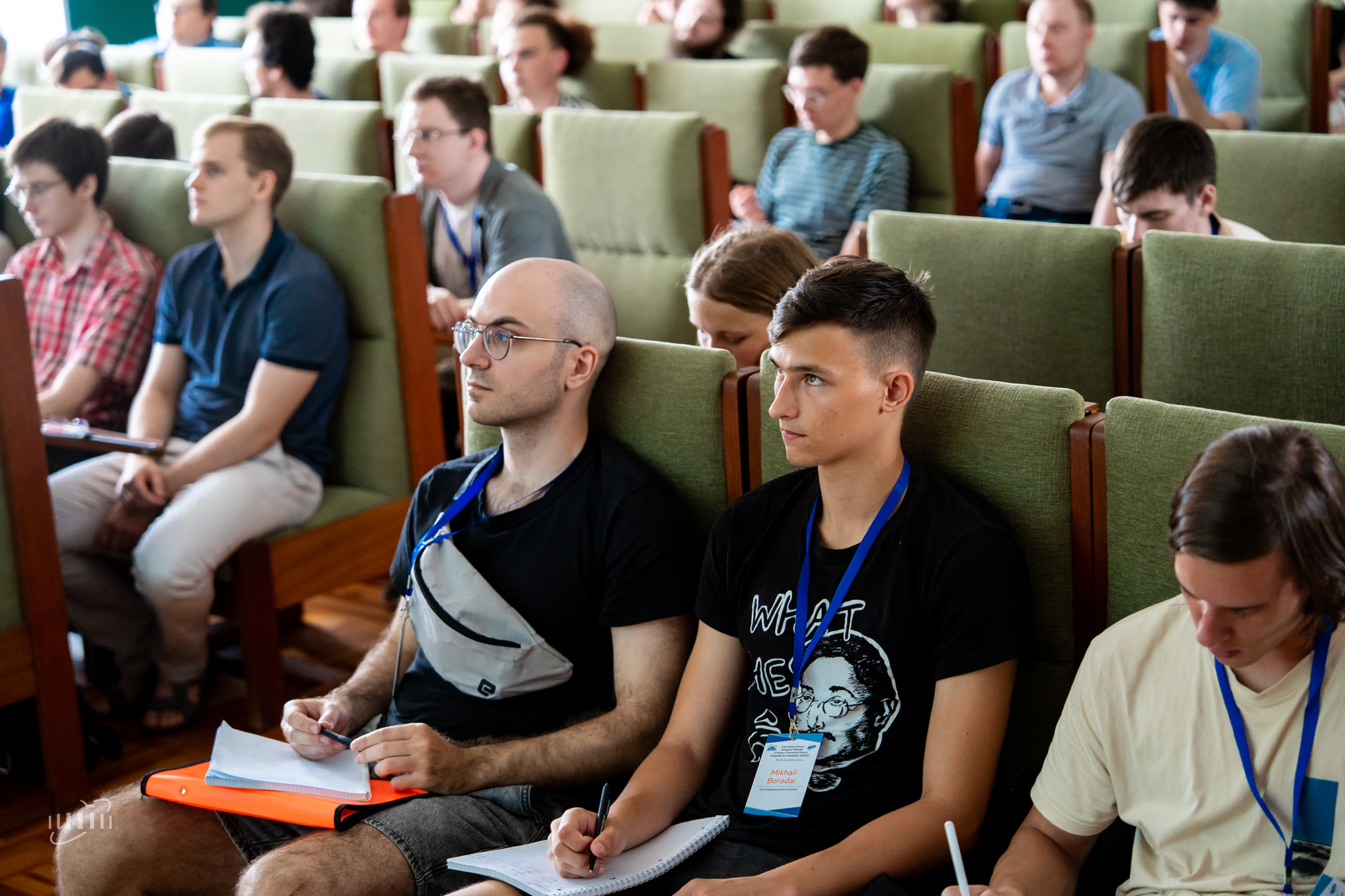
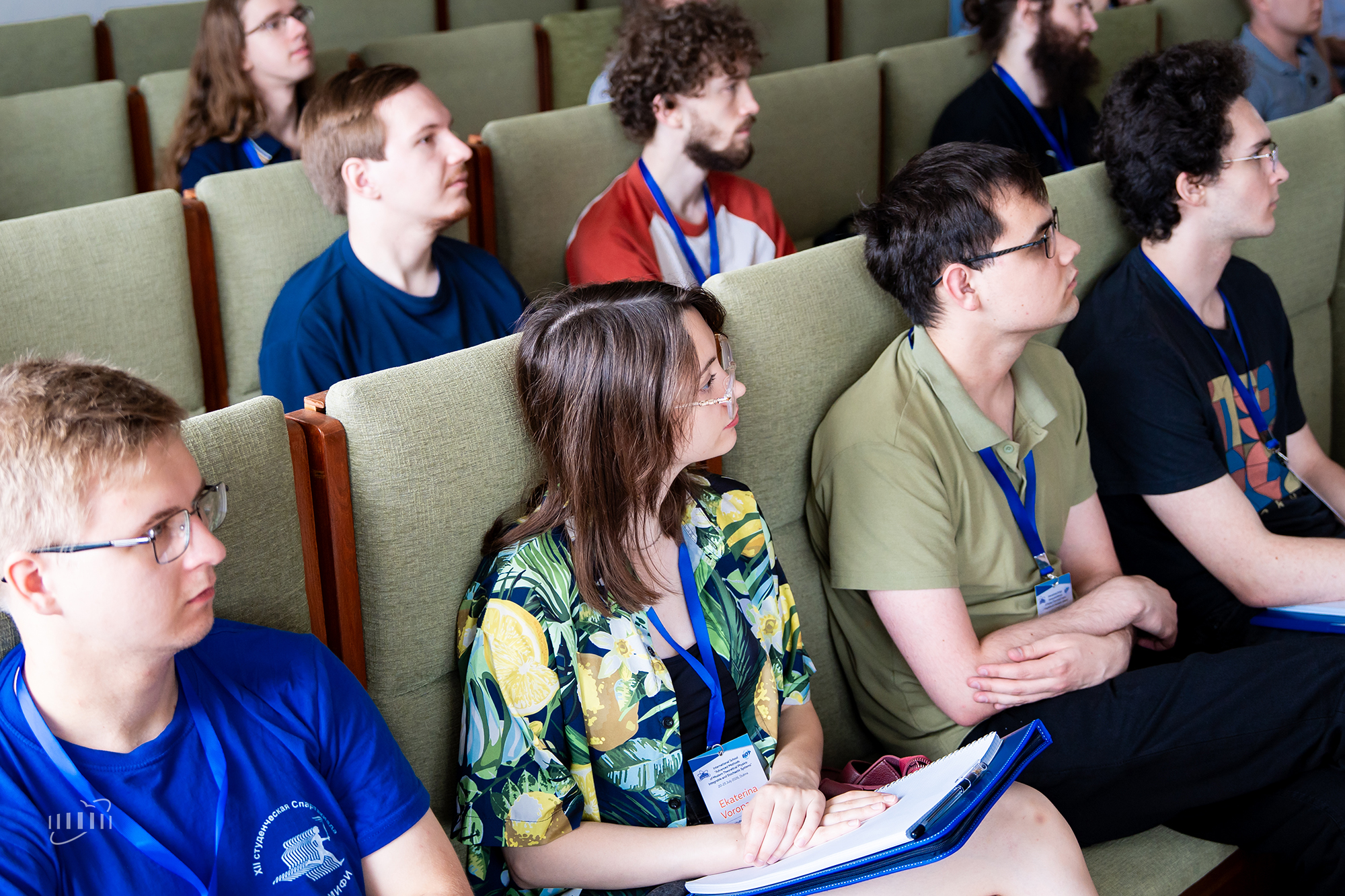
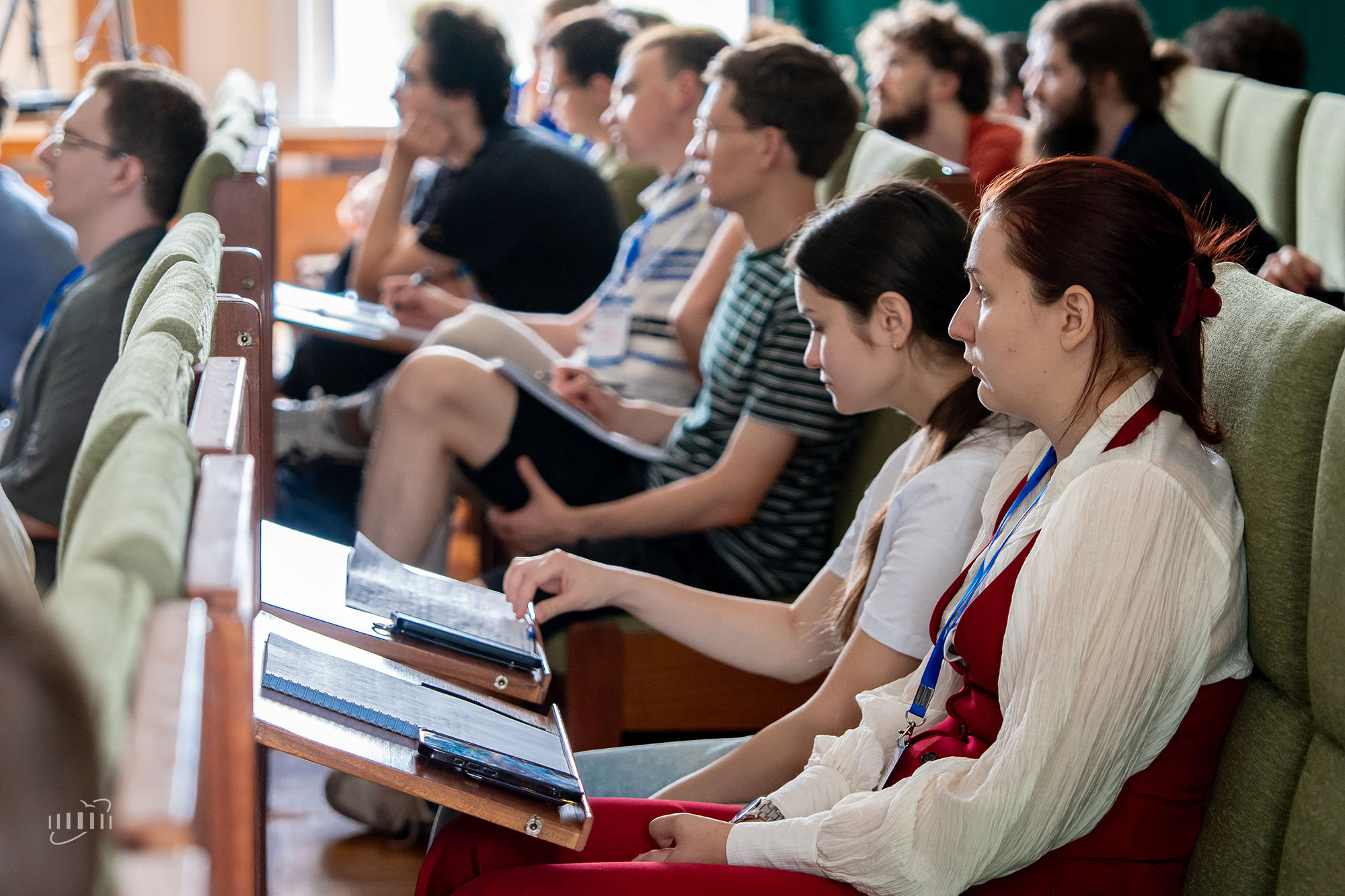
From 20 to 25 July 2025, the Joint Institute for Nuclear Research hosted the annual international school entitled “Advanced methods of modern theoretical physics: integrable and stochastic systems”, organized by the Bogoliubov Laboratory of Theoretical Physics. More than 50 master’s and postgraduate students from Belarus, Bulgaria, Vietnam, and Russia participated in the event.
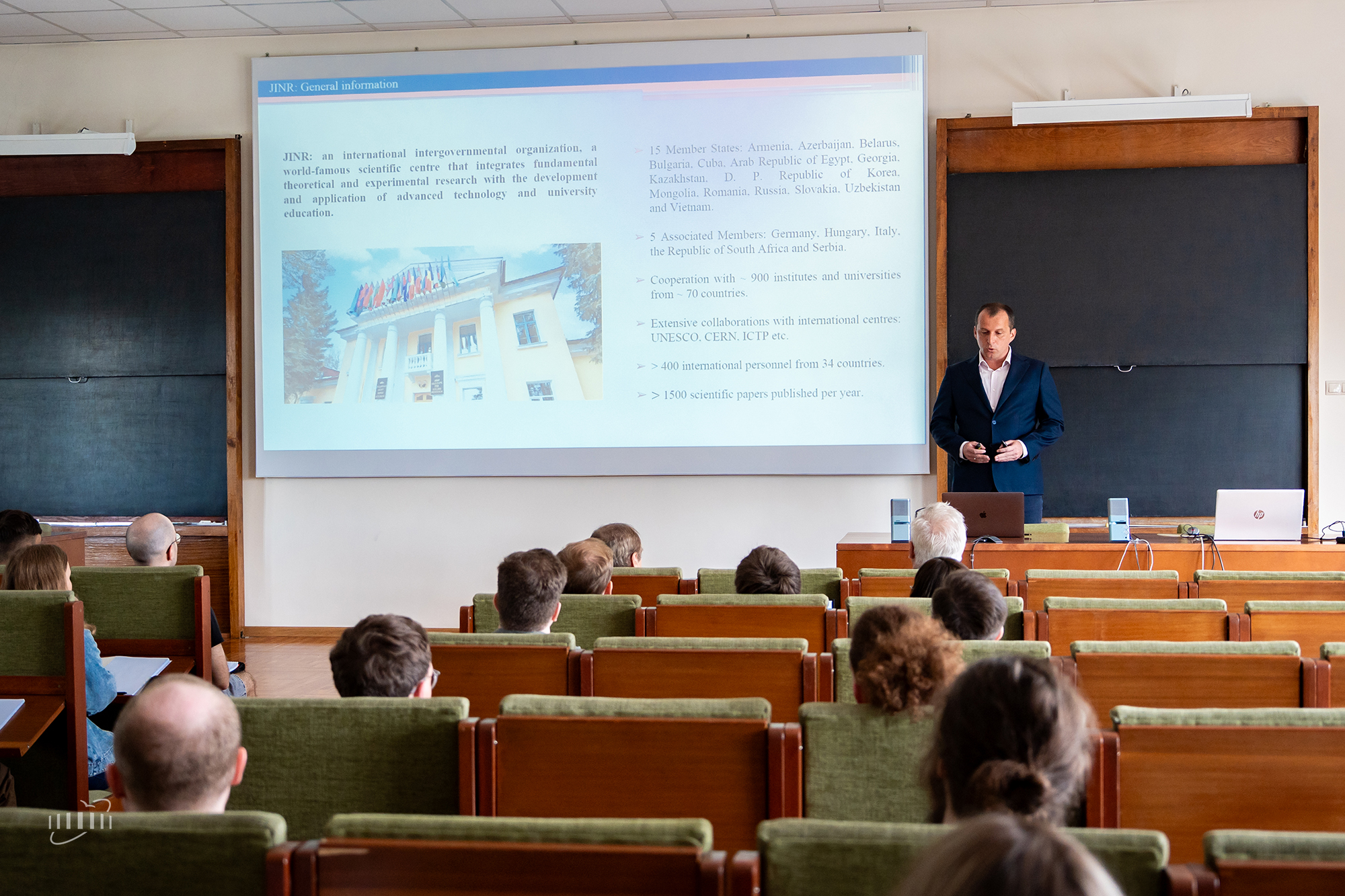
BLTP JINR Deputy Director Eugen Anitas gave a welcome speech at the opening ceremony. He summarised the activities of the laboratory and the Institute, noting that the BLTP employees yearly publish about 500 scientific articles and hold around 15 international seminars and conferences. “The Joint Institute for Nuclear Research is a unique organization combining fundamental theoretical and experimental studies with technological development and advanced education. The synthesis of research leadership and teaching experience ensures that the lectures you attend here are both scientifically sound and understandable, aiming not only to inform but also to inspire. I urge you to take full advantage of this opportunity”, Eugen Anitas concluded.
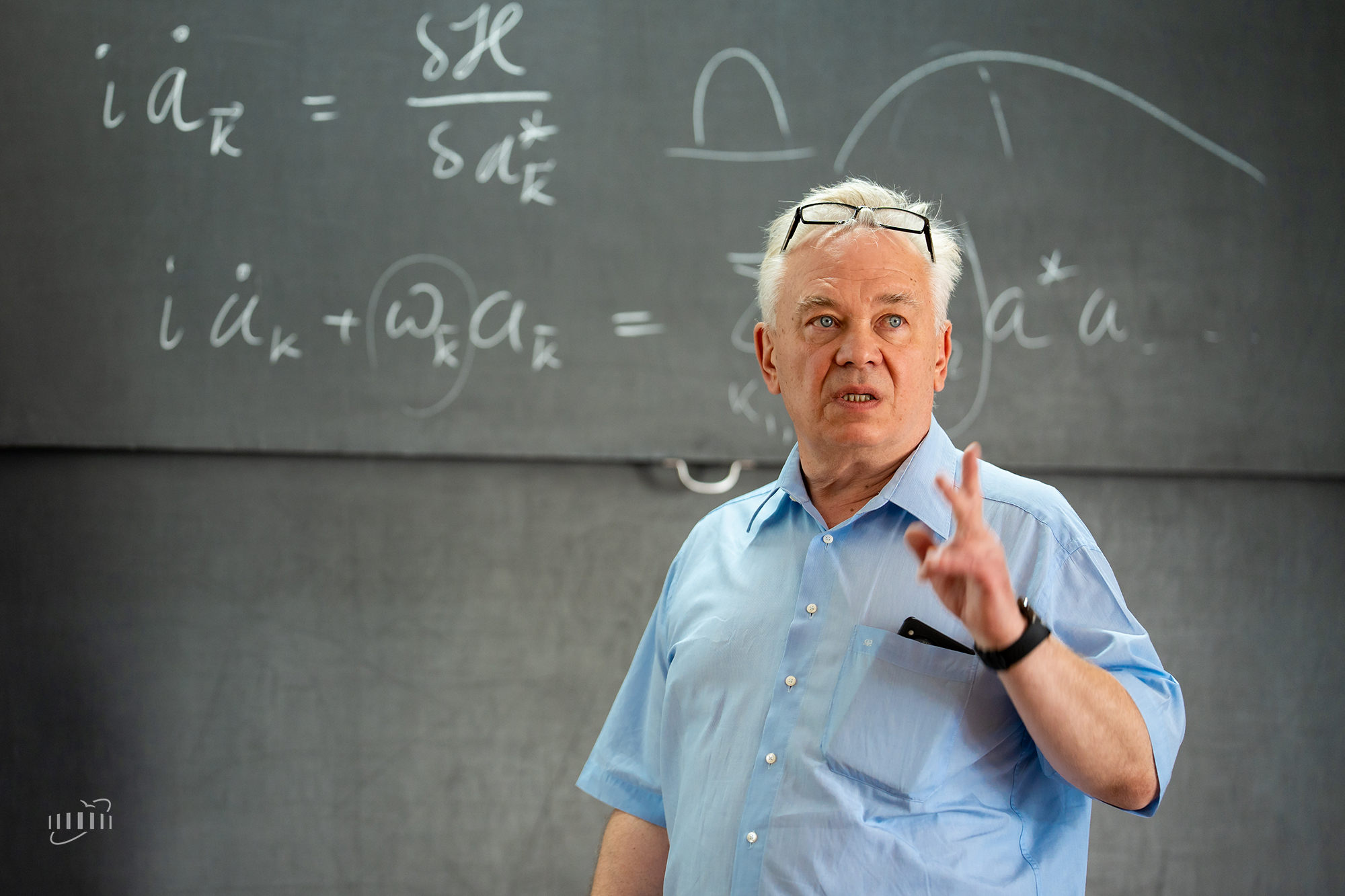
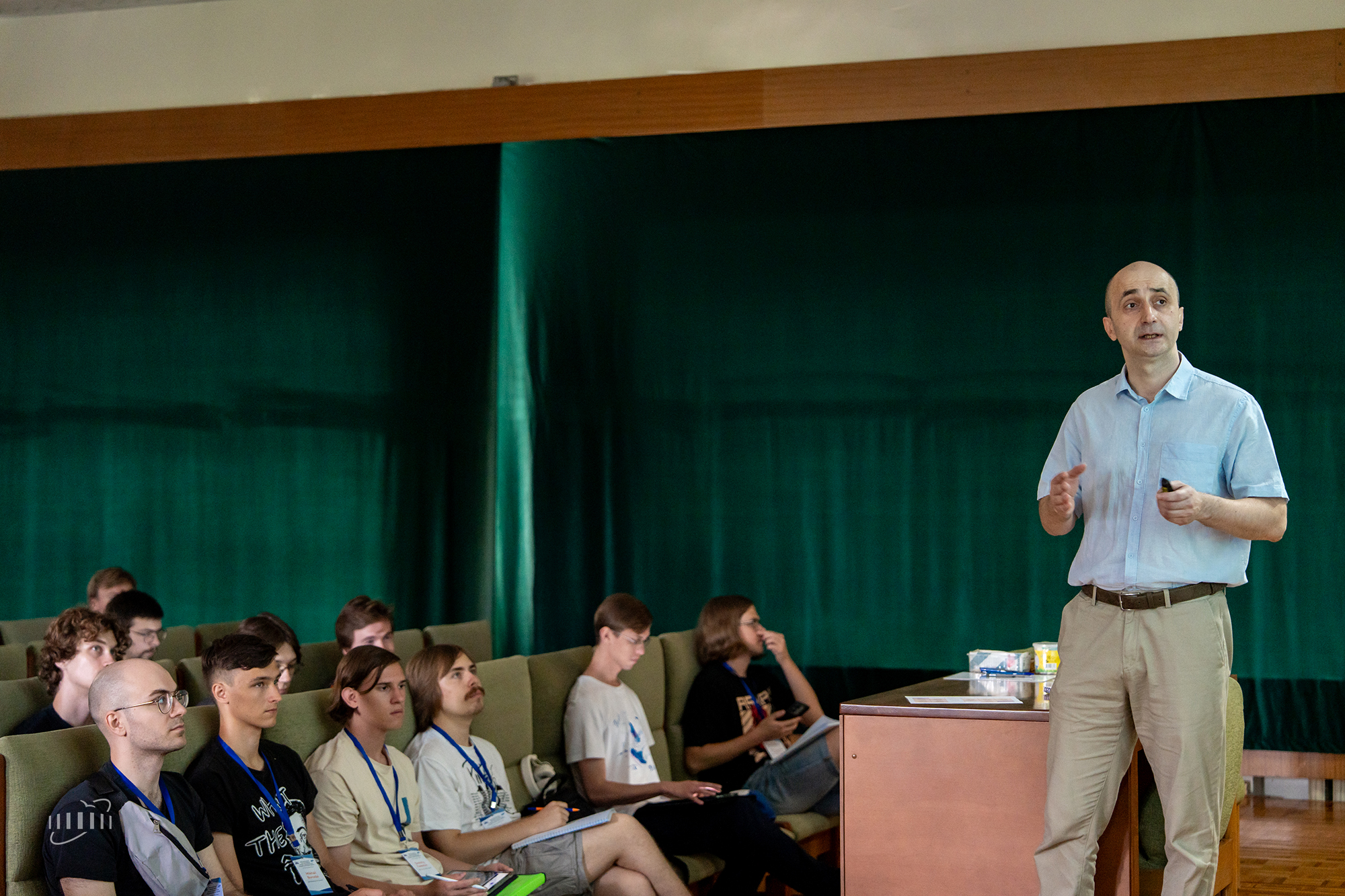
The scientific programme began with lectures by Director of the Landau Institute for Theoretical Physics, Corresponding Member of the Russian Academy of Sciences (RAS) Igor Kolokolov (“Fluctuations and coherent vortices in turbulence”) and BLTP JINR Sector Head Alan Dzhioev (“Quantum mechanics in the state space”).
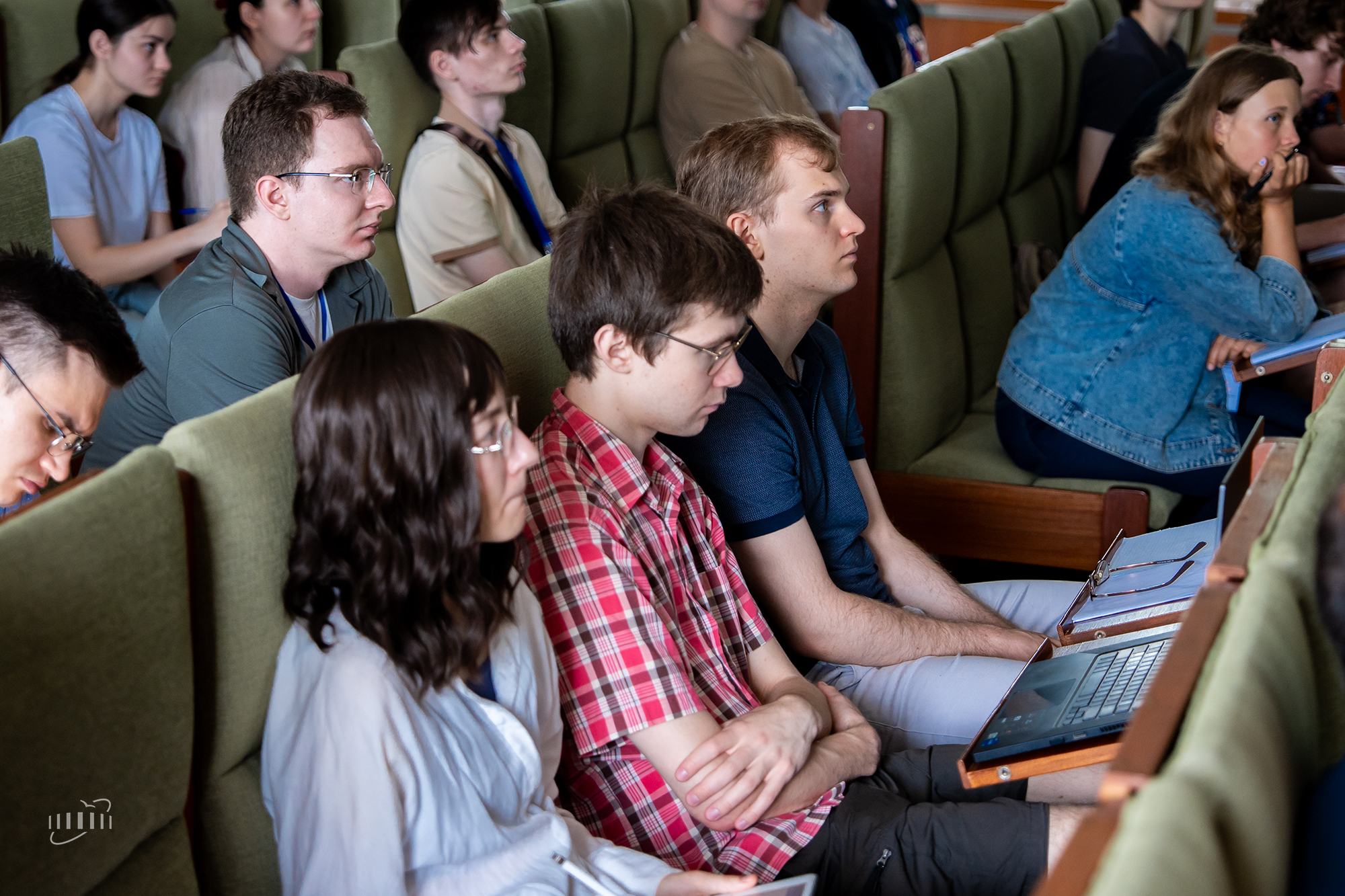
The school’s scientific secretary, Nikita Lebedev, highlighted that the participants were highly motivated undergraduate and graduate students from leading universities and research organizations of several JINR Member States. The Russian participants represent the Moscow Institute of Physics and Technology, Moscow State University, St. Petersburg State University, MEPhI University, Higher School of Economics, Bauman Moscow State Technical University, Kurchatov Institute, as well as the universities of Kazan, Samara, Tomsk, etc. With the annually updated programme and list of speakers, some participants chose to join the school for the second or third time.
“Our main criteria for selecting the lecturers are their standing in the scientific community and extensive pedagogical experience. Many are professors or visiting professors from the leading universities of Russia and other countries. Integrable and stochastic systems are a very broad topic. We choose lecture subjects based on the scientific interests of each speaker”, Organizing Committee Co-chair, Head of the BLTP JINR Department of the Methods of Quantum Field Theory in Complex Systems Michal Hnatic commented.
The programme included about 20 lectures on the methods of quantum field theory, nonequilibrium quantum and classical stochastic systems, and methods of modern mathematical physics. As proved by the previous events, some participants maintain contacts with BLTP after the school.
This year’s lecture series was presented by four speakers from the Laboratory of Theoretical Physics and three invited scientists:
- Sergey Derkachev (St. Petersburg Department of RAS Steklov Mathematical Institute) “Integrable spin chains and calculation of Basso-Dickson diagrams in two-dimensional fishnet models”.
- Alan Dzhioev (BLTP JINR) “Superoperator method in Liouville space”.
- Sergey Fedoruk (BLTP JINR) “Lagrangian formulation aspects for (super)fields of higher and continuous spins”.
- Igor Kolokolov (Landau Institute) “Turbulence as a branch of nonequilibrium statistical physics: inverse cascade of energy and coherent vortices in two-dimensional turbulence. The problem of light propagation in a turbulent atmosphere”.
- Marina Komarova (St. Petersburg State University) “Convergent diagrammatic technique from A to φ”.
- Edvard Musaev (BLTP JINR) “Brane dynamics”.
On 22 July, the participants visited the JINR Lipnya Tourist Resort. Anton Baushev (BLTP JINR) gave an overview lecture on supernovae. In addition, a poster session took place; presentation authors shared the results of their studies and discussed them with colleagues in person.