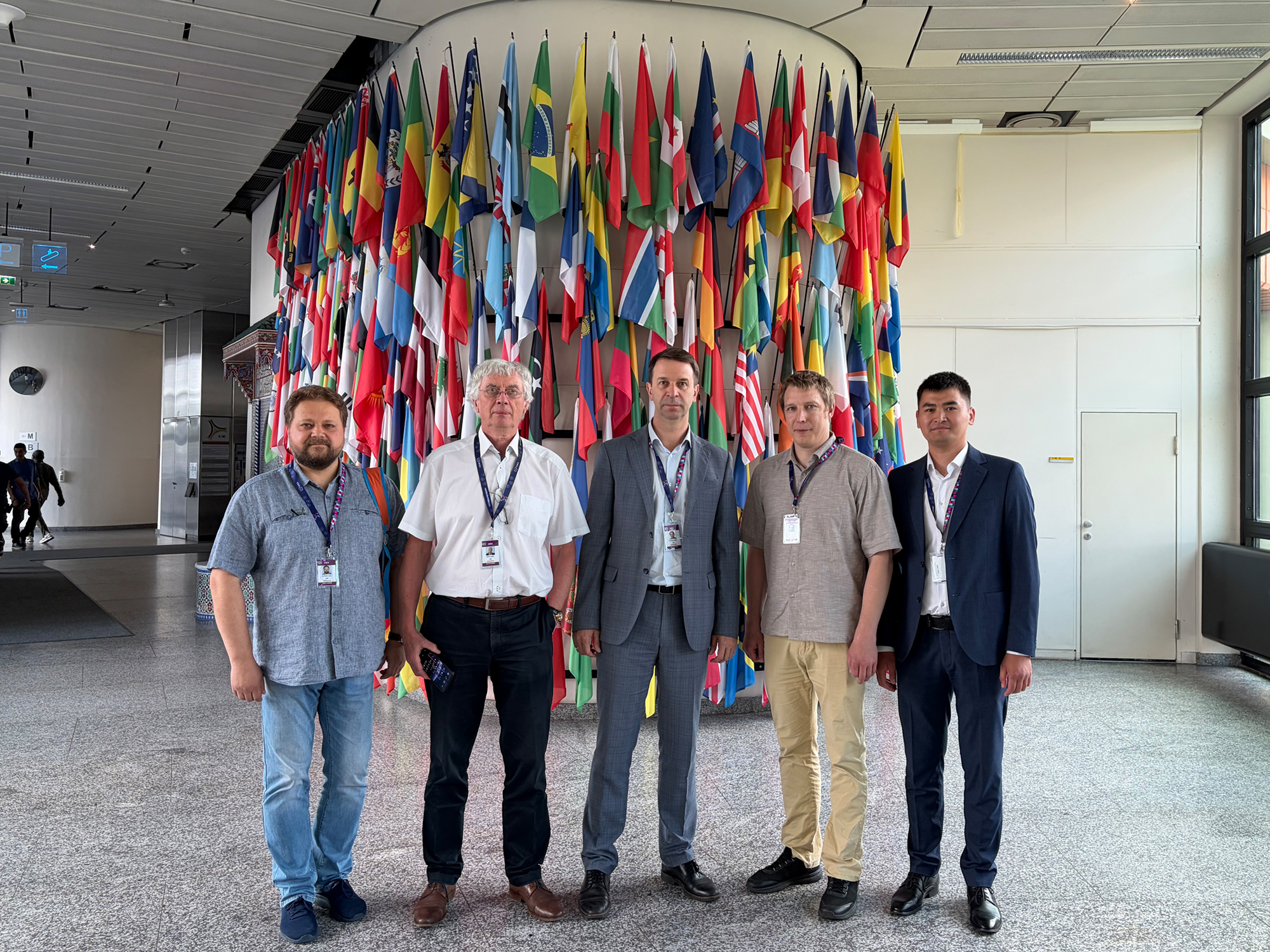
From 22 to 26 June 2026, the Second International Conference on Accelerators for Research and Sustainable Development (Accelerators 2026) took place at the IAEA headquarters in Vienna (Austria). The large-scale scientific forum gathered more than 400 participants from 76 countries. The Joint Institute for Nuclear Research was represented by a delegation of specialists from the Laboratory of High Energy Physics and the Laboratory of Nuclear Reactions, headed by JINR Director, Academician of the Russian Academy of Sciences Grigory Trubnikov.
A distinctive feature of Accelerators 2026 was an emphasis on aligning the thematic sessions with the UN Sustainable Development Goals. The advancement of accelerator science and technology was discussed in the context of priority applications: from studying the fundamental properties of matter in the Universe to life sciences, nuclear medicine, ecology, new pharmaceuticals, clean energy, food processing, plastic recycling, and cultural heritage preservation. Held for the second time, the conference has already formed its unique topic range, complementing the established accelerator forums – IPAC, EPAC, and RUPAC.
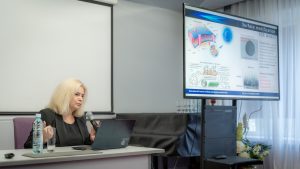
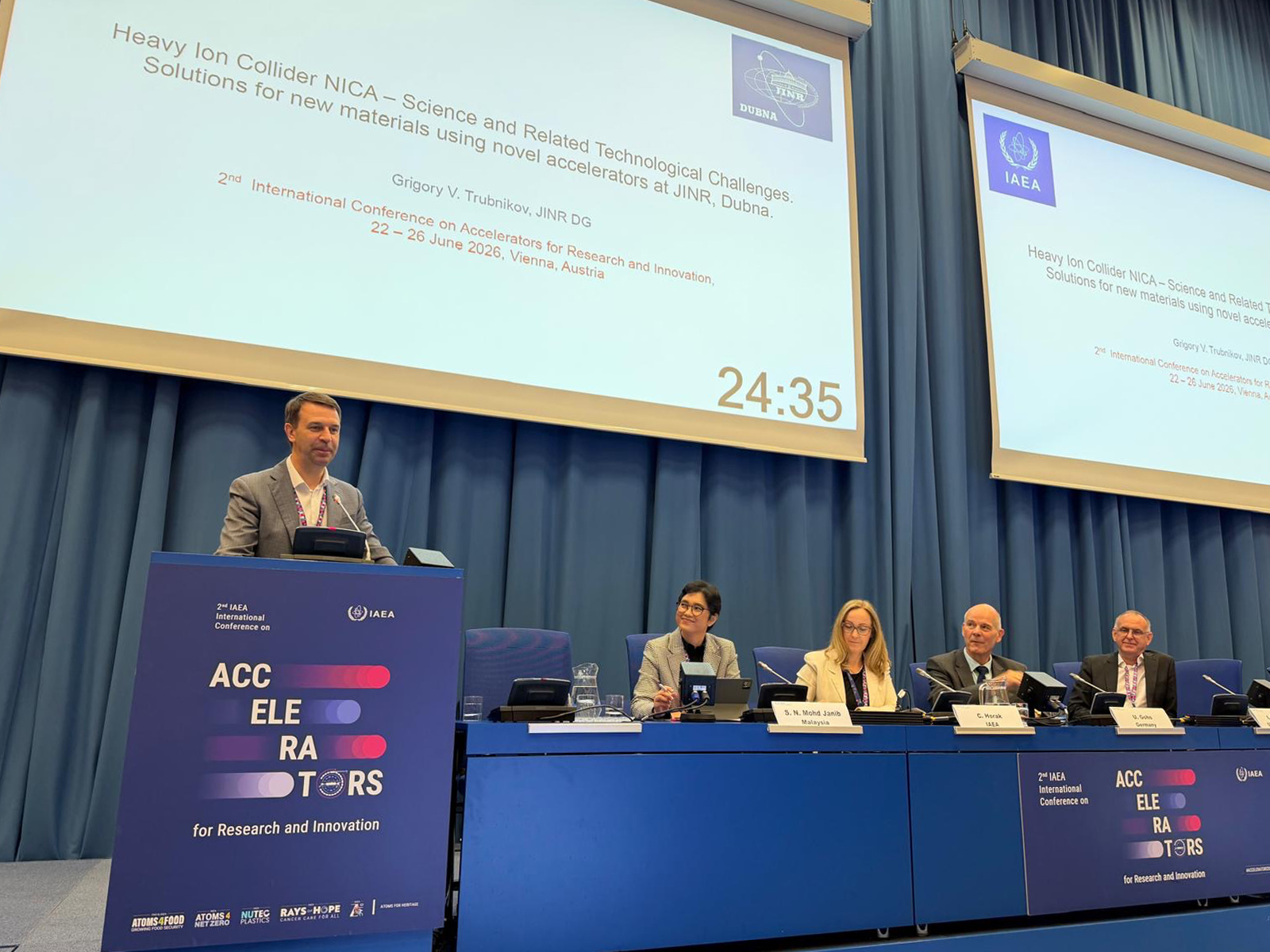
Grigory Trubnikov gave an invited plenary talk, “NICA Heavy Ion Collider: science and related technological challenges”. He commented on the work of the Joint Institute for Nuclear Research, providing an overview of the last NICA Complex Run results and outlining the programme of JINR heavy ion beam experiments. Special attention in the presentation was paid to the programme of applied studies in a number of important modern areas.
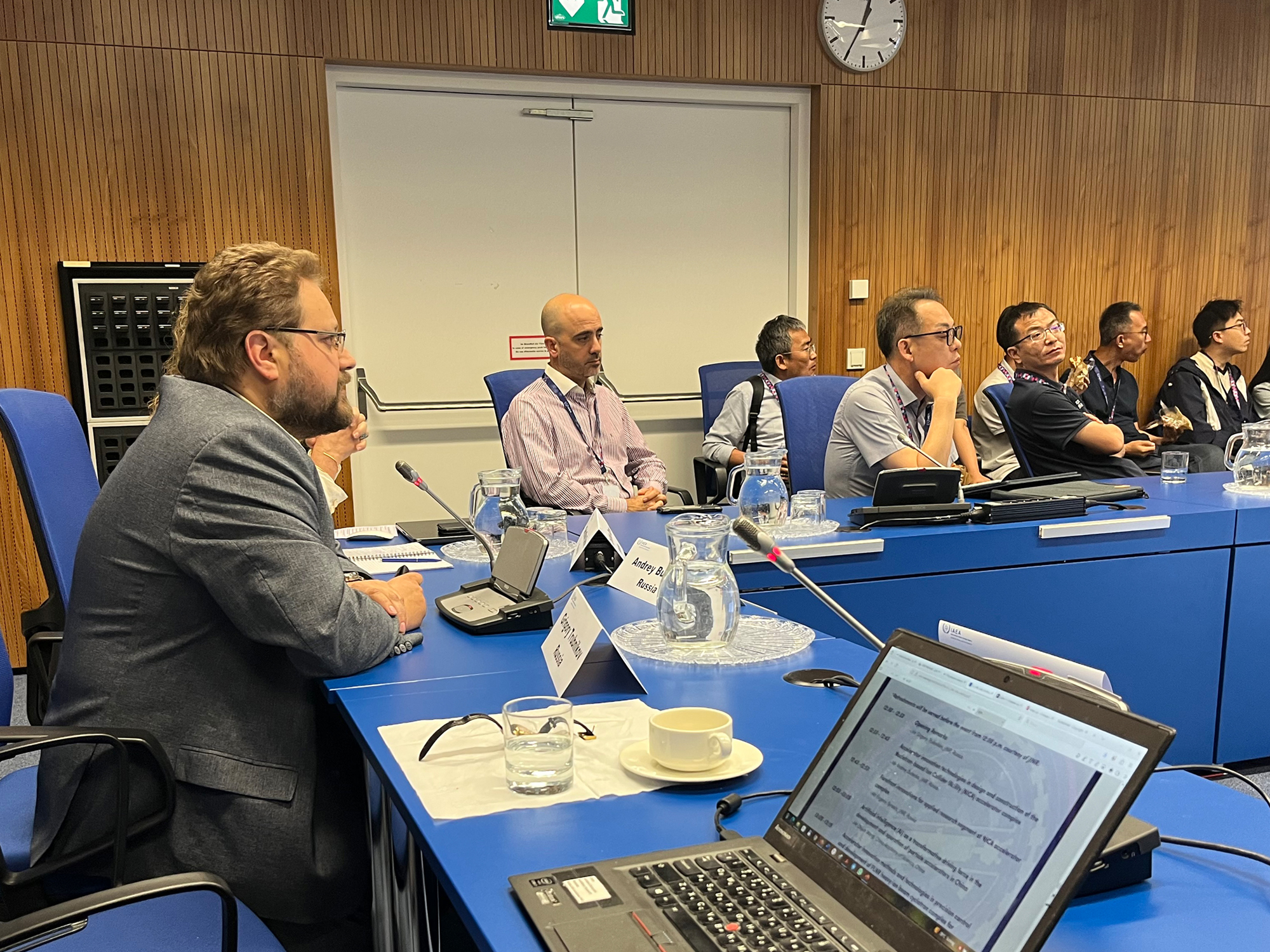
In connection with the 70th anniversary of the Joint Institute, a special thematic session entitled “Accelerator technology innovations and AI” was included in the Accelerators 2026 programme. Talks by VBLHEP Acting Director Andrey Butenko, NICA Chief Engineer Evgeny Syresin, and Head of the FLNR JINR Scientific and Technological Accelerator Department Vasily Semin were dedicated to outstanding technological solutions developed during the creation and operation of accelerator complexes at the JINR laboratories. This session attracted great attention from participants representing China, India, Brazil, the USA, Germany, France, Pakistan, Canada, and other countries.
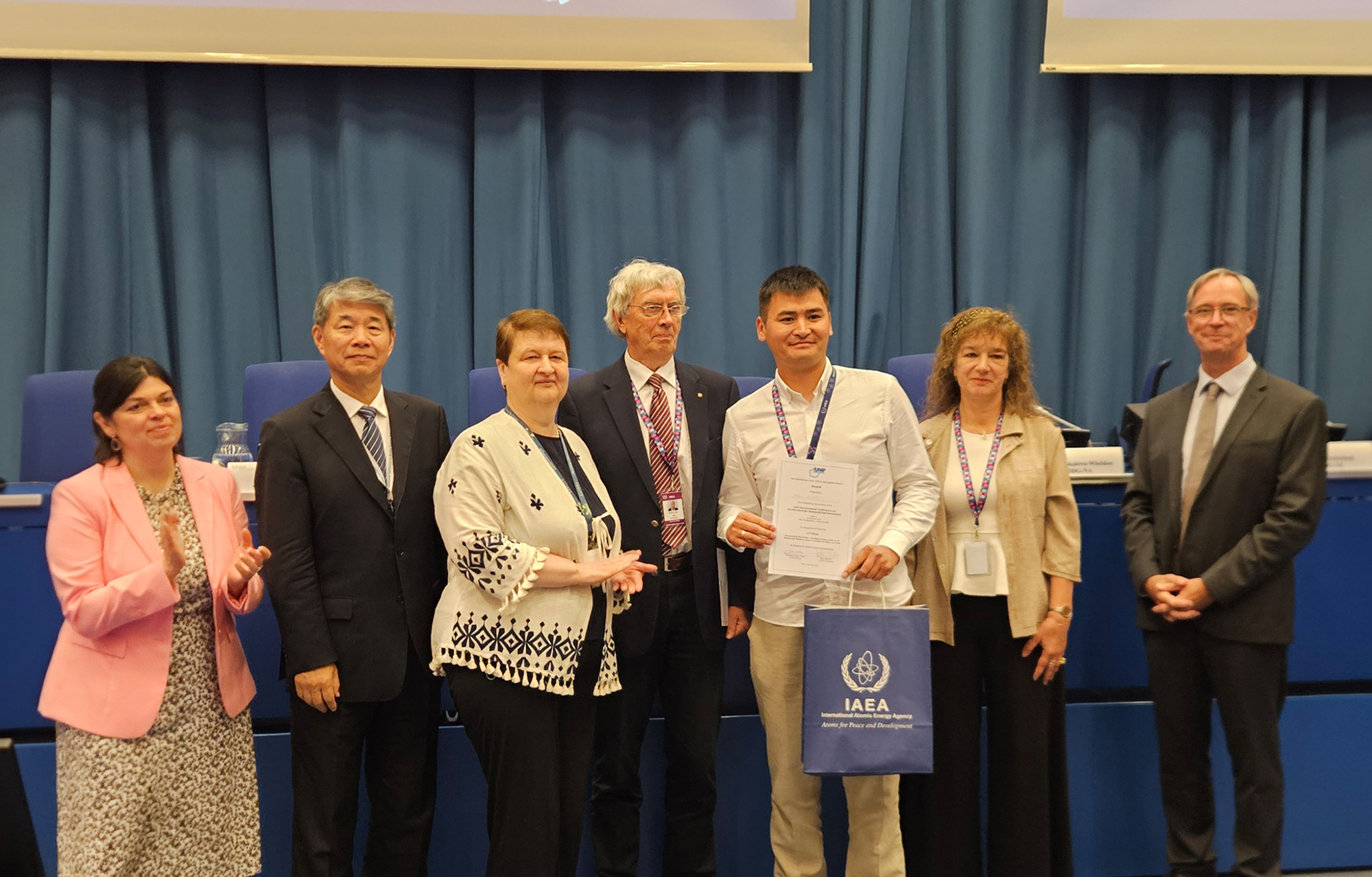
The poster session featured a number of presentations the JINR employees as well. As part of the programme, the joint committee of IAEA and the International Union of Pure and Applied Physics held a competition among young scientists under 35, in which FLNR JINR senior employee Askar Issatov took second place. He received honorary diplomas and a monetary prize.
Discussions at the poster sessions and meetings in the hallways became a valuable opportunity for JINR specialists to strengthen professional contacts with international colleagues. In addition, conference participants exchanged updates on major national accelerator projects in China, Japan, the USA, and Germany. The participation of the JINR delegation in this international forum once again confirmed the Institute’s high credibility and leading role in the development of world accelerator science and innovative technologies.