On 26 January 2026, the 63rd meeting of the JINR Programme Advisory Committee for Particle Physics (PAC PP) took place at the International Conference Centre. The PAC members discussed the implementation of the NICA Megascience Project, the progress of the MPD, SPD, and BM@N Experiments, as well as reports on the work of JINR scientific teams in external international projects.





The meeting started with a moment of silence in memory of Doctor Laszlo Laszlovich Jenkovszky (1942–2025) – a leading researcher at the Bogolyubov Institute for Theoretical Physics of the National Academy of Sciences of Ukraine and a long-term member of the JINR Programme Advisory Committee on Particle Physics.
PAC PP Chair Itzhak Tserruya informed the participants about the implementation of the recommendations of the previous meeting. The Committee members heard a talk by JINR Vice-Director, Academician of the Russian Academy of Sciences Vladimir Kekelidze on the Resolution of the 138th session of the JINR Scientific Council (September 2025) and the decisions of the Committee of Plenipotentiaries of the Governments of the JINR Members States (December 2025).
Acting Director of the Laboratory of High Energy Physics at JINR Andrey Butenko made the first scientific presentation, dedicated to important results of the NICA Accelerator Complex. In the recent months, efforts were focused on preparations for a run at the collider. On 18 December 2025, a xenon beam was first injected into the lower ring, and a month later, on 11 January 2026, the first stable beam circulated the ring. At the PAC meeting, Andrey Butenko announced that on 23 January, the upper ring circulated a beam as well. The results obtained during the commissioning run confirmed that all collider system function and comply with the design characteristics.
Plans for 2026 include conducting runs at the BM@N and ARIADNA Experiments the NICA Accelerator Complex by the end of April. After that, the complex will be shut down to finish all construction and installation work in the collider building and modernise its key systems. The operation of the injection complex and collider is set to resume in autumn. By the end of the year, VBLHEP specialists expect to circulate stable beams in both rings and conduct the first collisions.
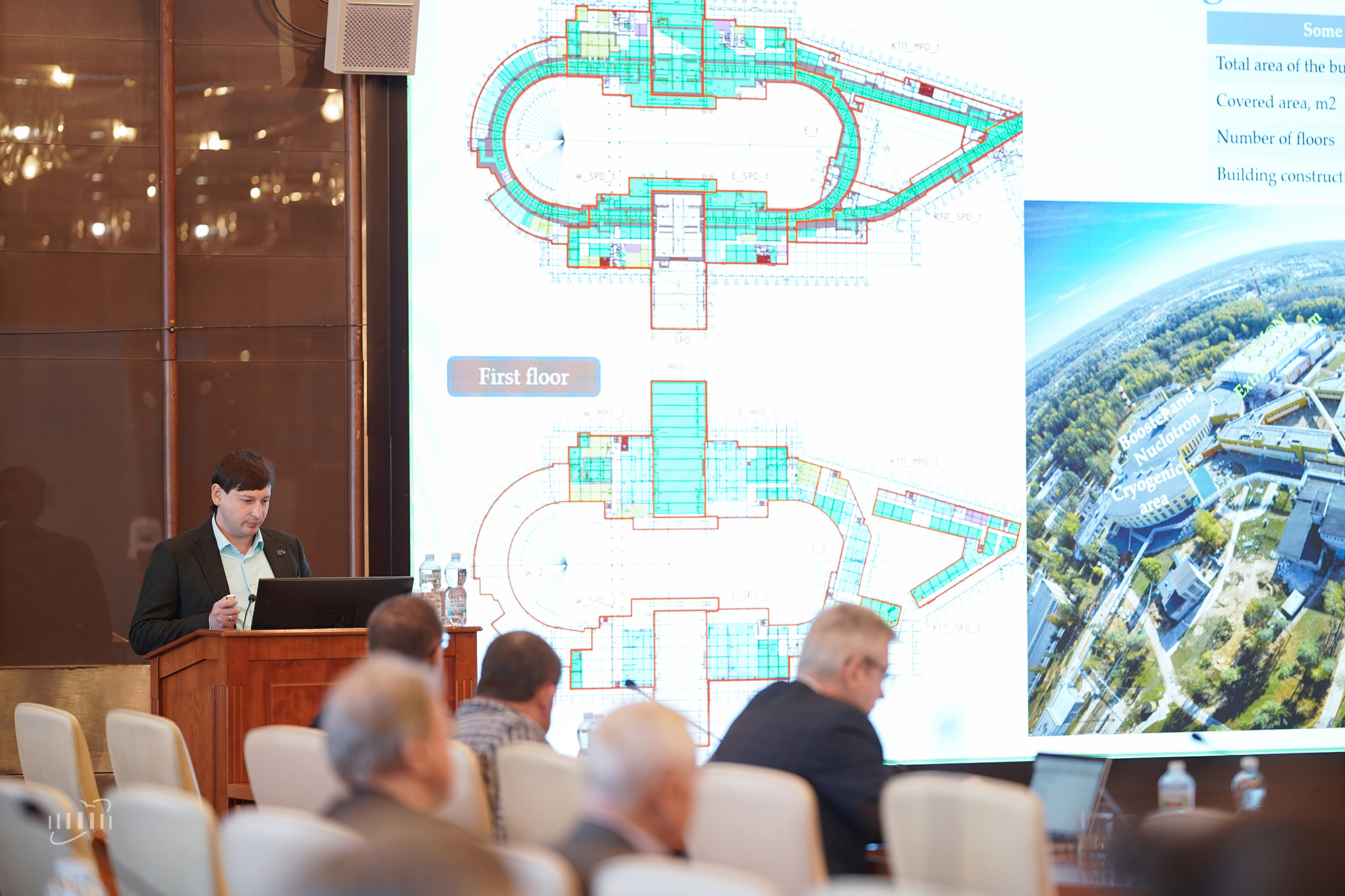
VBLHEP Deputy Chief Engineer Konstantin Mukhin discussed the development of the NICA Complex’s infrastructure. He noted the construction of the collider building is done, and specialists are commissioning key engineering systems, including microclimate, water cooling, and power supply systems. Another significant achievement was the simultaneous cooling of the entire accelerator complex to the operating temperature of 4.5 K. In preparation for the operation of the Multi-Purpose Detector, in December 2025, a map of the magnetic field of a superconducting solenoid was successfully measured at a field value of 0.2 T, and starting in February 2026, measurements are planned to be carried out at 0.3–0.5 T.


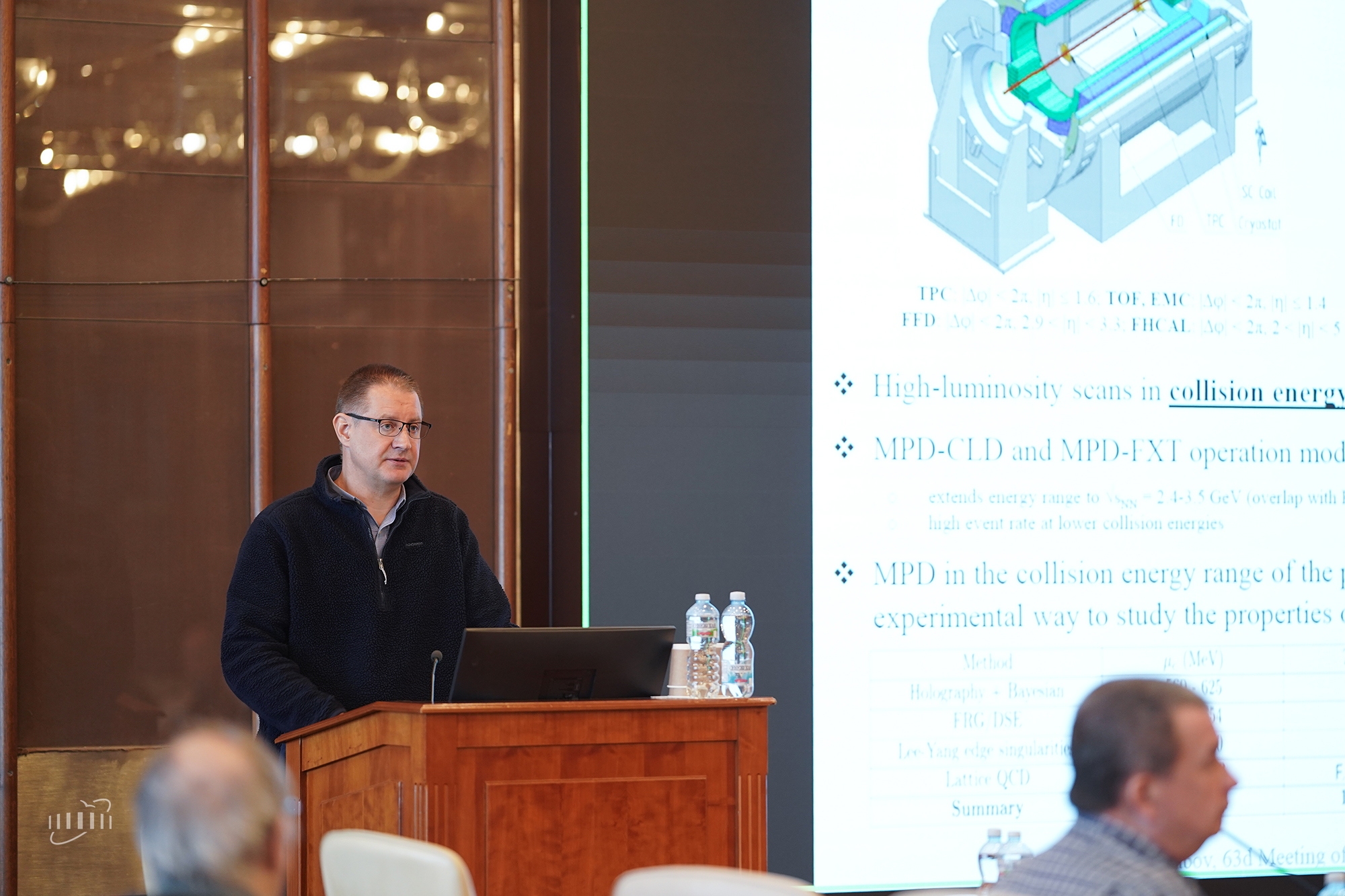
Chief Researcher at the VBLHEP JINR Sector of Elementary Particle Identification, MPD Collaboration Spokesperson Victor Riabov provided an update on the experimental facility. According to the scientist, after measuring the magnetic field of MPD’s magnet, the final assembly of the Multi-Purpose Detector will begin. It is scheduled to be completed in summer 2026. Most of the key subsystems are ready for installation. At the same time the collaboration is engaged in modelling and software development. In the absence of real data, this allows study in detail the physical potential of the facility and prepare the computing infrastructure for analysis. The collection of the first experimental data at the MPD detector is scheduled to begin at the end of 2026.
The co-head of the SPD collaboration and Deputy Director for Scientific Work of the Laboratory of Nuclear Problems at JINR Alexey Guskov talked about the development of the Spin Physics Detector. He stated that the signing of a contract for the manufacture of a magnet yoke, the creation of infrastructure for a cryogenic system, and the production of a superconducting cable for a solenoid are the main tasks for 2026. Two prototypes of zero degree calorimeters (ZDC) are already installed at the interaction point, ready to collect the first data during upcoming runs at the collider.
The head of the VBLHEP at JINR Scientific and Experimental Department of Baryonic Matter Mikhail Kapishin made a proposal to prolongate the BM@N project. Experimental results on the generation of hyperons, mesons, and light nuclear fragments in Xe+CsI interactions as well as the formation of protons, deuterons, and tritons in nuclear interactions of argon ions at an energy of 3.2 AGeV demonstrate the high research potential of the facility.
In the next two years, scientists plan to conduct a series of energy scanning experiments with xenon and krypton ion beams, and from 2028 they plan to work with bismuth beams. To implement this programme, it is planned to modernise the facility: a new high granular neutron detector will be created for measuring neutron yields and collective fluxes, and the tracking system will be expanded with additional silicon detectors. Mikhail Kapishin emphasised that for precision measurements of rare processes, it is necessary to increase the volume of statistics data to at least a billion reconstructed events.
The supervisors highly assessed the obtained physical results and a clear programme for further research. Following the meeting, the Programme Advisory Committee approved a proposal to prolongate the BM@N project until 2031.
In the second part of the session, the results of JINR scientific groups’ participation in major international projects were presented. Elena Rogochaya (ALICE), Tatiana Lyubushkina (ATLAS), and Vladimir Karjavine (CMS) presented reports on their work at the Large Hadron Collider at CERN.
The PAC PP meeting continued with two scientific talks. DLNP Deputy Director Dmitry Naumov spoke about JINR neutrino programme. VBLHEP senior researcher Maria Patsyuk made a presentation “Exclusive measurement of 1p states of protons in the 12C(p,2p)11B quasi-elastic reaction at high momentum transfer”.
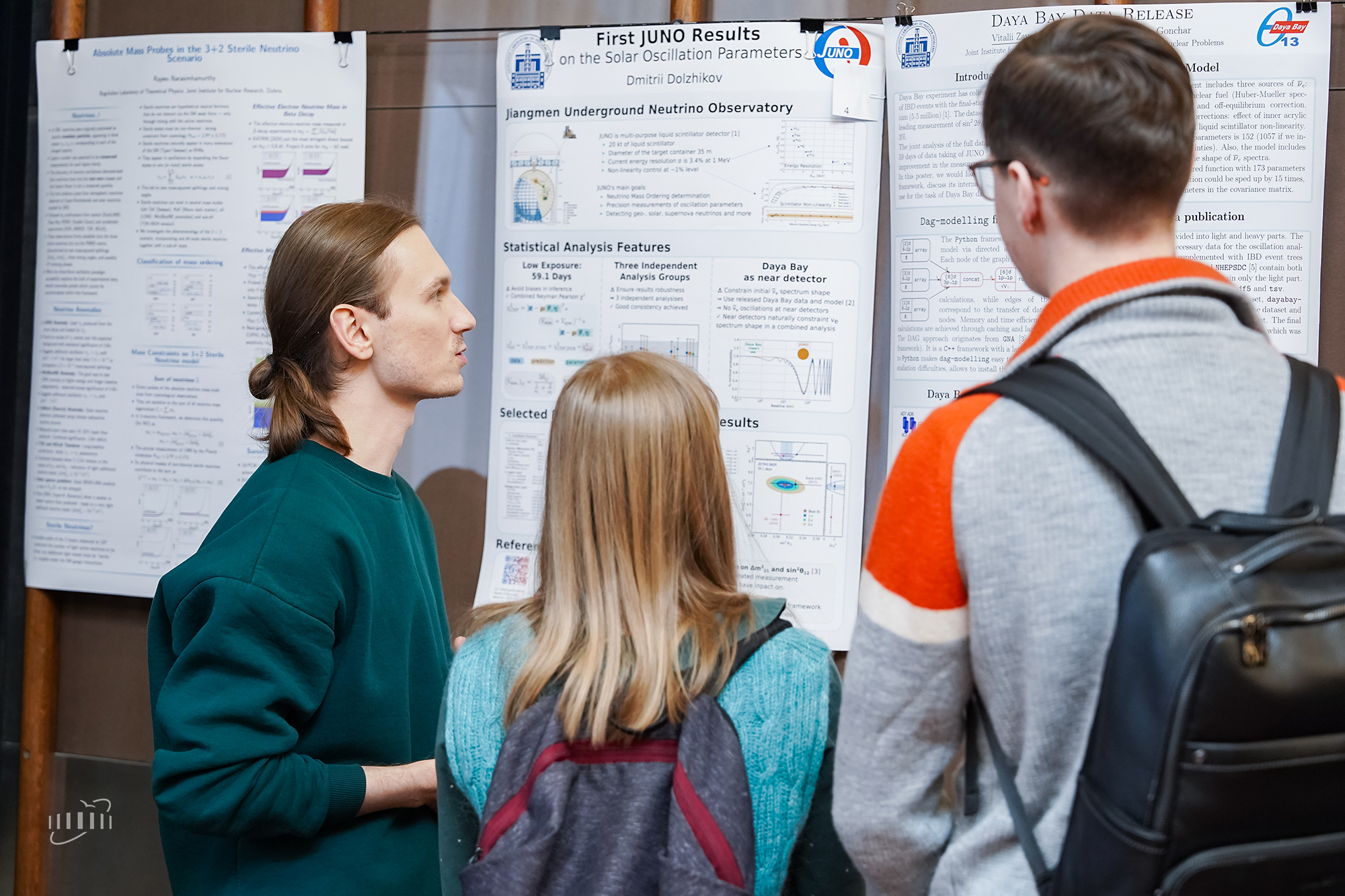
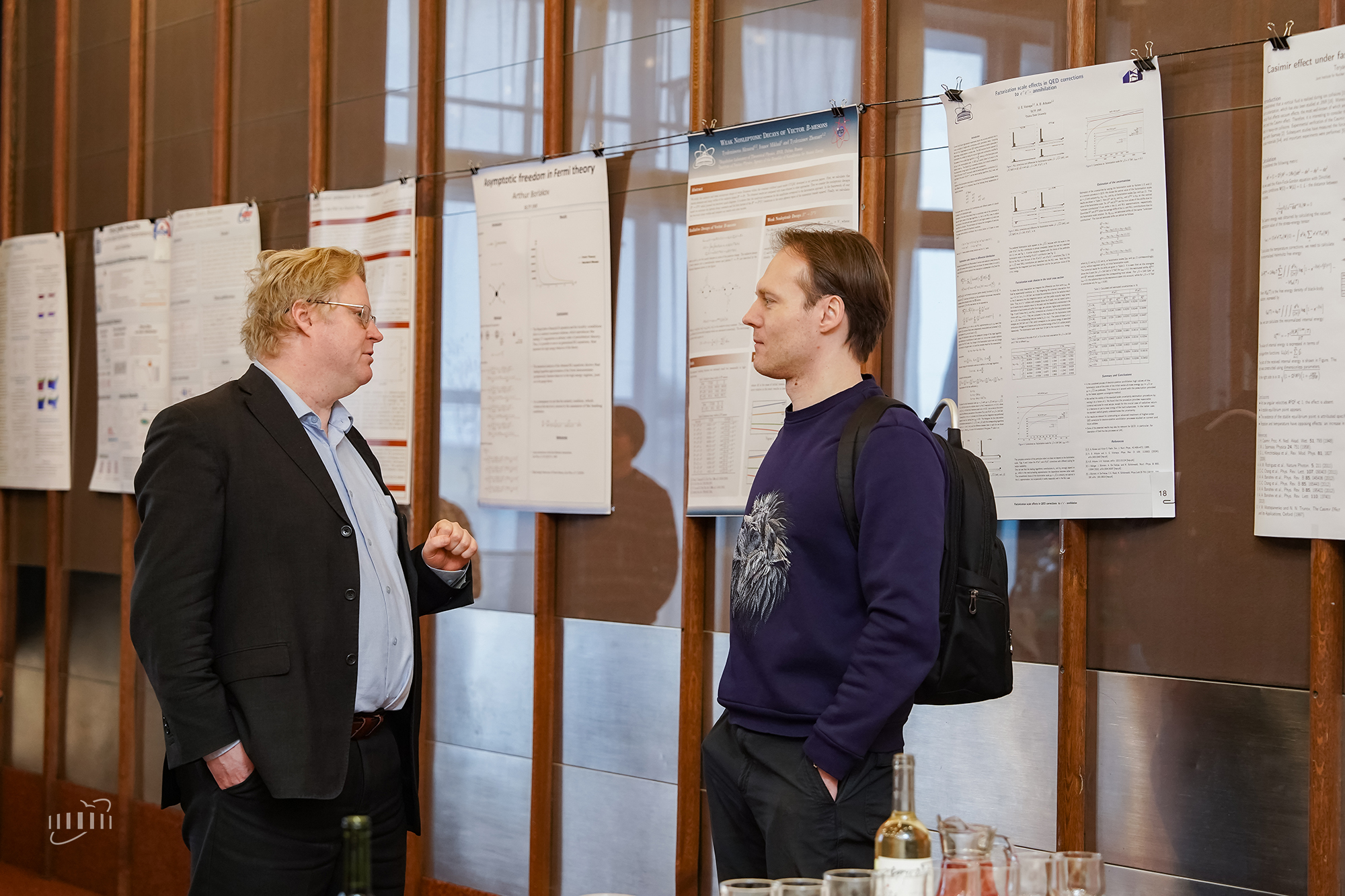
In addition, a competition for poster presentations of young scientists on particle physics research took place as part of the PAC. DLNP junior researcher Dmitry Dolzhikov (“The first results of the JUNO Experiment on solar neutrino oscillation parameters”) became the winner. His talk will be presented at the 139th Scientific Council session.
At the end of the session, members of the Program Advisory Committee for Particle Physics met with representatives of the JINR Directorate. Following the meeting, the PAC recommendation were adopted and proposals for the agenda of the next 64th session, which will take place on 15-16 June 2026, were considered.