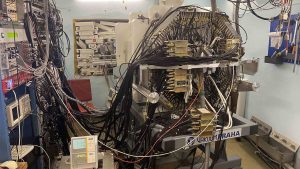
Employees of the Laboratory of Neutron Physics at JINR are studying the dynamics of the molecular structure of organic compounds using the NERA Facility at the IBR-2 Reactor and complementary methods. Research contributes to the development of methods and approaches used in the design and study of the properties of medicinal compounds, systems of targeted medicine delivery to body tissues.
“Comprehensive studies of the dynamics of hydrogen–containing compounds, including well-known medicinal substances and new compounds, are one of the key research areas of the NERA Group. Experimental data obtained by inelastic neutron scattering is analysed in combination with the results of Raman, infrared spectroscopy, and nuclear magnetic resonance spectroscopy, with the mandatory use of modern molecular modelling methods. This approach was successfully demonstrated in the work of our group’s young employees”, Head of the FLNP JINR NERA Group Elena Raksha says.
MLIP for organic molecular crystals
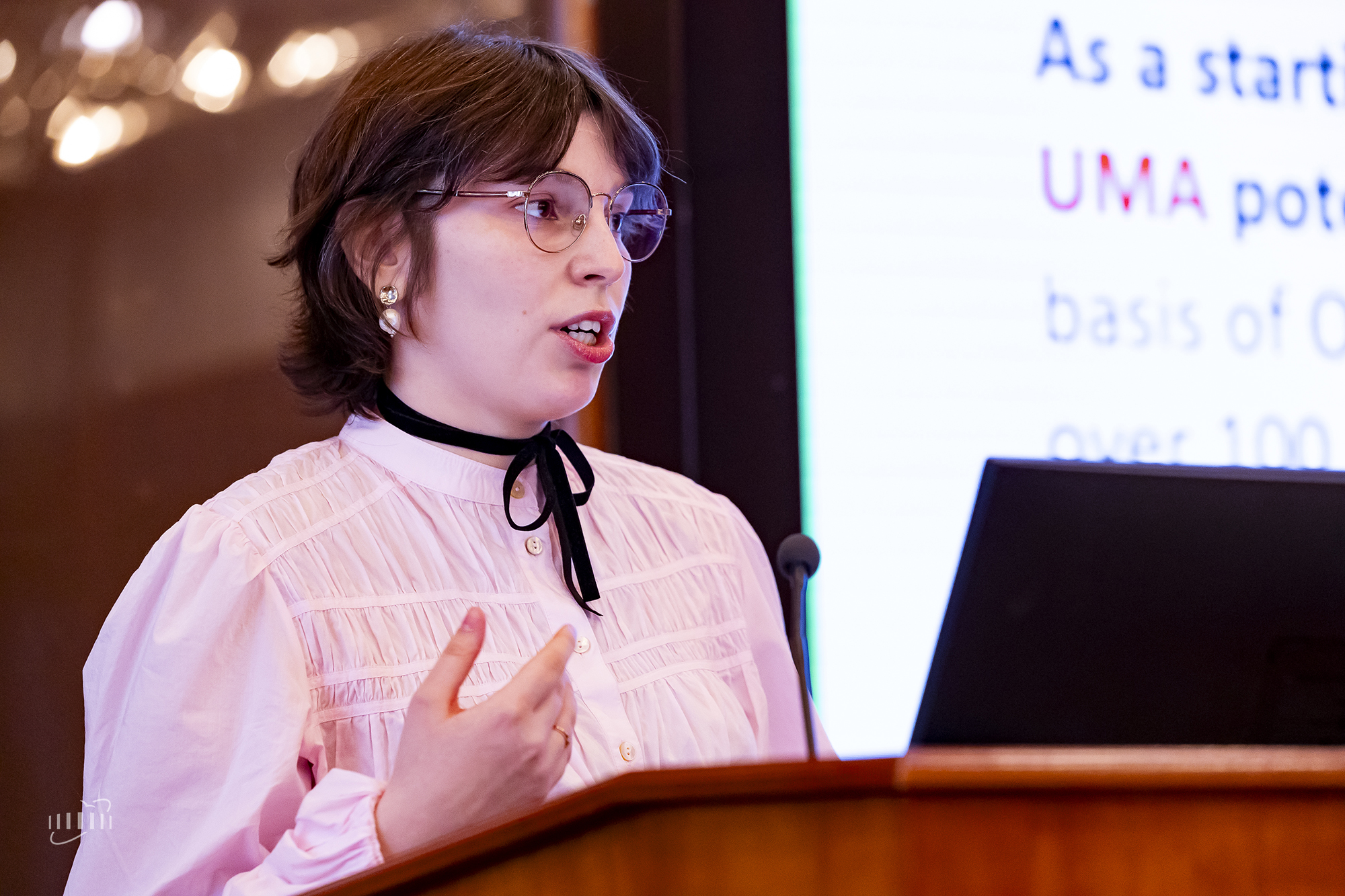 One of the areas of work of an FLNP postdoctoral researcher Polina Kobchikova is machine–learned interatomic potentials (MLIP), a popular tool for modelling a wide range of systems. MLIPs allow approaching an accuracy comparable to that of the universal calculation method, density functional theory (DFT), with significantly lower computational costs. Despite these advantages, MLIPs have a number of limitations. In particular, the question of their applicability to molecular crystals remains open.
In her research, Polina Kobchikova proposed to expand the practical use of a universal machine-learning potential, UMA (Universal Materials Atomic), in relation to organic molecular crystals. The UMA potential was validated on glycine polymorphs and a reference set of X23 molecular crystals by comparing energy, structural, and vibrational characteristics with the results of first-order calculations. Special attention was paid to analysing the influence of the limitations of harmonic and quasi-harmonic phonon approximations on the simulation results.
The study confirmed that, with respect to organic molecular crystals, this approach provides scalable and physically consistent modelling that is inaccessible to traditional methods.
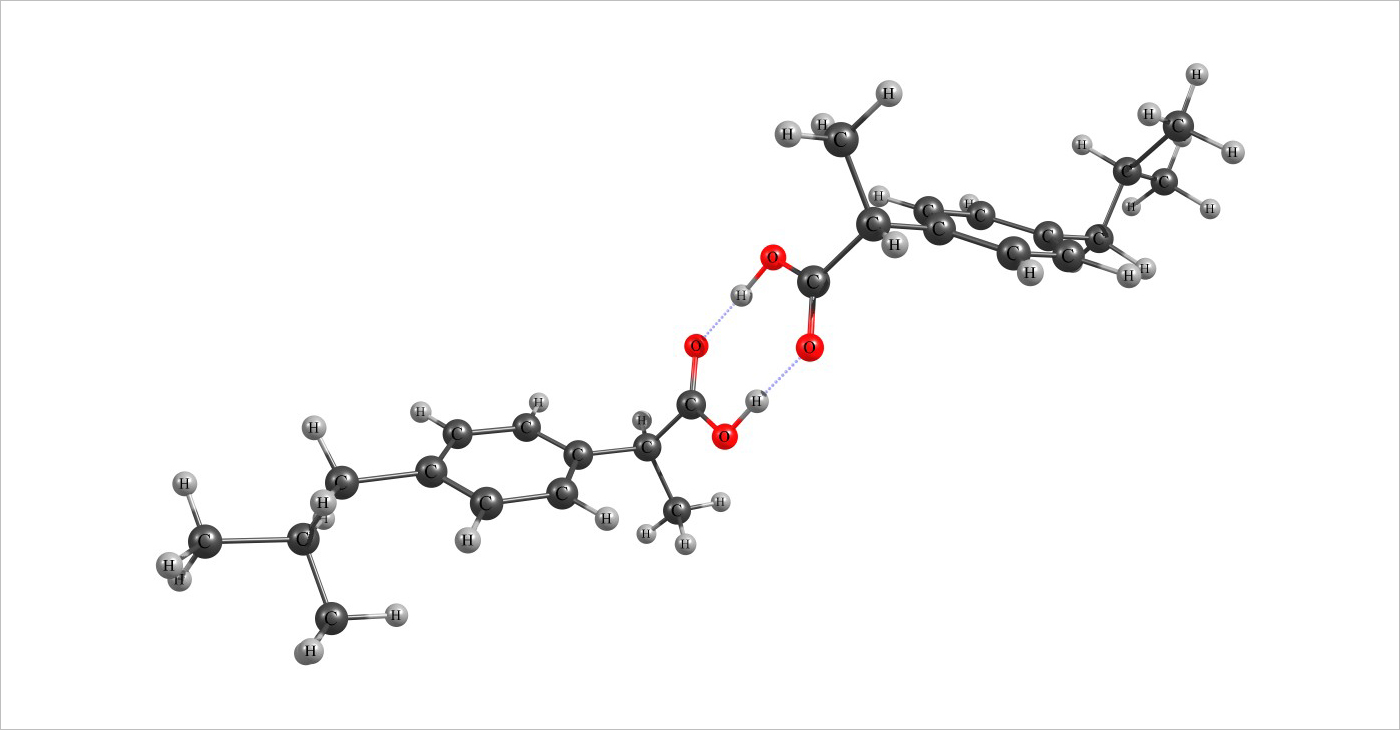 Cyclic R-S dimer of ibuprofen
Vibrational spectroscopy of ibuprofen
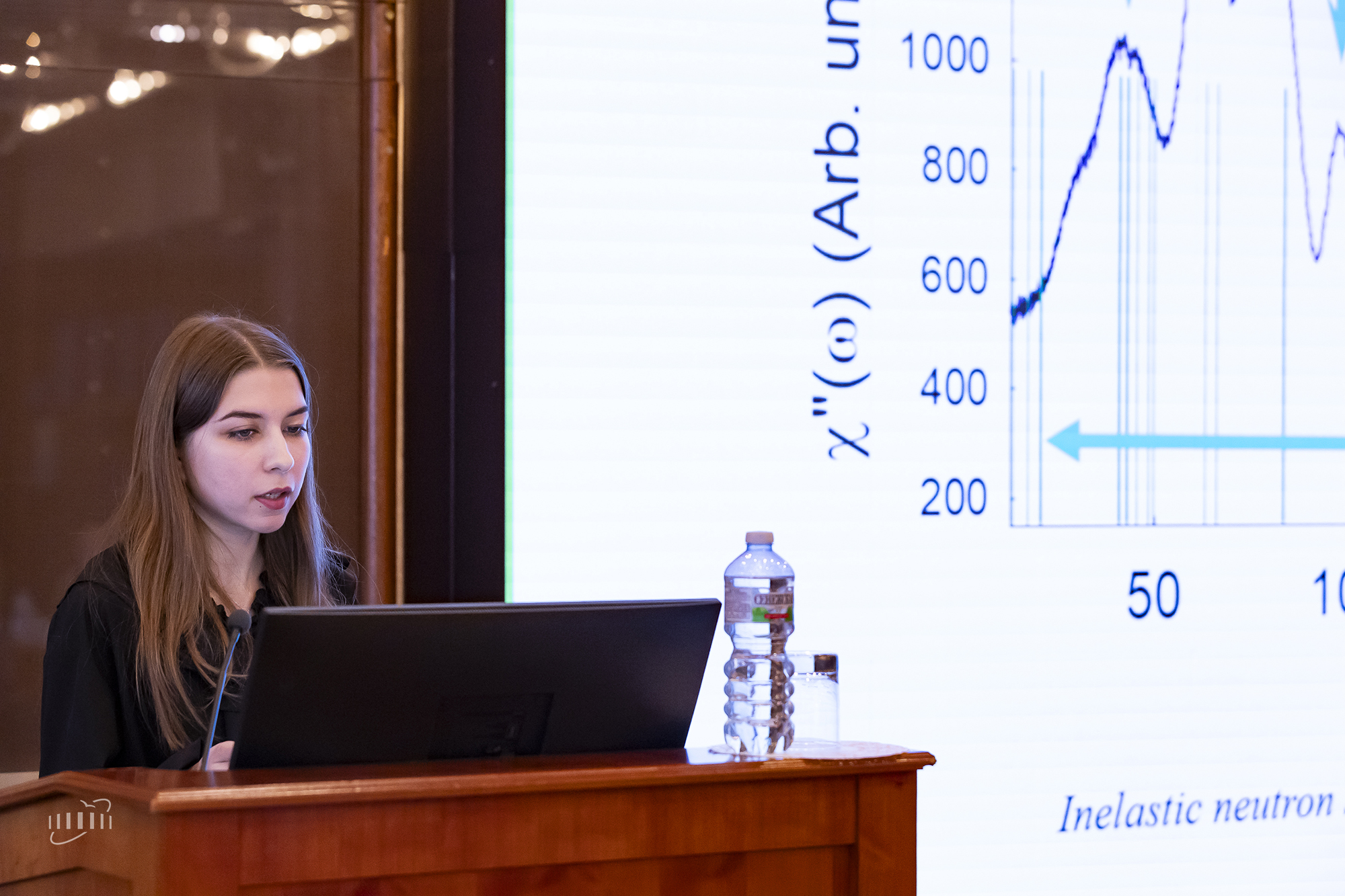 The work of an FLNP laboratory assistant Polina Gergelezhiu focuses on the molecular dynamics of ibuprofen. Since the registration of ibuprofen (1962), extensive experimental material on its structure and properties has been accumulated, making ibuprofen a convenient model compound for the development and testing of new rapid pharmaceutical detection and identification methods, as well as the design of new medicine delivery systems.
The paper presents detailed studies of the molecular dynamics of ibuprofen racemate by inelastic neutron scattering (INS) on the NERA Spectrometer. Unlike optical methods (infrared and Raman spectroscopy), the INS method has a unique sensitivity to vibrations of hydrogen atoms and lacks strict selection rules, which makes it indispensable for studying hydrogen bonds.
As a result of a joint analysis of experimental data (INS, IR, Raman spectroscopy) and the results of molecular modelling, characteristic oscillation frequencies of the carboxyl group were identified, which can act as spectral markers of intermolecular interactions. “The practical significance of the identified markers lies in the fact that they provide a spectral “indicator”, or “fingerprint”, of the state of the carboxyl group. This allows tracking the nature and dynamics of the formation of hydrogen bonds in ibuprofen and related compounds”, Polina Gergelezhiu says.
In January 2026, at the 62nd session of the JINR Programme Advisory Committee for Condensed Matter Physics, Polina Kobchikova took second place at poster session for young scientists with a presentation titled “Machine-learned interatomic potentials for molecular crystals of flexible organic compounds” and Polina Gergelezhiu took third place with a talk titled “Vibrational spectroscopy of ibuprofen: experimental features and DFT calculations”.