Within a few years, the effective volume of the Baikal-GVD Facility is planned to be increased to one cubic kilometre, and by 2040, a new-generation 30 km3 HUNT Neutrino Telescope will be built in the waters of the world’s deepest lake. The project will be implemented by the Baikal-GVD Collaboration jointly with specialists from the Institute of High Energy Physics of the Chinese Academy of Sciences (IHEP). These plans were announced by Director of the Joint Institute for Nuclear Research, Academician of the Russian Academy of Sciences (RAS) Grigory Trubnikov at the 2026 Baikal-GVD Neutrino Telescope 2026 working meeting held on 25–28 February in Listvyanka village (Irkutsk Region, Russia).
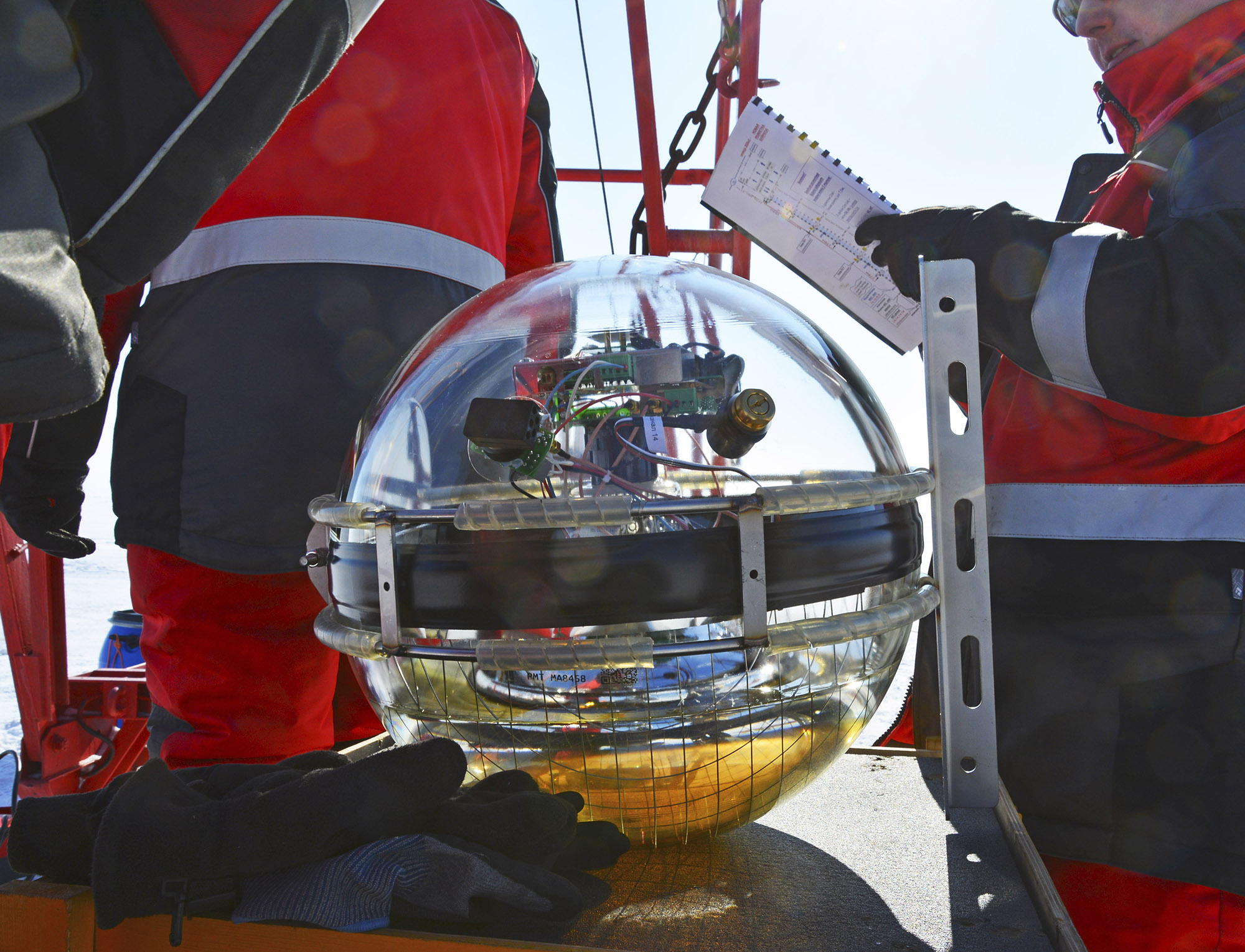 Photo © Irkutsk State University (ISU) Press Office
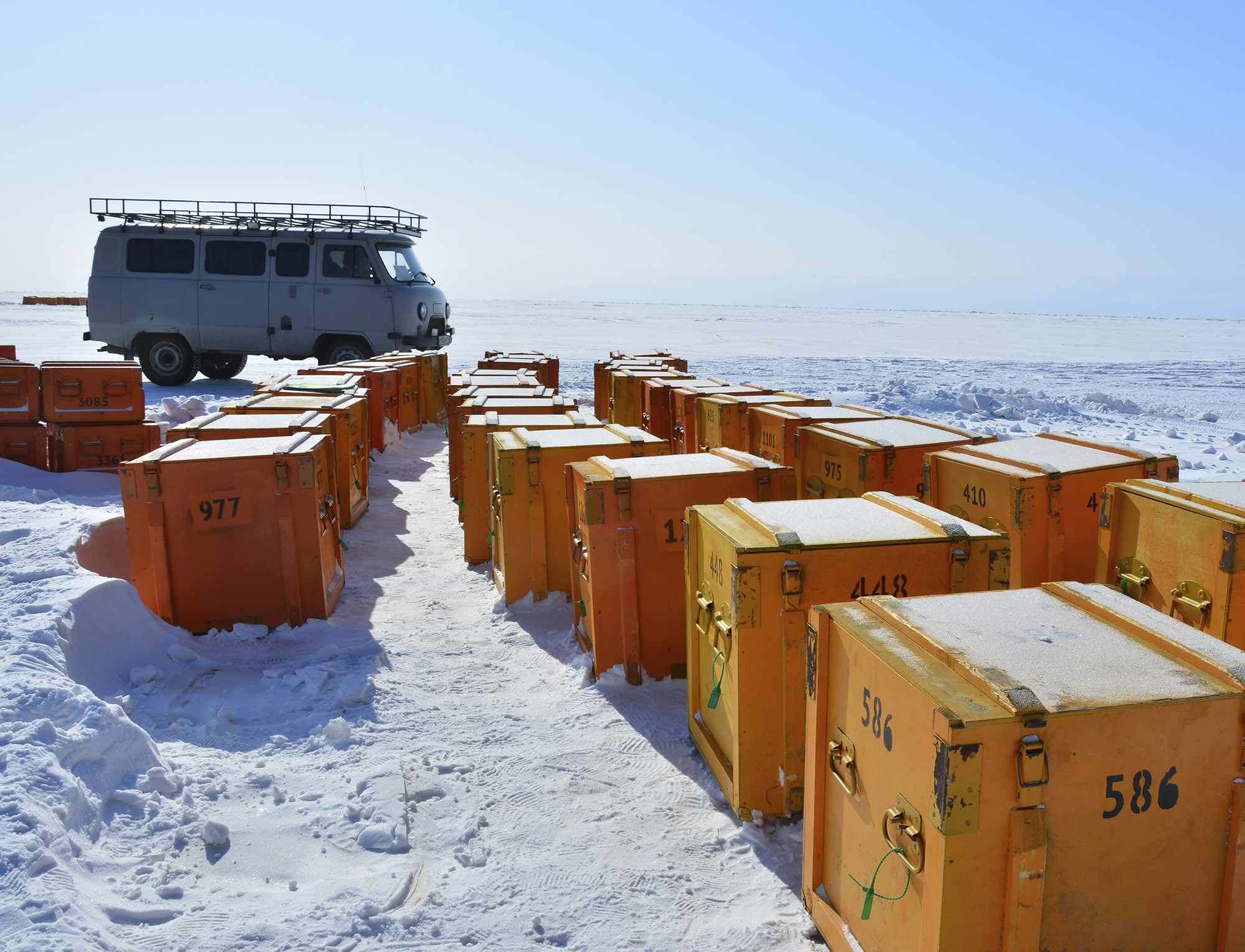
Specialists from JINR, the RAS Institute for Nuclear Research (INR RAS), and a number of Russian universities discussed the progress of the Northern Hemisphere’s largest facility for neutrino flux studies and the future vast expansion of the research infrastructure.
“The project is gathering pace, and the telescope is set to reach an effective volume of one cubic kilometre and take a world-leading position by 2028”, Grigory Trubnikov emphasised. “The new-generation facility, which we will work on jointly with colleagues from China, will allow us to solve problems not only in neutrino astrophysics, but also in geophysics and environmental monitoring. This is an ambitious yet attainable goal, especially given the support of the JINR Member and Partner States”.
In addition, the Director of the Joint Institute announced the start of a new stage of Baikal shore infrastructure’s development. Construction of a modern station designed for 120 specialists will begin in 2026 at kilometre 107 of the Circum-Baikal Railway.
Baikal-GVD Spokesperson, Head of the INR RAS High Energy Neutrino Astrophysics Laboratory Jan-Arys Dzhilkibaev provided an update on the megascience project. Today, the collaboration of the Baikal Neutrino Telescope unites about 80 researchers from five countries. Over the last ten years, the facility grew from one to 14 clusters consisting of 119 strings and 4284 optical modules. Following the 2025 expedition, the neutrino telescope’s effective volume reached 0.7 km3.
Jan-Arys Dzhilkibaev noted that Baikal-GVD is actively used for testing new-generation technologies as well. Specialists commissioned two experimental strings with optical data transmission and two prototype strings of the HUNT Neutrino Telescope, built jointly with Chinese colleagues from IHEP.
Plans for the 2026 expedition include installing another HUNT string prototype and two optical modules with 20-inch photomultipliers. Over the next three years, the detector volume is set to reach 1 km3: with eight new inter-cluster strings with laser calibration light sources and four additional experimental strings, the number of modules will increase to 6000.
Deputy Director of the Laboratory of Nuclear Problems at JINR Dmitry Naumov drew attention to the imbalance in employee numbers: while the Baikal-GVD Collaboration counts about 80 people, experiments such as KM3NeT, IceCube, JUNO, and DUNE comprise from 250 to 1400 specialists. “We need to address the shortage and develop systematic training programmes to guarantee the necessary workforce in neutrino physics”, the scientist noted.
The response to this challenge will be the launch of a new educational programme – Neutrino Physics and Particle Astrophysics, a collaboration between JINR, Lomonosov Moscow State University (MSU), and the Teach-in online platform. The programme is modular: the main course on neutrino physics and data analysis fundamentals is supplemented by two advanced programmes focusing on the theoretical and experimental aspects. Integrative disciplines cover multi-messenger astrophysics, gravitational wave research, and a review of next-generation neutrino facilities. A key element of the training will be work on real research projects under the tutelage of scientists currently working in the field, allowing graduates to immediately engage in the activities of leading scientific organizations. The programme is scheduled to start in 2026.
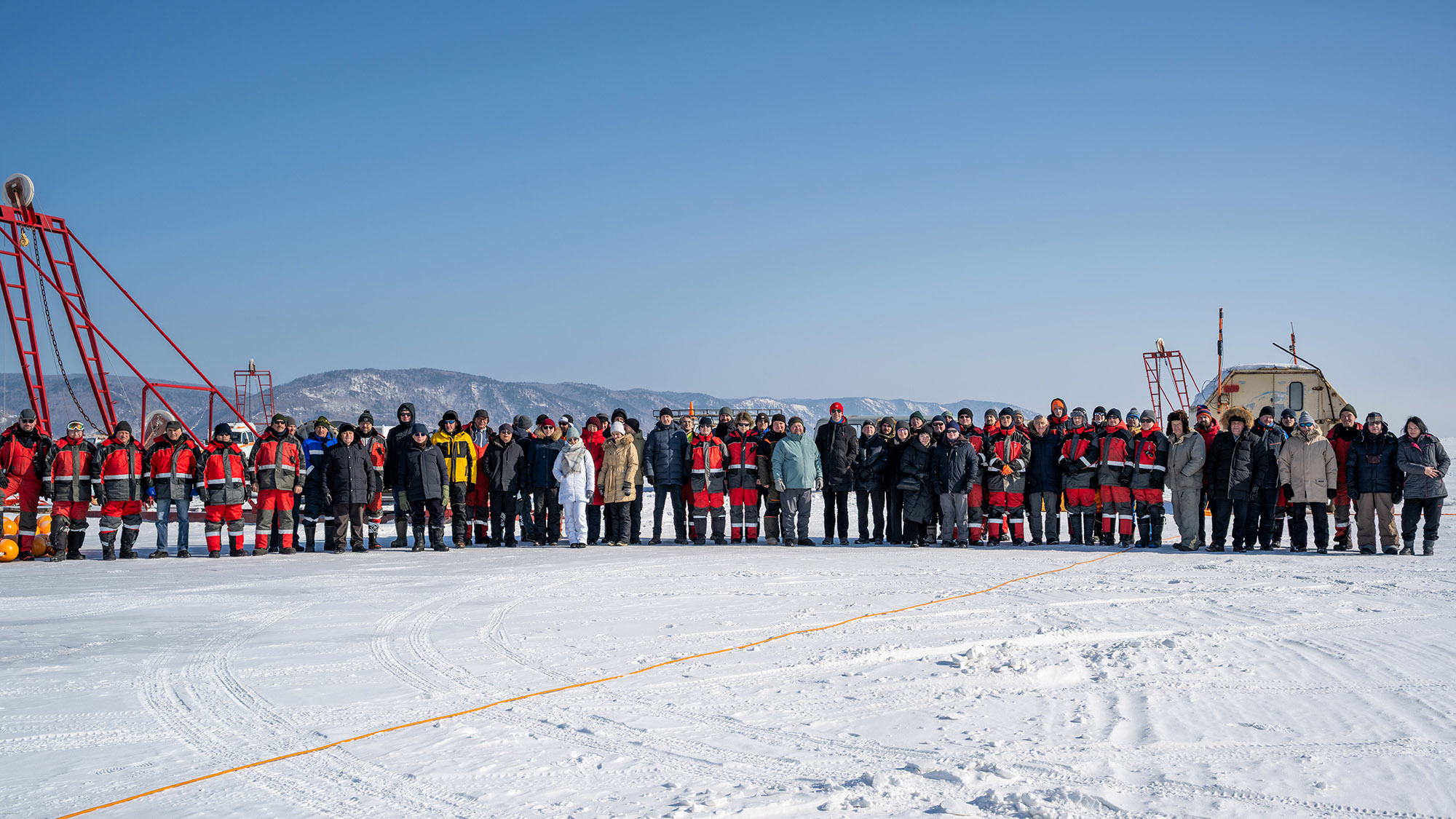 Photo by Bair Shaibonov
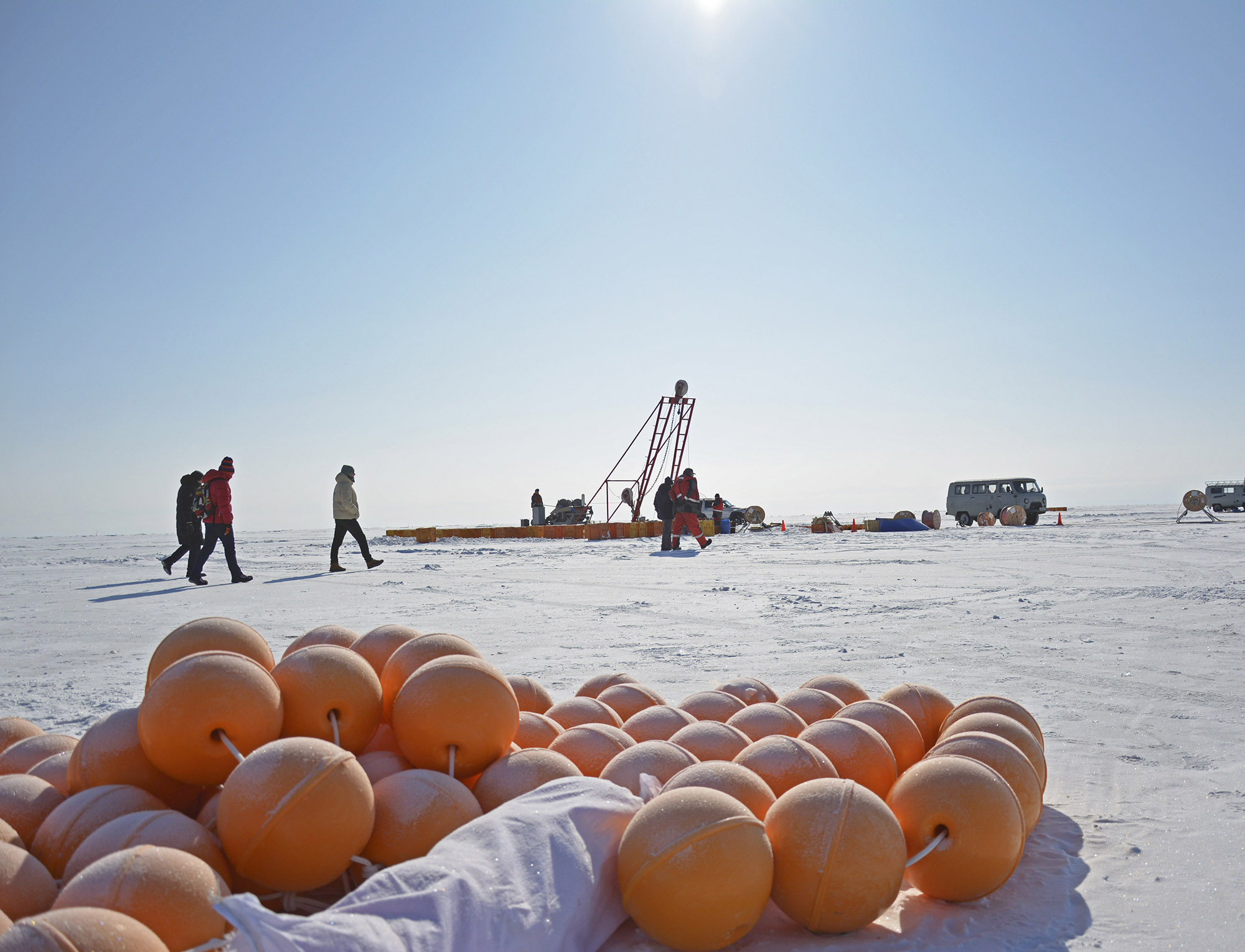
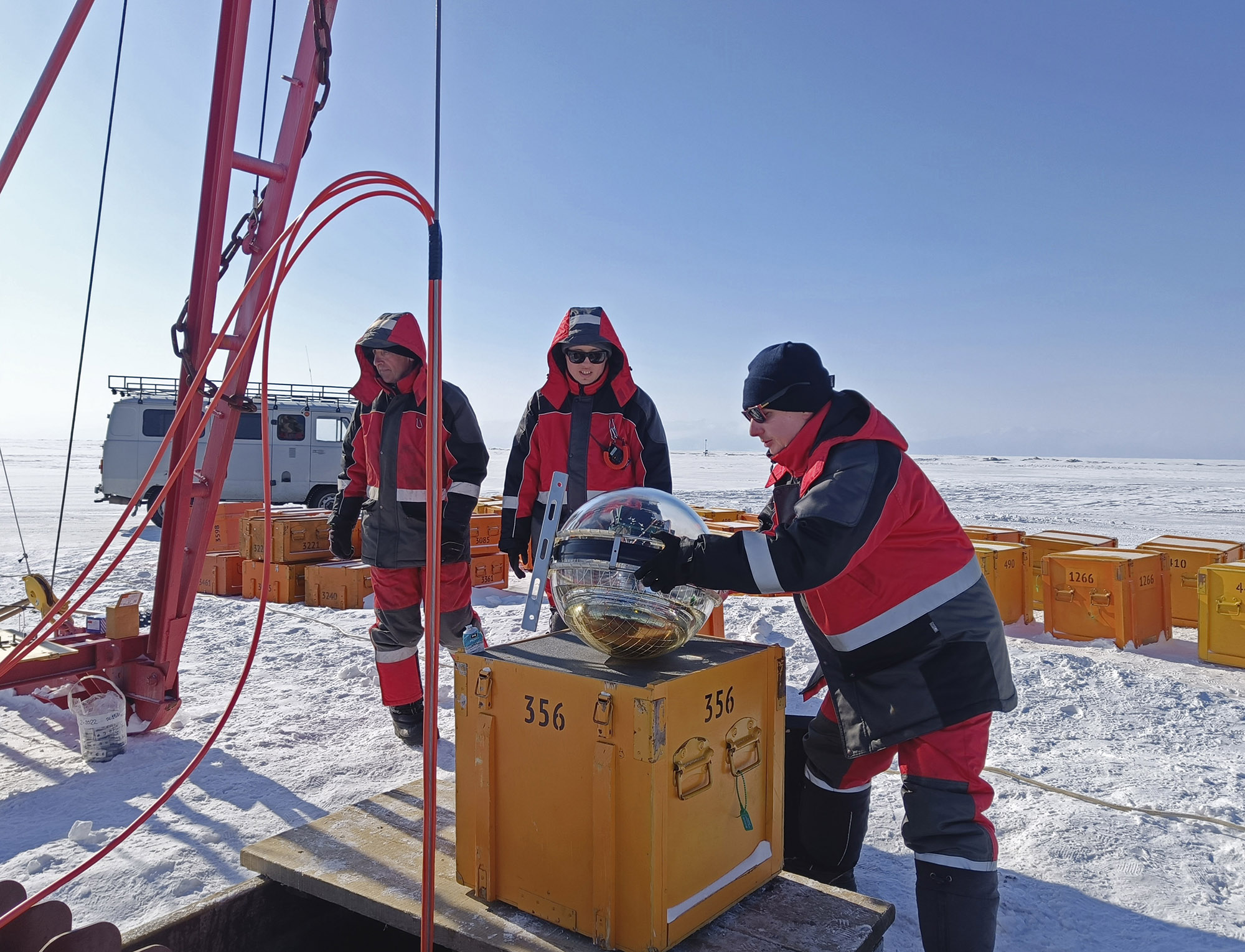
In addition to plenary talks, presentations were made on the fulfilment of governmental tasks in neutrino physics and astrophysics by specialists from the INR RAS, Lebedev Physical Institute, Novosibirsk State University, ISU, MEPhI National Research Nuclear University, and Kabardino-Balkarian State University. Colleagues from the MSU Skobeltsyn Institute of Nuclear Physics provided an update on the work carried out, and ITMO University representatives shared plans for their participation in the Baikal Neutrino Project. In addition, the meeting participants visited the Ice Camp at the railway’s kilometre 107 – the site of the Baikal Neutrino Telescope deployment – where they learned about the expedition’s progress and observed the immersion of a new optical module in real time.
Background information
Baikal-GVD (Baikal Gigaton Volume Detector) is the largest neutrino telescope in the Northern Hemisphere. Its main tasks are the detection and study of ultra-high energy neutrino fluxes from astrophysical sources. The Joint Institute for Nuclear Research and the Institute for Nuclear Research of the Russian Academy of Sciences play a leading role in the construction and operation of the experimental facility.