The annual winter expedition to build the deep underwater Baikal-GVD Neutrino Telescope finished on Lake Baikal. This season, scientists installed a record number of 756 optical modules. The telescope’s effective volume reached about 0.8 km3, and starting with 6 April 2026, the Baikal Neutrino Detector systems are collecting data.
 Photos by Bair Shaibonov
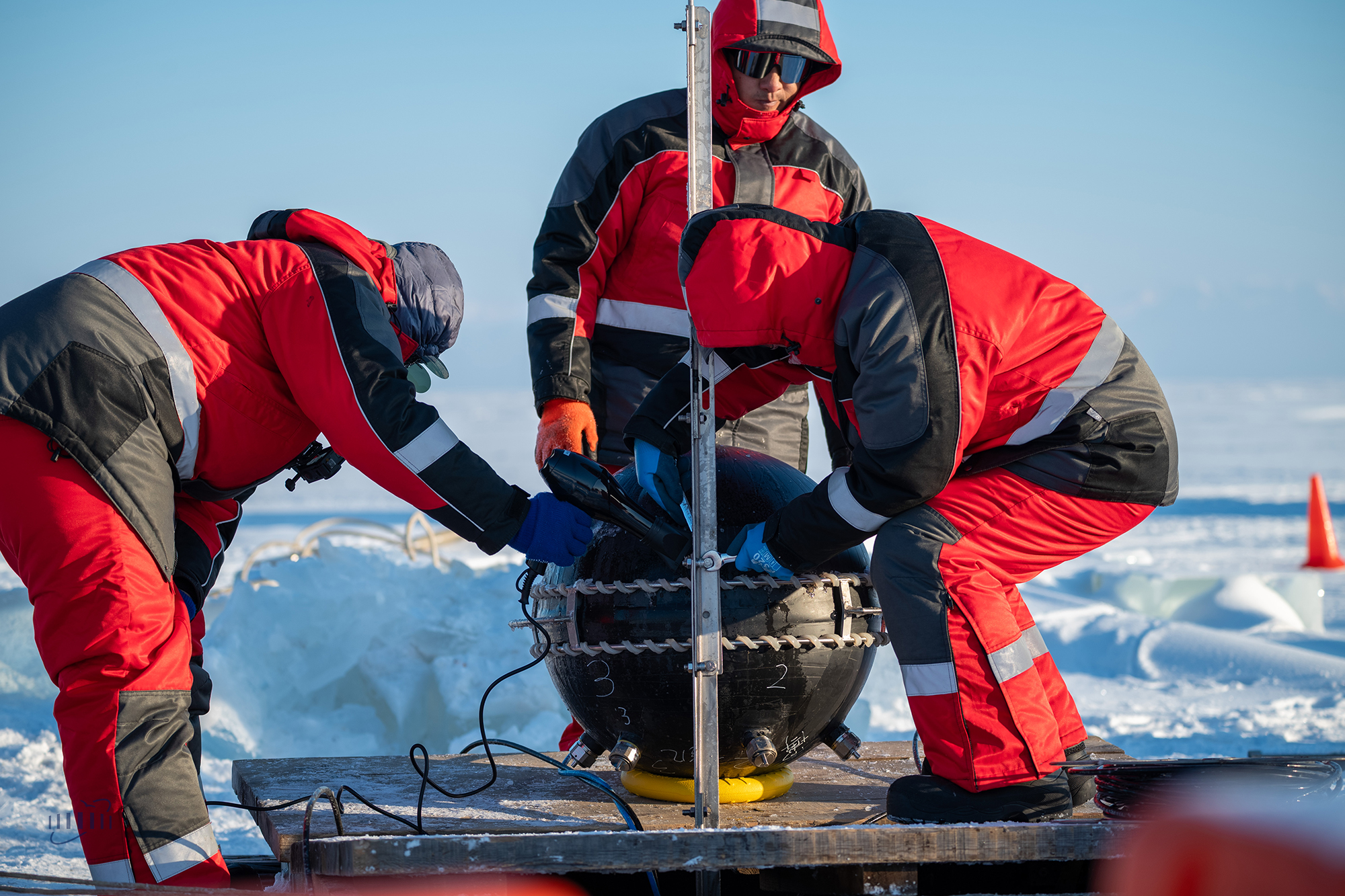
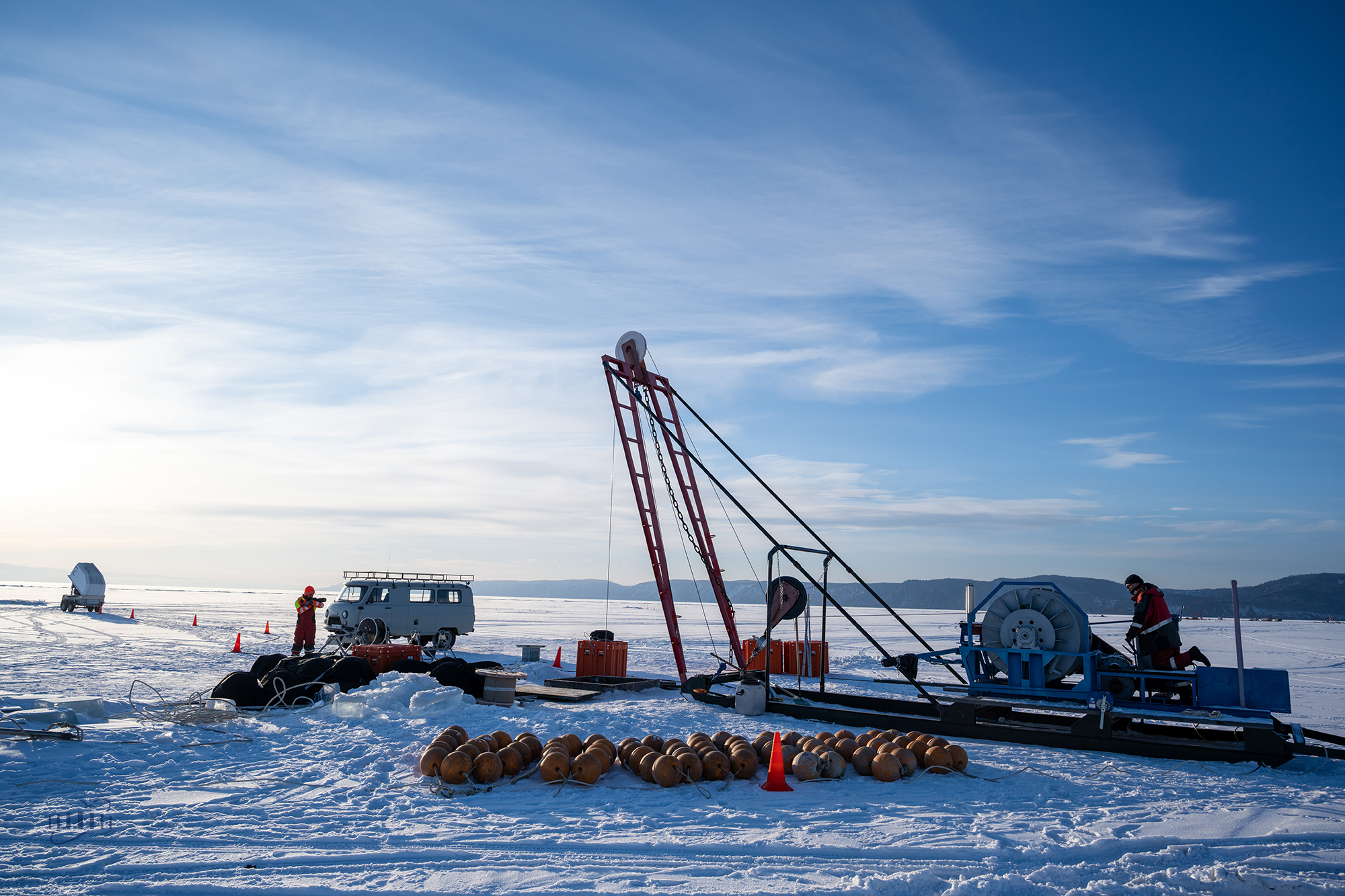
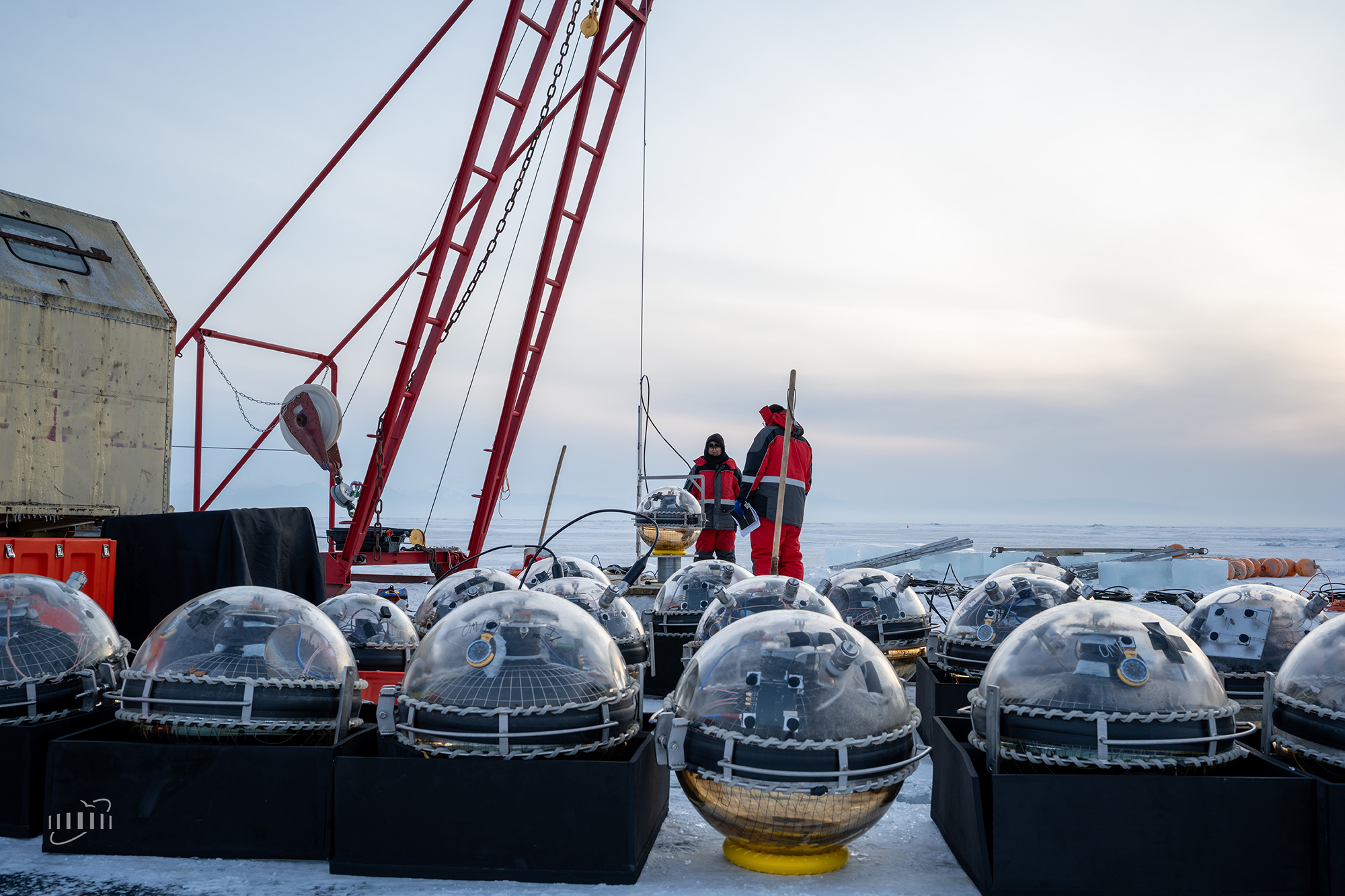
During the expedition, participants of the international Baikal-GVD Collaboration constructed the telescope’s clusters 15 and 16. Each one is an independent detector consisting of eight vertical strings, with 36 optical modules per string. The configuration of the last three clusters (14–16) included external strings with calibration laser light sources.
The specialists carried out scheduled maintenance and modernisation of the clusters 6 and 10, as well as a prototype of the next-generation neutrino telescope string together with the Institute of High Energy Physics of the Chinese Academy of Sciences. In addition, a full-scale string with optical modules based on 20-inch photomultipliers was commissioned. For the two new clusters, a special bottom cable was laid for energy supply and data transmission. Thus, the underwater structure now includes almost 4900 optical modules.
In accordance with the joint work plan, colleagues from Irkutsk State University and the Limnological Institute of the RAS Siberian Branch conducted a number of hydrological experiments.
In 2026, works on ice finished a few days ahead of schedule due to the lack of snow in the second half of the expedition. The bright spring sun and warm weather dramatically changed the ice’s structure, decreasing its bearing capacity. Nevertheless, almost all the plans of the expedition, which included more than 70 participants from the institutes and scientific organizations of the collaboration, were fully implemented.
“This year, the ice cover on Lake Baikal was almost perfectly flat and more than 60 centimeters thick by the time the first team arrived”, Head of the Baikal-GVD Facility at the Laboratory of Nuclear Problems at JINR, Collaboration Deputy Head Igor Belolaptikov said. “The beginning of the expedition was marked by cold weather (daytime temperatures hovered around -20 °C) during the first two weeks, but despite such harsh conditions, installation began on the third day after the first group came. This was facilitated by careful preparation for the work and newly introduced technological solutions for building the facility. The absence of snowfall and strong winds for almost the entire period of ice works accelerated the installation, though it meant a lack of rest the team working on ice. However, the main team demonstrated strong willpower, and following their example, new expedition members performed excellently. Almost all plans were completed, and a record was hit in terms of the number of new optical modules installed in a single season – 756 (or 21 strings), not including those deployed by our Chinese colleagues”.
Head of the High Energy Neutrino Astrophysics Laboratory of the RAS Institute for Nuclear Research, Baikal-GVD Collaboration Head Zhan-Arys Dzhilkibaev noted that the telescope’s successful deployment is largely facilitated by its modular structure. This configuration allowed conducting studies of natural neutrino fluxes at a high level of sensitivity at the early stages of the detector’s creation.
According to the researcher, the analysis of experimental data collected over 2018–2023 already yielded great results: the participants of the Baikal-GVD Collaboration were the first to independently confirm the data of the IceCube Antarctic Experiment on the registration of a diffuse cosmic neutrino flux, detected a 200 TeV particle flux from the Milky Way, found out constraints on the magnitude of the cosmogenic neutrino flux in the energy range above 10 PeV, and registered a number of indications of the existence of local neutrino sources both in our Galaxy and outside of it.
“Finishing the construction of the neutrino telescope in the next 2–3 years and commissioning it in the design configuration with a volume of one cubic kilometre will allow us to obtain unique results in exploring our universe”, Zhan-Arys Dzhilkibayev summarised.
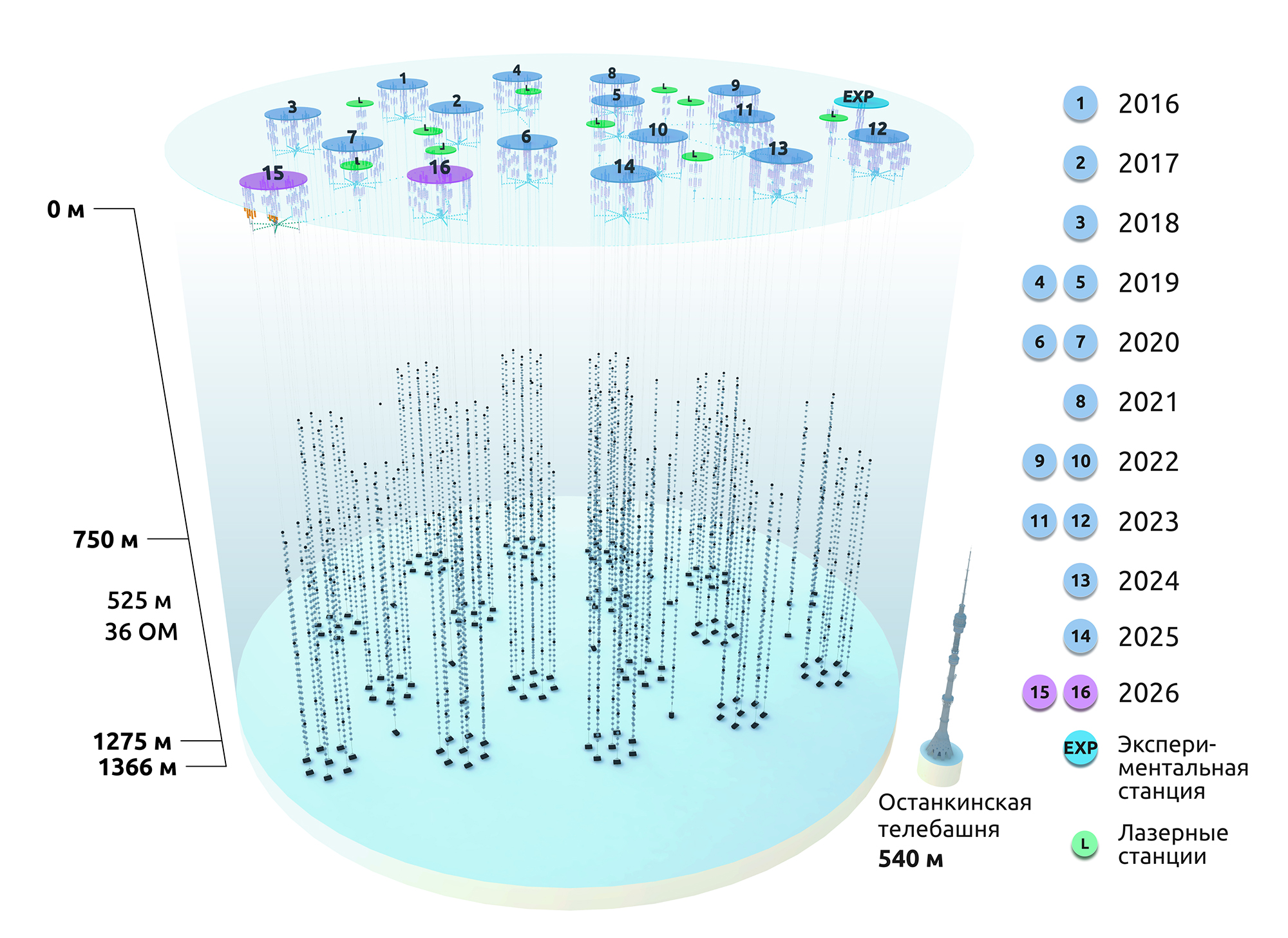 Scheme of the Baikal-GVD Neutrino Telescope
Background information
The Baikal Neutrino Telescope (Baikal-GVD) is a neutrino detector located in Lake Baikal at a distance of 3.6 km from the shore and a depth of about 1300 m. It is the largest neutrino telescope in the Northern Hemisphere and the second largest in the world.
This unique scientific facility is an important tool for multi-channel astronomy, a new method of exploring the universe. Baikal-GVD is one of the three operating large-scale neutrino telescopes in the world. Along with IceCube at the South Pole and KM3NeT in the Mediterranean, it is part of the Global Neutrino Network.
The telescope is designed for the detection and study of ultrahigh-energy neutrino fluxes from astrophysical sources. Using it, scientists are going to study not only processes with huge energy release that happened in the distant past, but also galaxy evolution, formation of supermassive black holes, and particle acceleration mechanisms.
Baikal–GVD is being constructed by the international collaboration with a leading role of the RAS Institute for Nuclear Research and the Joint Institute for Nuclear Research. In total, more than 70 scientists and engineers from nine research centres of Russia, Kazakhstan, Slovakia, and the Czech Republic are participating in the project.