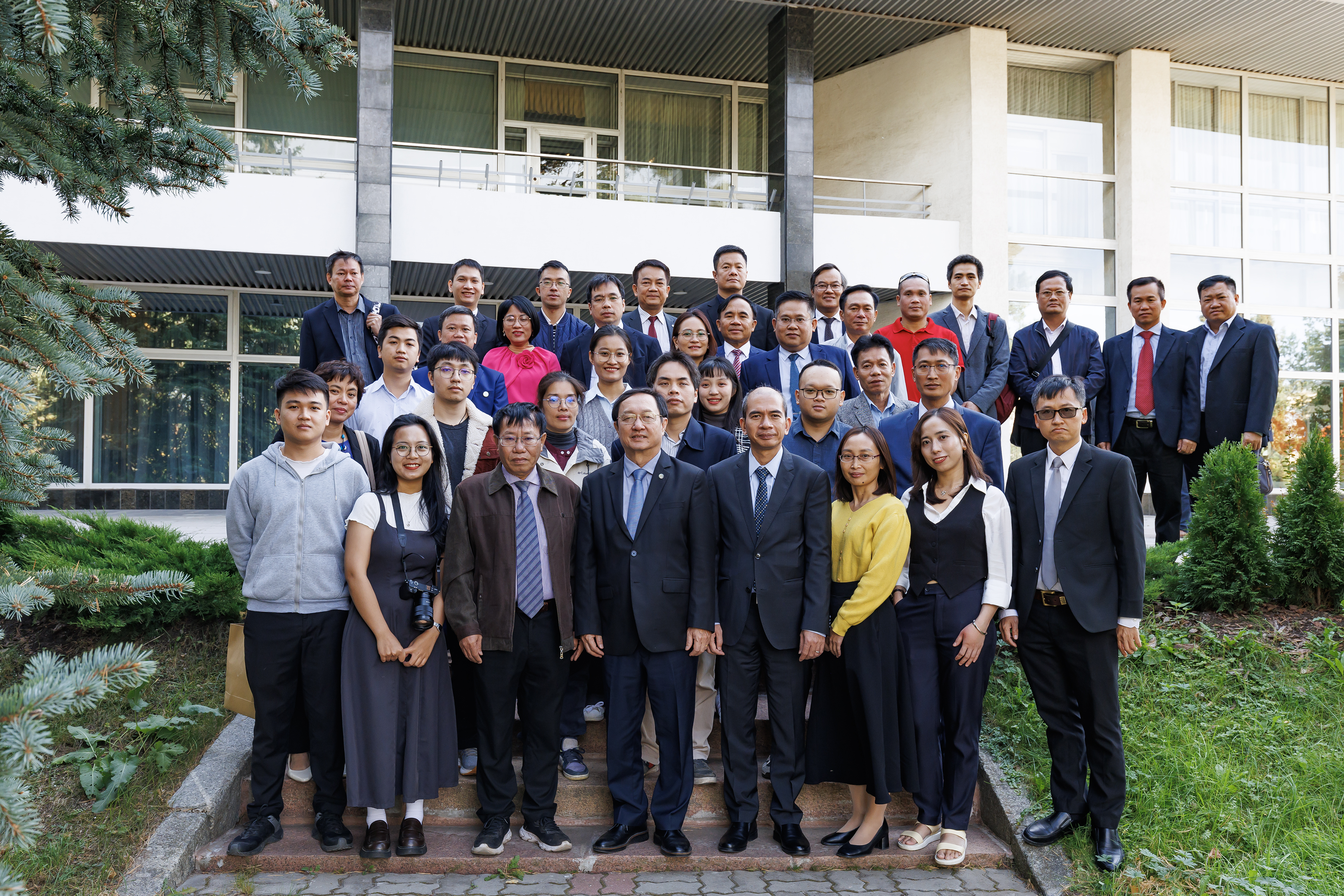
On 26 September, a Vietnam delegation headed by Minister of Science and Technology of the Socialist Republic of Vietnam (SRV) Huynh Thanh Dat visited the Joint Institute for Nuclear Research. Topping the agenda were personnel training for a research reactor planned to be created in Vietnam, the involvement of the Republic’s employees in key JINR projects, and JINR’s support for a project to create an accelerator complex in Hanoi.
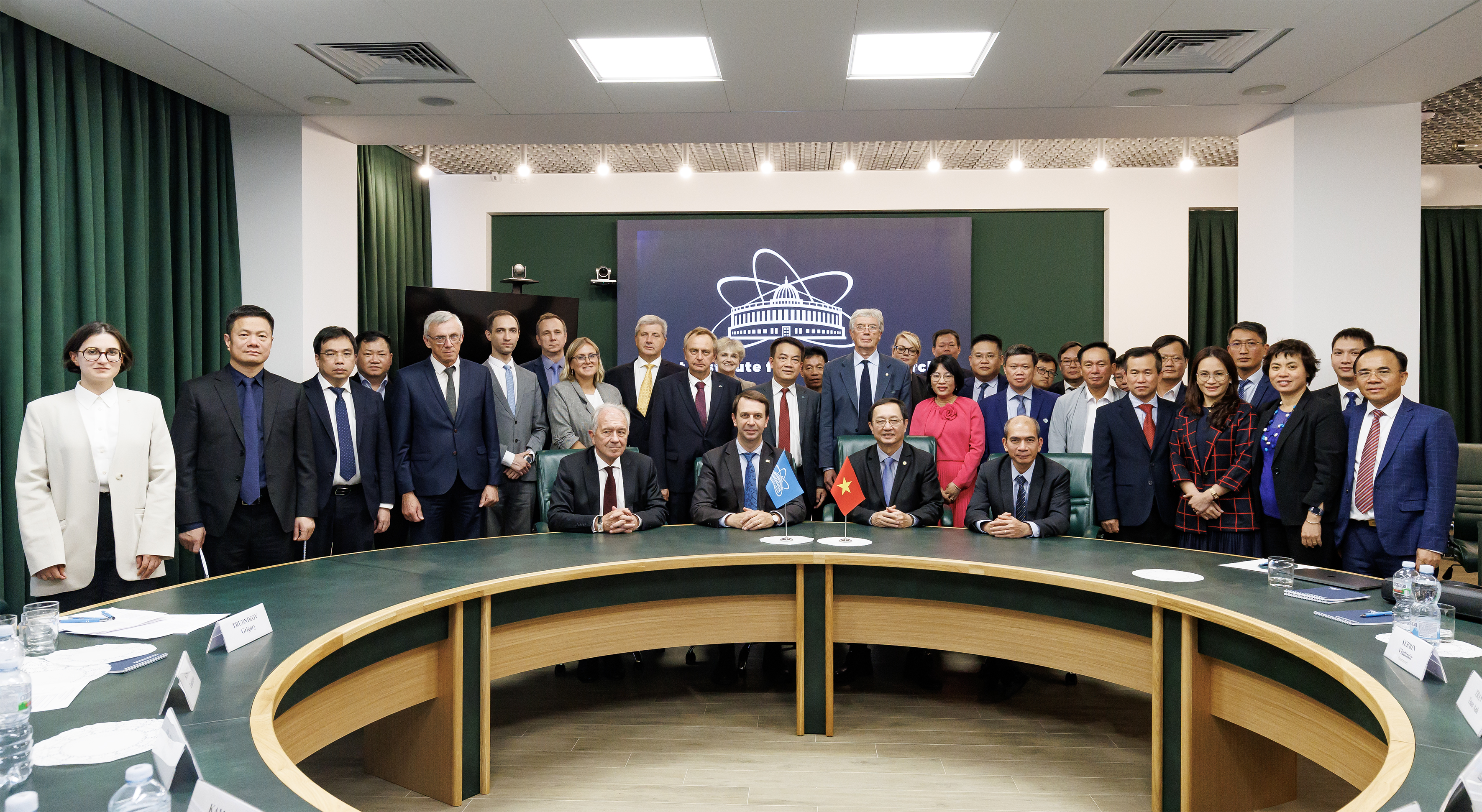
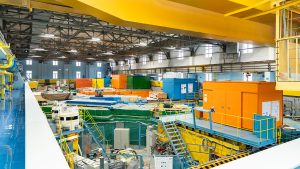
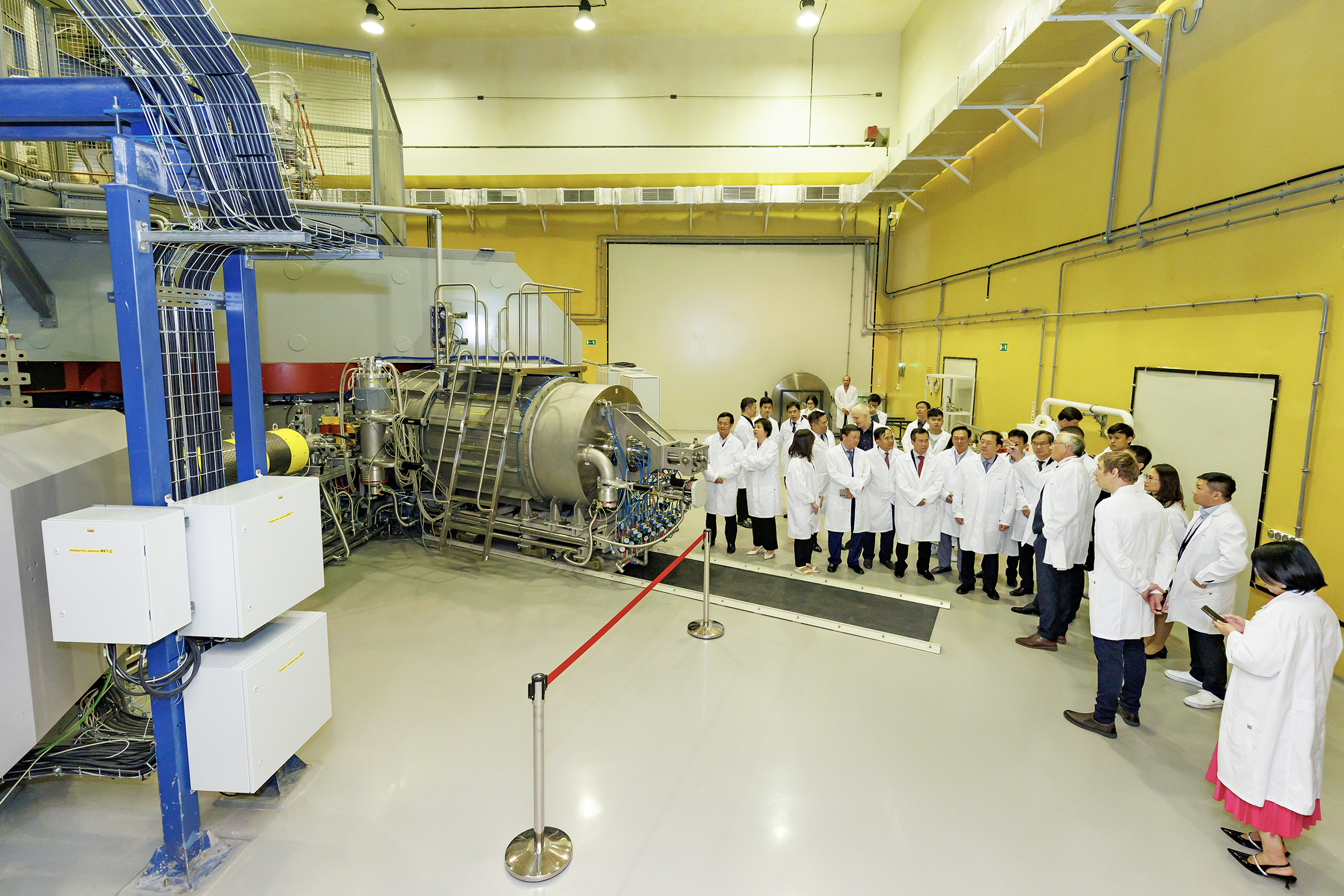
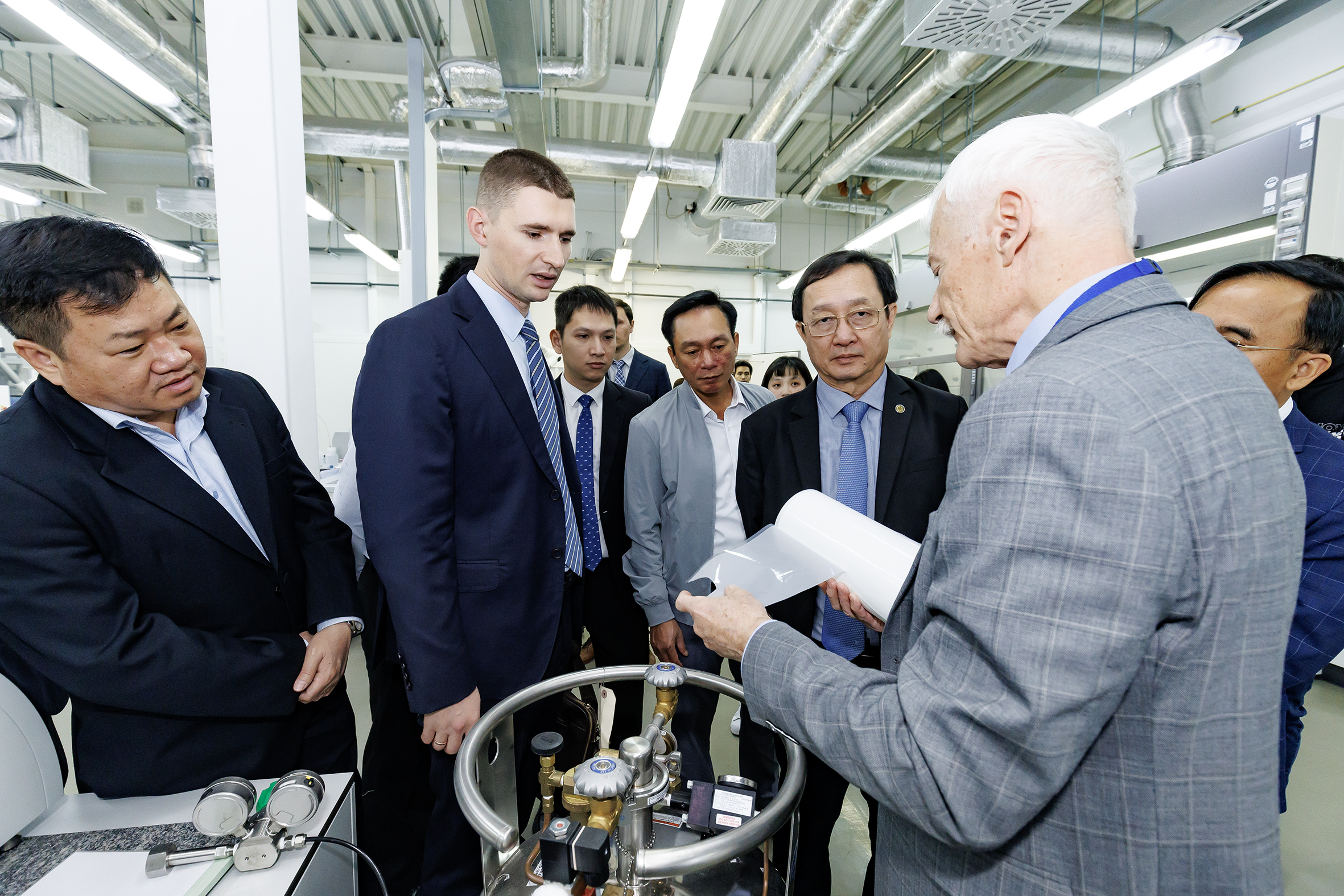
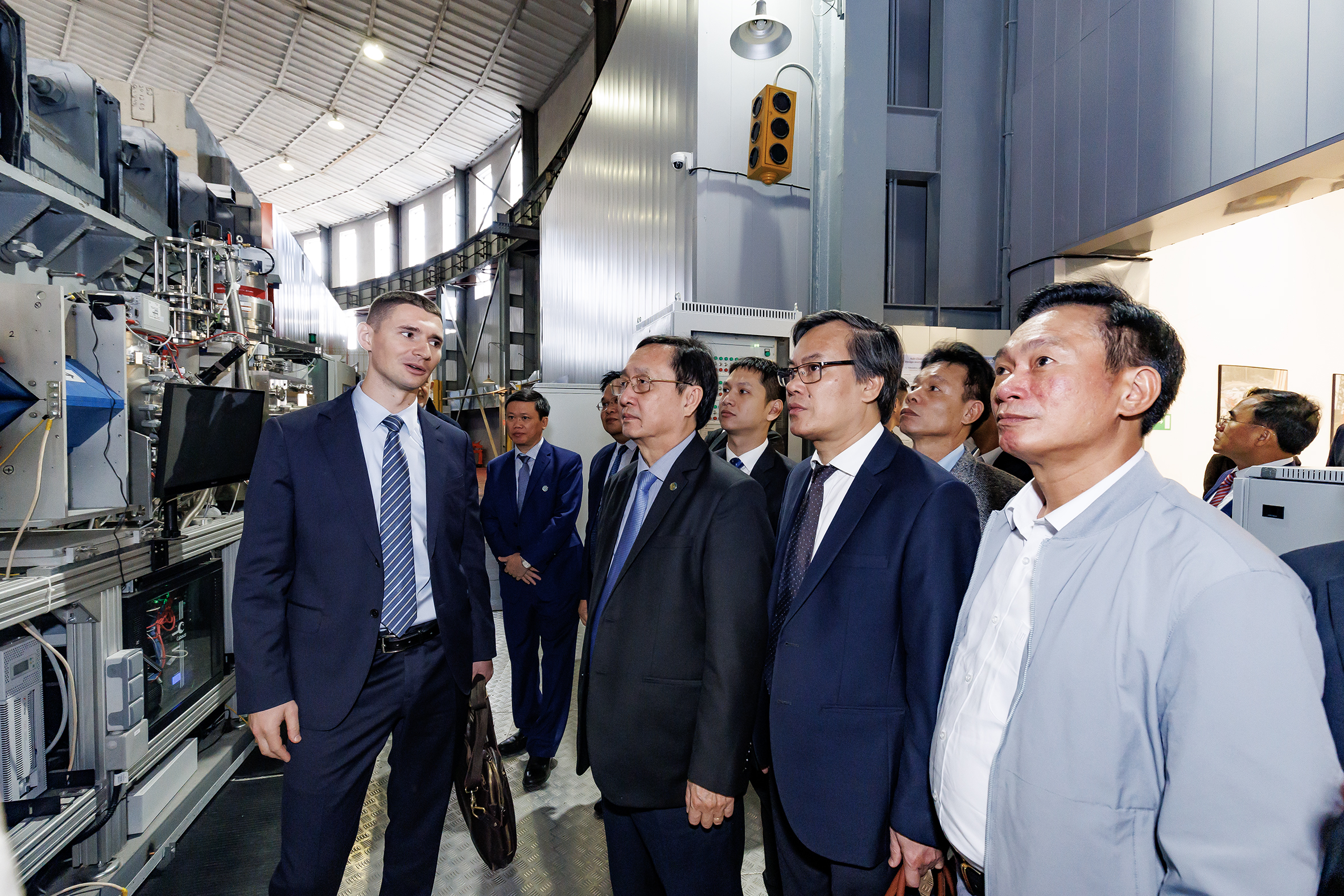
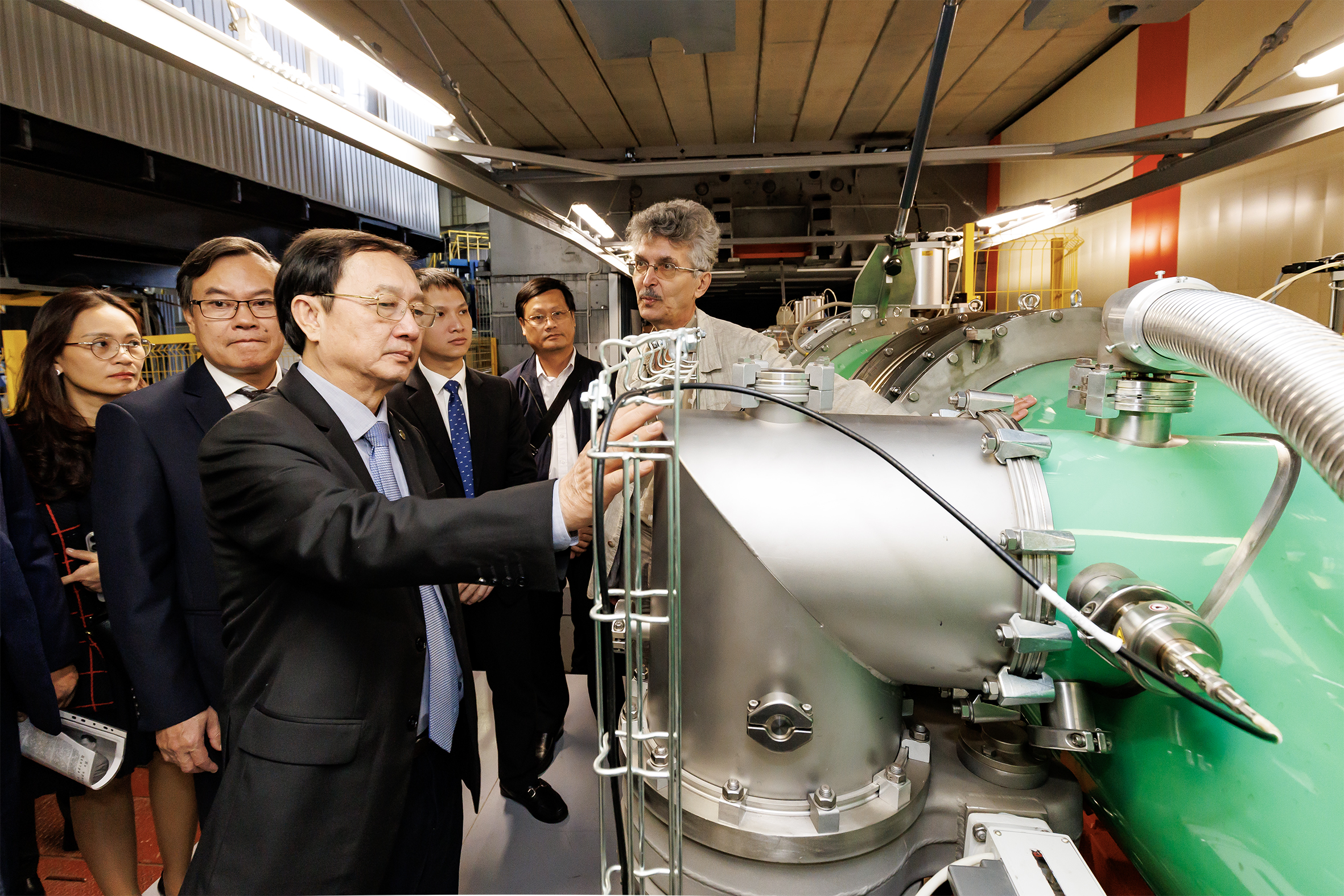
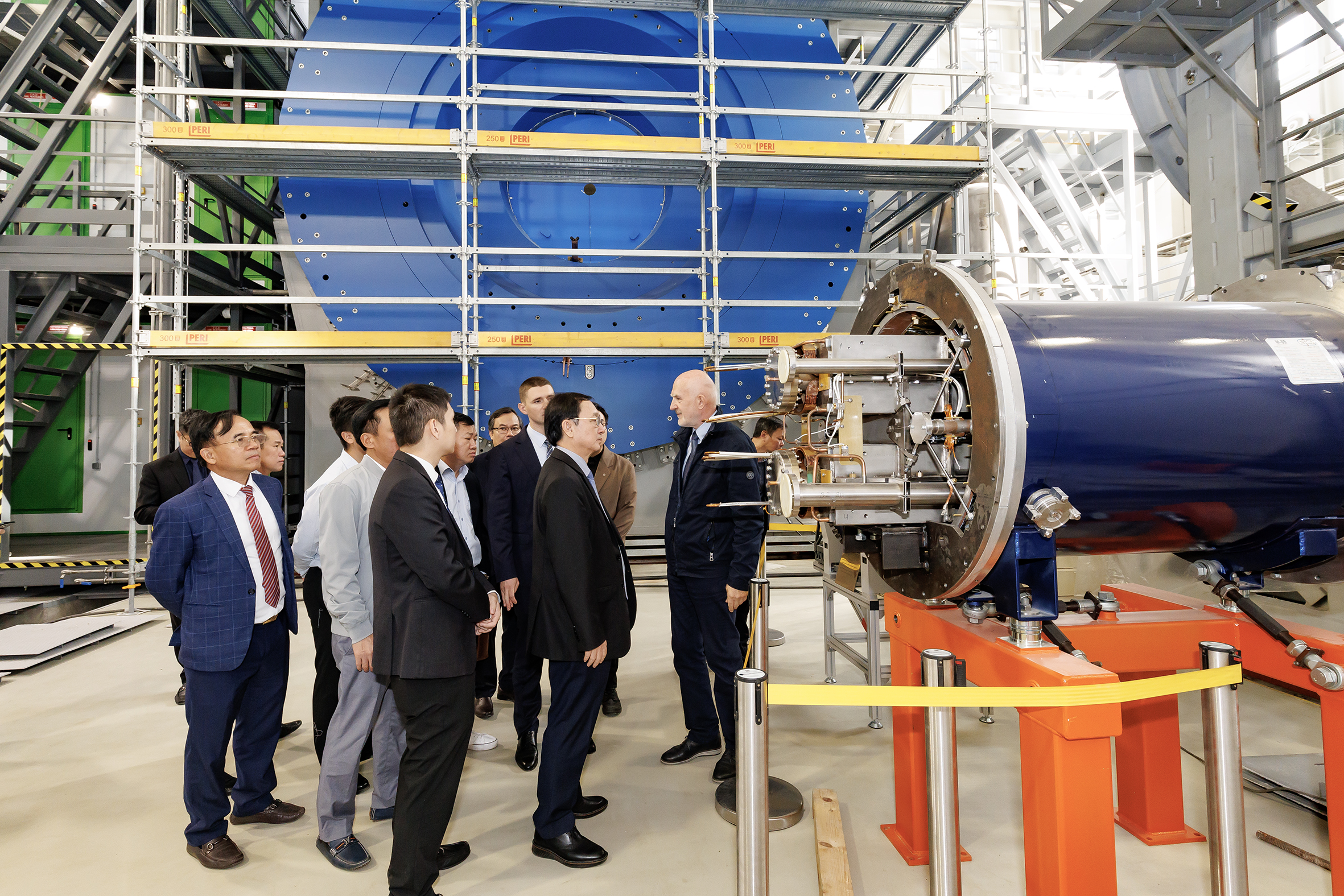
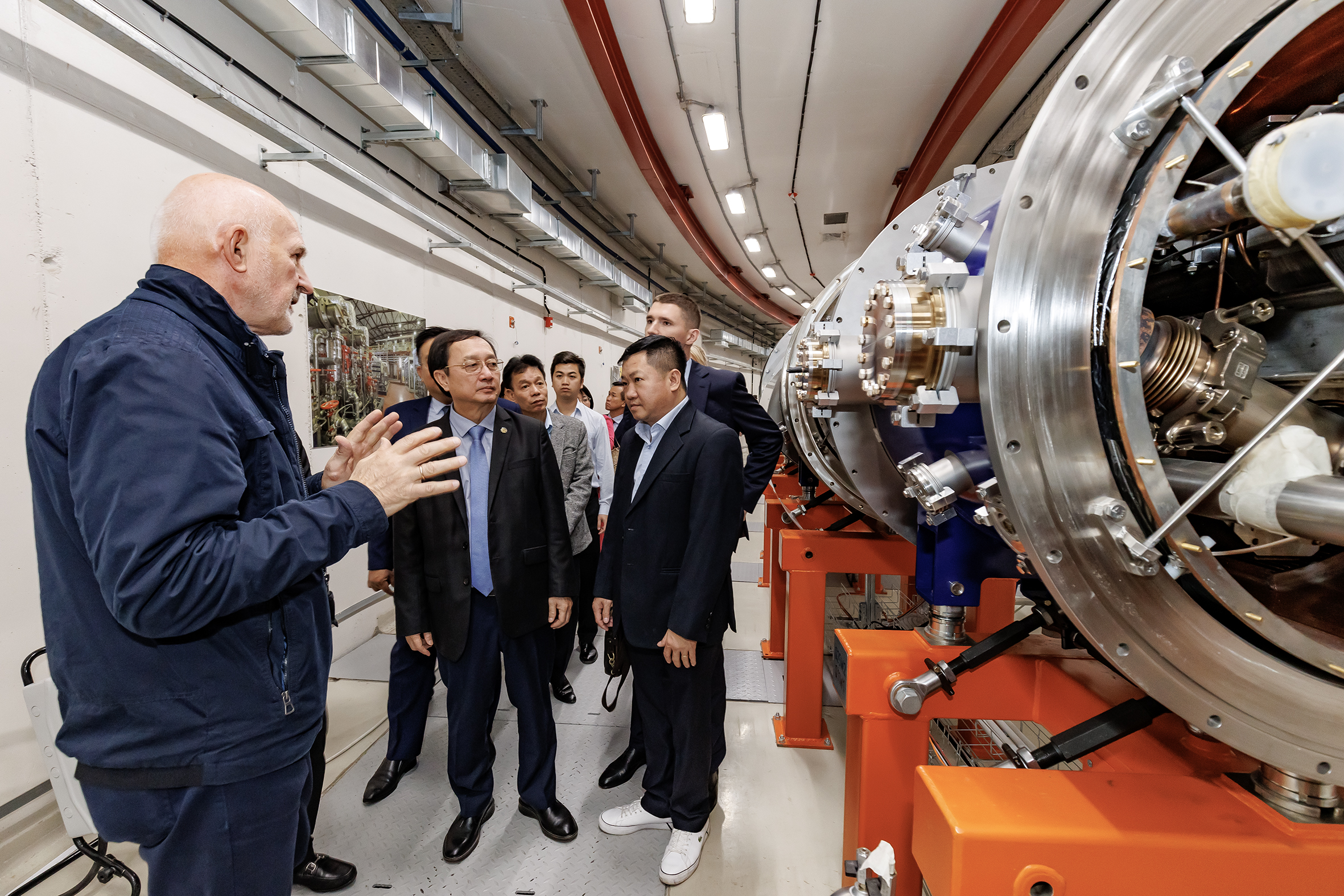
A meeting of the Vietnam–JINR Joint Coordination Committee Scientific Projects took place at the JINR International Conference Centre. At FLNR and VBLHEP JINR, the Republic’s delegation got acquainted with the Institute’s flagship facilities: the Superheavy Element Factory and the NICA Complex, as well as the work of the FLNR Nanocentre. The visit’s results were summarised at a meeting with the leadership of the Joint Institute.
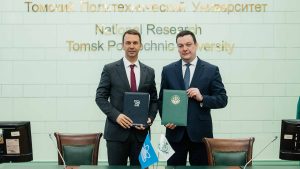
JINR Director Grigory Trubnikov expressed his commendation to Minister Huynh Thanh Dat for his willingness to dedicate a full working day to a detailed introduction to the Joint Institute and to Plenipotentiary of Vietnam to JINR Tran Tuan Anh for his active assistance in expanding the country’s participation in JINR’s activities. The Institute’s Director highlighted the rapid development of the JINR–SRV cooperation. High-level meetings take place several times a year: this year, the Chair of the JINR Committee of Plenipotentiaries visited Hanoi, and the Institute hosted meetings with the Plenipotentiary of SRV and the President of the Vietnam Academy of Science and Technology (VAST). “Vietnam pays great attention to cooperation with Dubna, and the country’s researchers are widely engaged in the Institute’s activities”, Grigory Trubnikov emphasised. The JINR Director noted that the most important indicators of the partnership’s progress are the rising number of SRV scientists working at the Institute – currently about 40 employees – and the increase in joint publications by scientists from the Republic and other JINR Member States.
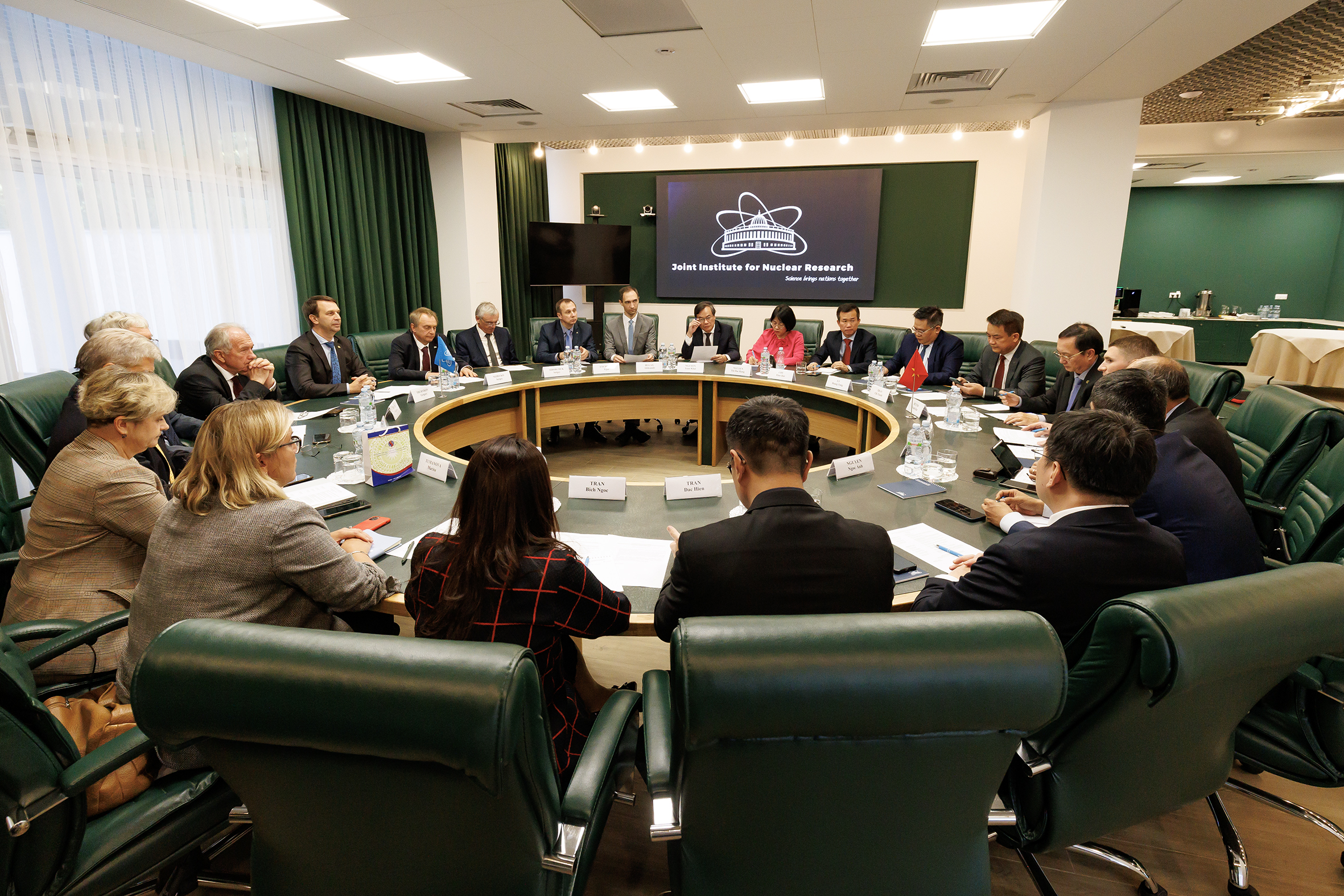
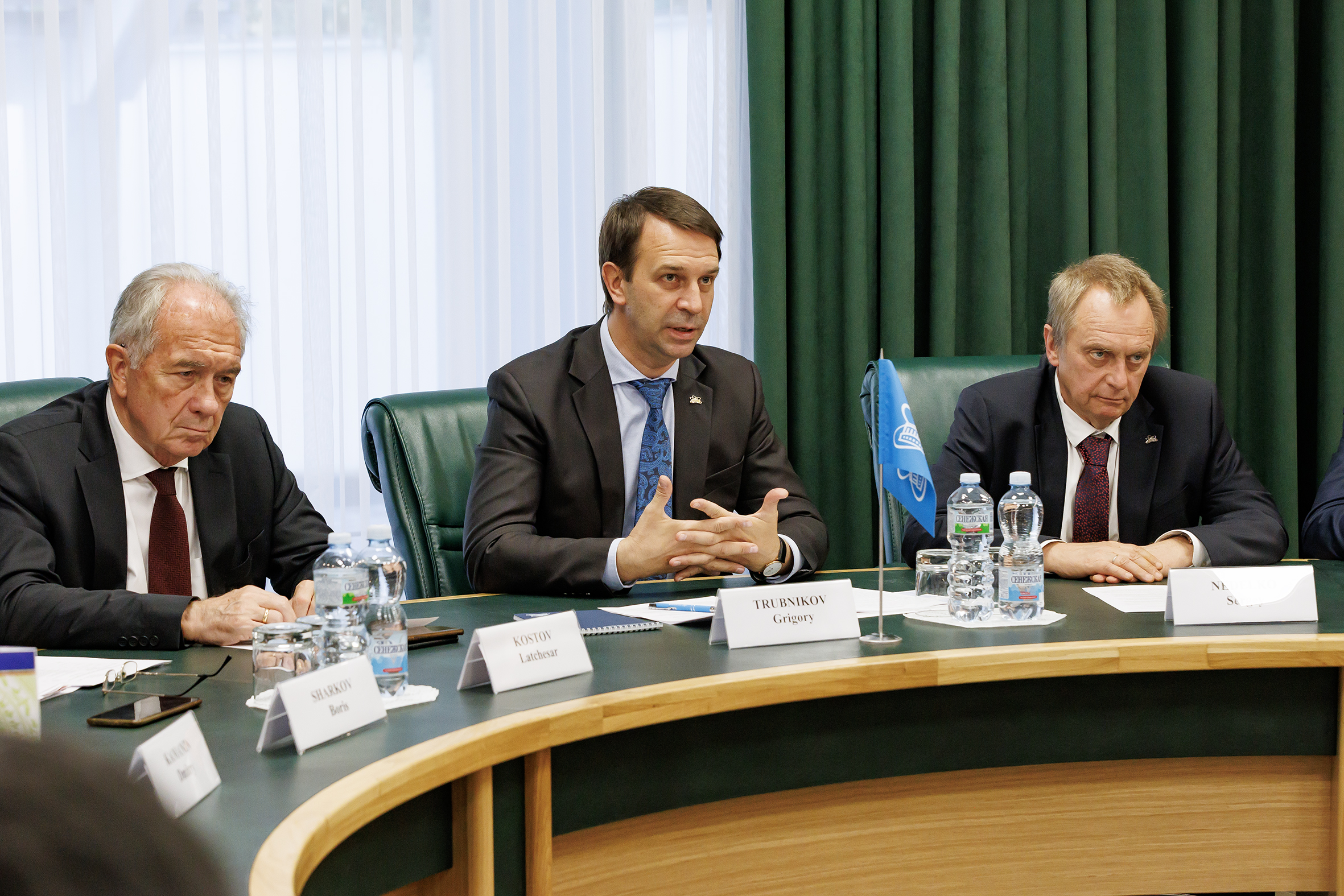
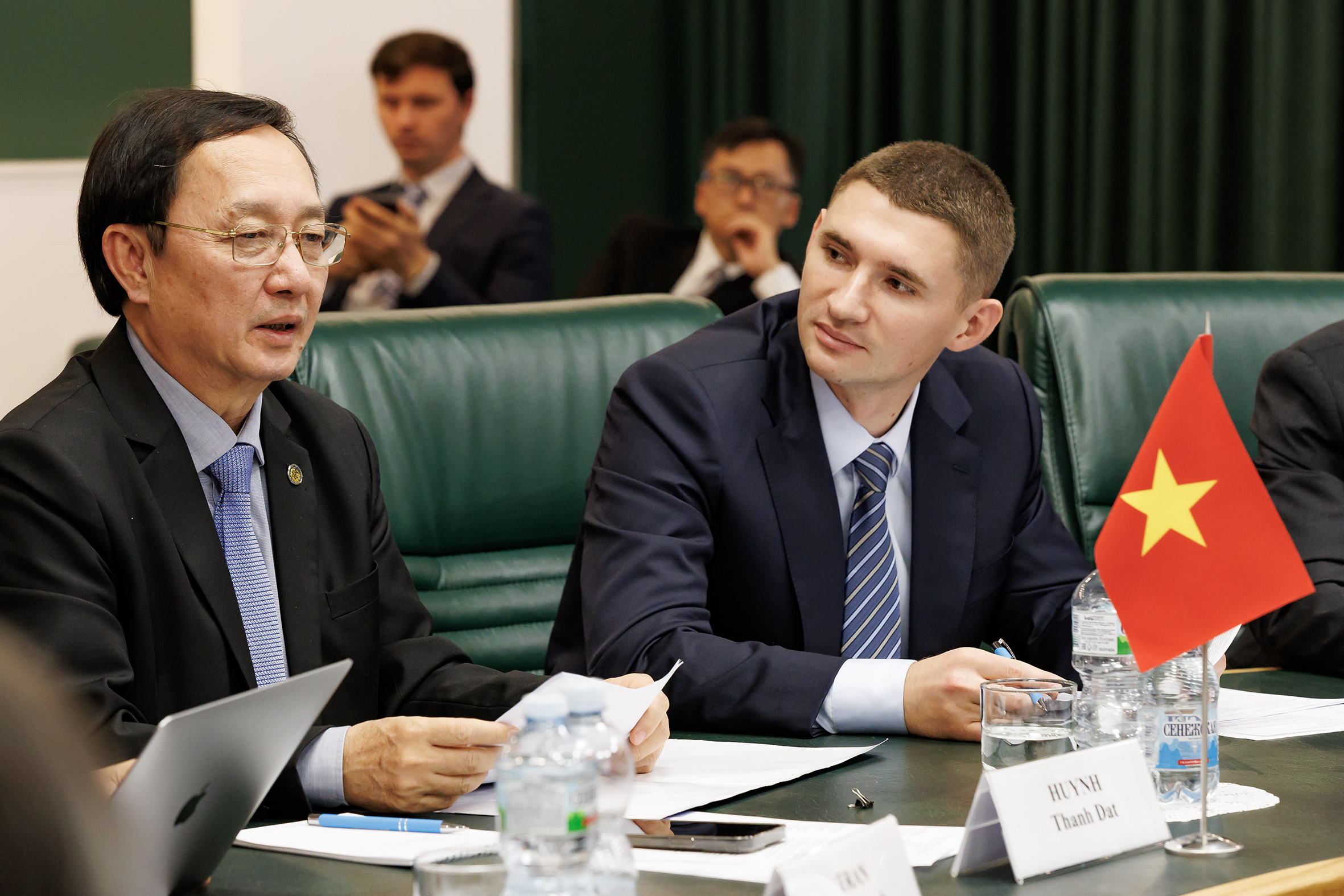
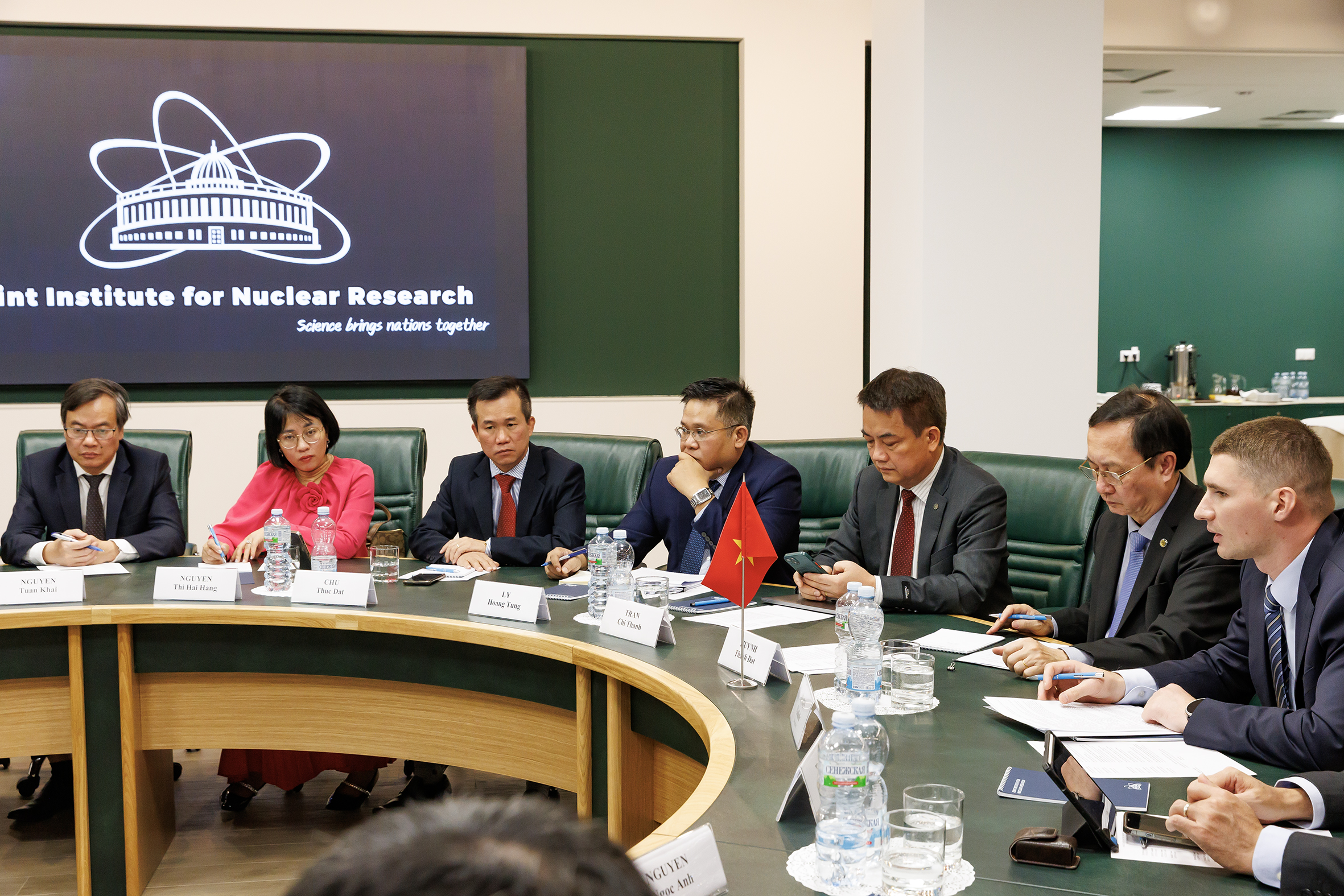
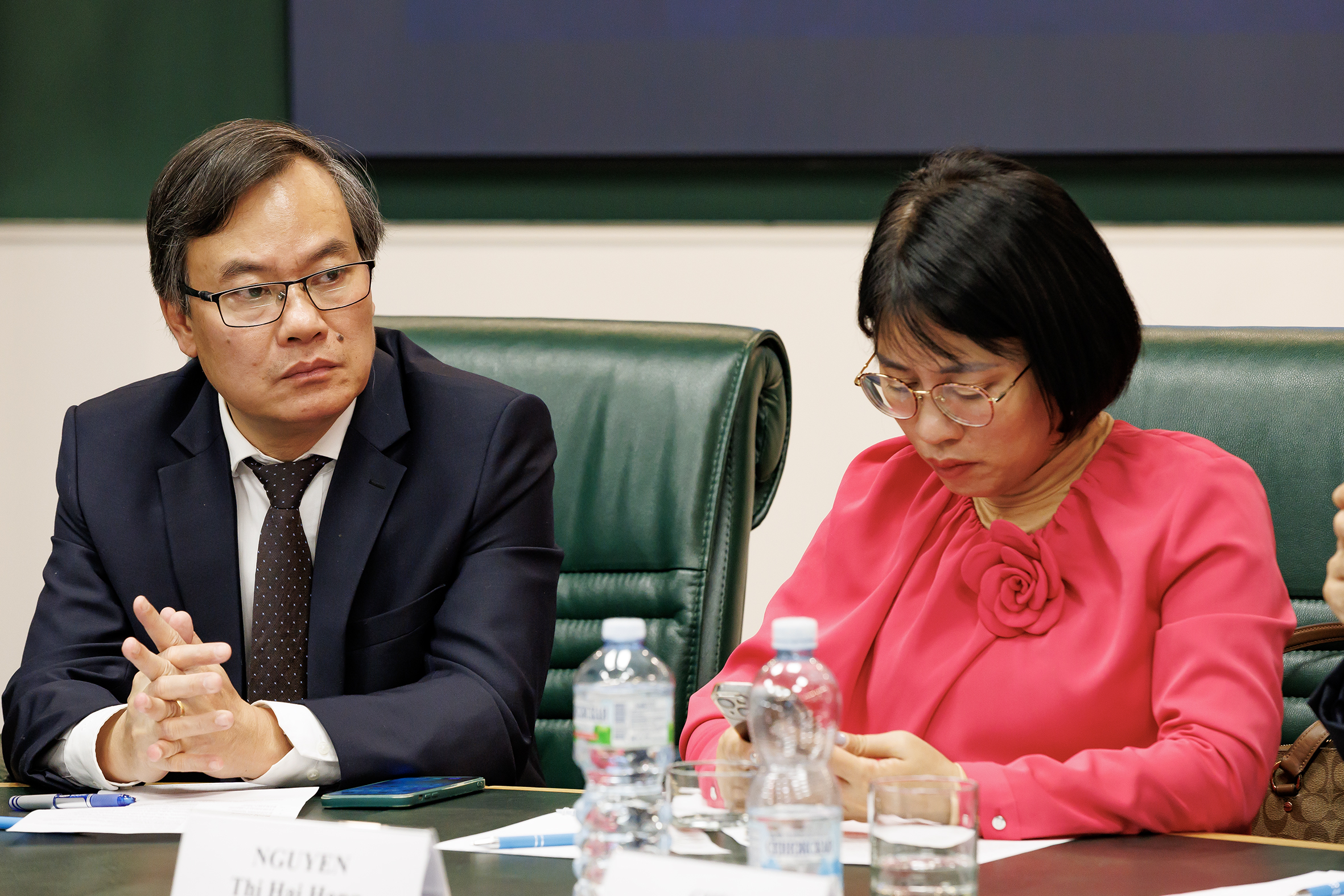
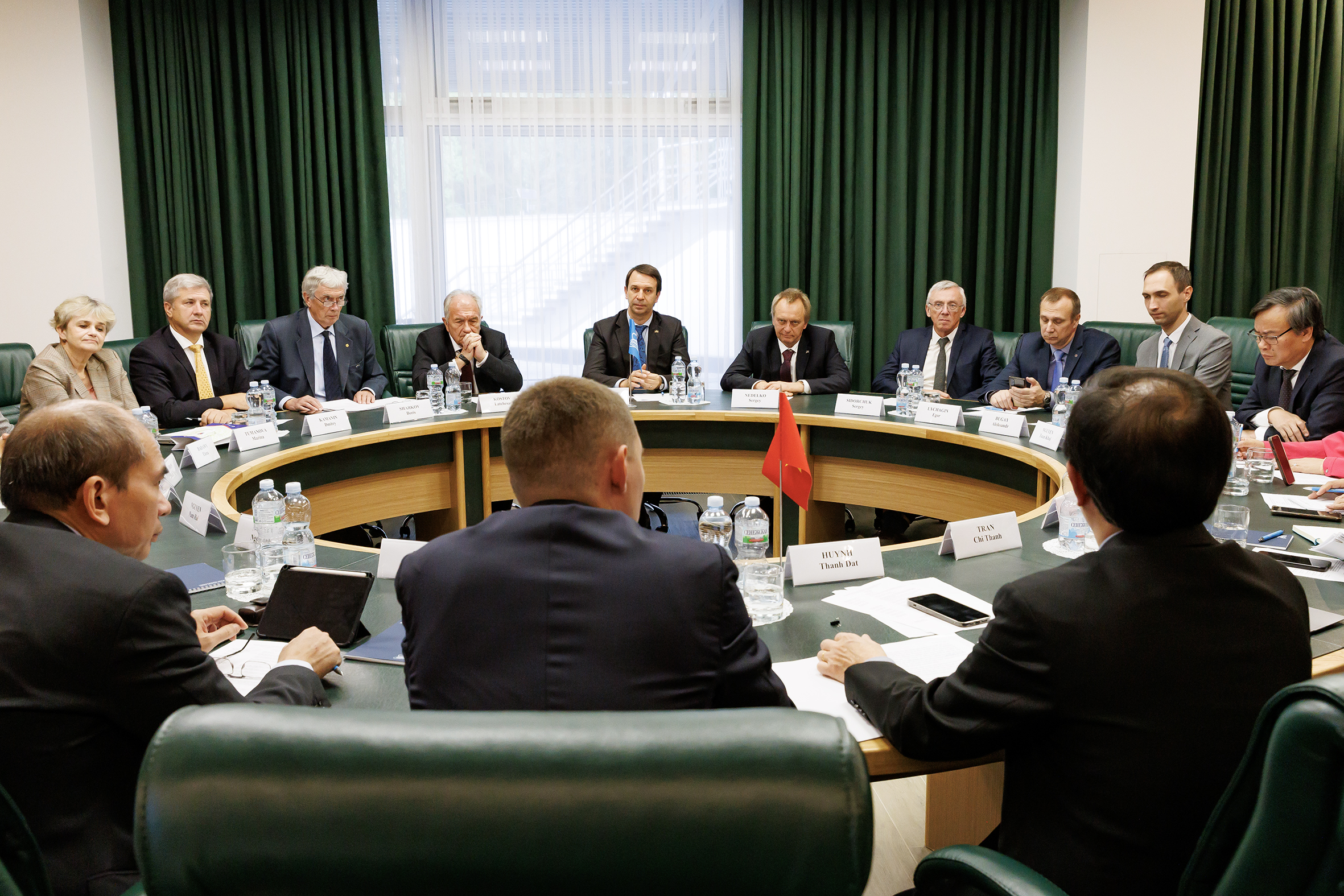
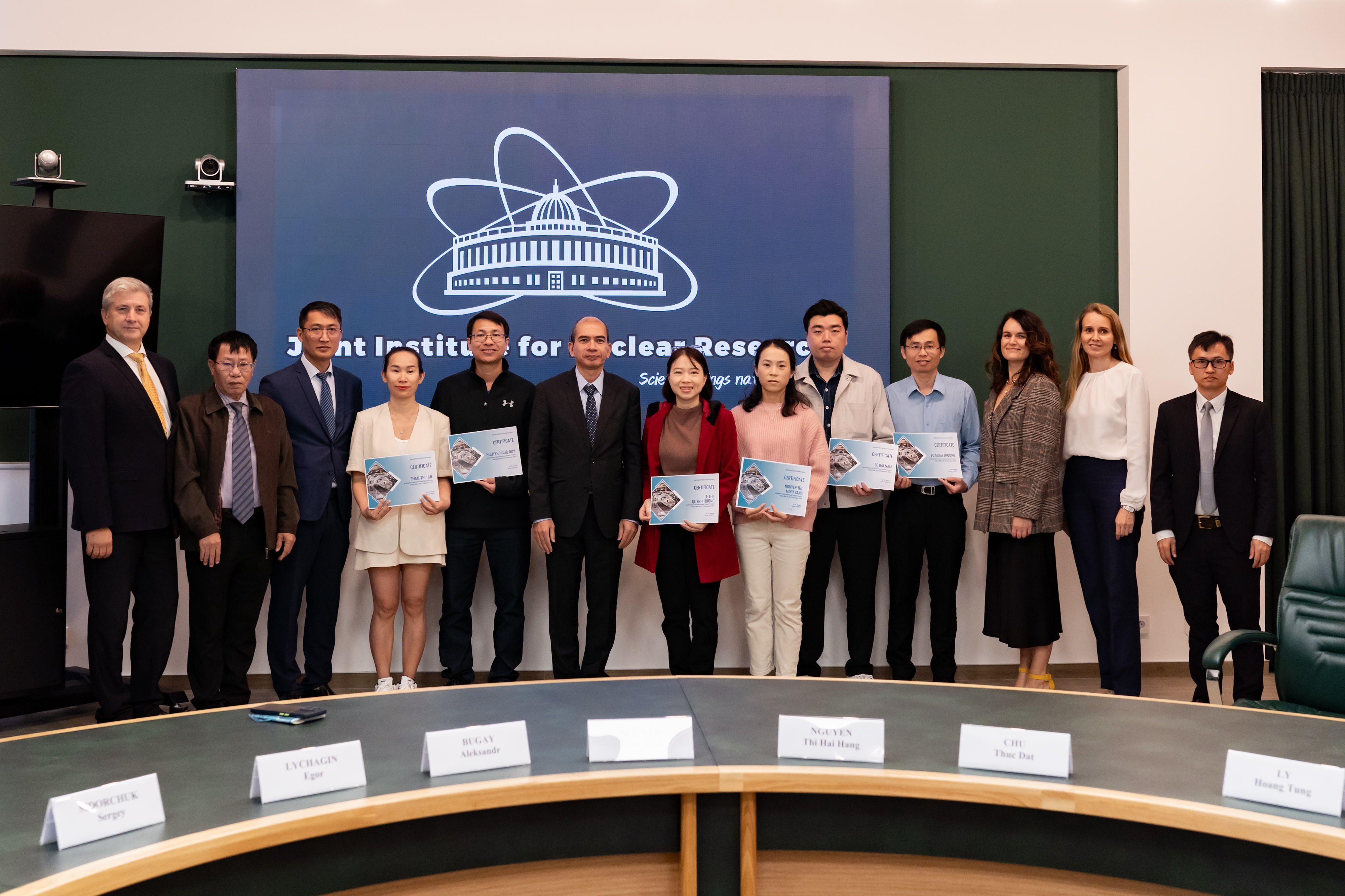
Huynh Thanh Dat thanked the Institute’s leadership on behalf of the ministry for warmly welcoming the delegation. “Over the years of joint work, we have achieved great results in peaceful atomic energy research and other areas of mutual interest. JINR is a cradle of scientific studies proudly demonstrating remarkable achievements and preparing generations of leading specialists and scientists in nuclear physics. The Dubna institute is vital for us ever since our country became a Member State. Many SRV nuclear scientists were trained here, including such outstanding figures as Professor Nguyen Dinh Duc and Academician Nguyen Van Hieu”, Vietnam’s Minister of Science and Technology said. He noted that young SRV researchers were pleased with their internships at JINR, sharing positive feedback on every aspect from the training process to living conditions. “During our visit to the Institute’s laboratories, I was deeply impressed by the modern equipment and the highly professional research environment. With such an infrastructure and a team of highly qualified specialists passionate about the studies, it seems to me that the Institute’s continuous accomplishments are entirely natural”, Huynh Thanh Dat summarised.
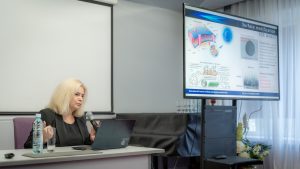
The co-chairs of the Joint Coordination Committee on Scientific Projects summarised results of the committee’s work. JCC Co-chair Boris Sharkov provided an update on the implementation of six joint projects and five grants from the Plenipotentiary of Vietnam. BLTP, FLNP, FLNR, and UC JINR are involved in the projects. Particular attention is paid to the project to create a VINATOM–JINR laboratory. Its core facility will be a research reactor planned to be built in the south of the Republic as part of the the Vietnam–Rosatom programme. At the meeting, a talk was delivered on the results of an accelerator technology workshop held at JINR in September with the participation of five Vietnamese specialists. The parties discussed organizing and conducting a JEMS course for representatives of Southeast Asian countries and Vietnam’s participation in other JINR educational programmes. At the JCC meeting, six SRV graduates of the September International Student Practice received their diplomas. Another important topic was planning bilateral visits and conducting a number of events. The Head of the Republic’s National Group at JINR made a presentation.
Director of the JINR University Centre Dmitry Kamanin noted that the training of personnel for Member States always was among the Institute’s priorities alongside research. “Twenty-eight SRV representatives already participated in our programmes for research leaders and coordinators, resulting in contacts established with a number of universities. The ambitious scientific tasks set by the leadership of Vietnam and JINR require extensive efforts in personnel training”, Dmitry Kamanin said. In regard to human resources, the focus will be on establishing contacts with universities for students to complete qualification papers at JINR. Vietnam representatives studying in Russian universities will be involved as well. Another potential cooperation area is the creation of a JINR Information Centre in Ho Chi Minh City – a future venue for many joint events. To discuss both formats, UC JINR employees will take a work trip to Vietnam in October.
JCC Co-Chair, Vice President of the Vietnam Academy of Science and Technology, Plenipotentiary of the SRV to JINR Tran Tuan Anh made a speech expressing gratitude to the Institute’s Directorate for support in managing the impact of the recent hurricane in the Republic. In addition, he noted that during his tenure as the Plenipotentiary of Vietnam, the number of representatives of this country in JINR and publications by Vietnamese employees increased. JINR actively cooperates with VAST and the leading SRV scientific organizations, develops educational programmes with three universities of the Republic, organizes joint conferences and seminars. For example, the country will host a conference on nuclear energy applications in the autumn. He called the construction of a nuclear centre and a joint laboratory with a research reactor as the core facility in Vietnam one of the significant milestones of JINR–SRV bilateral cooperation and noted the high quality of nuclear specialists’ training.
Director of the Vietnam Atomic Energy Institute (VINATOM), member of the JINR Scientific Council Tran Chi Thanh continued the topic. “Dubna is an ideal place to train senior personnel for the nuclear industry”, he stated. Tran Chi Thanh expressed the party’s interest in engaging JINR in personnel training in 2025–2030 for the future reactor, one of the four applied research channels of which will be allocated for JINR scientists. In addition, he proposed to create a long-term training programme in certain areas and asked JINR to consider providing assistance in selecting and supplying equipment for the new accelerator centre, which will be located in the Hanoi suburbs.
Director of the Agency for Radiation and Nuclear Safety of the Vietnam Ministry of Science and Technology Nguyen Tuan Khai noted that the country’s key goal in scientific cooperation with JINR is personnel training and the effective use of laboratory facilities. He expressed hope that Vietnamese employees would participate in JINR’s leading nuclear research groups and develop their own research areas of high importance to the country, as well as that young SRV specialists joining the Institute’s educational programmes would receive scholarships. Nguyen Tuan Khai highlighted the significance of establishing a nuclear research centre and a laboratory with a research reactor as its core facility. In his opinion, with JINR’s participation, the centre can become international. In addition, he noted that JINR could participate in creating a roadmap for VINATOM and the countries of Southeast Asia to efficiently operate the new reactor after its commissioning.
At the end of the meeting, Grigory Trubnikov thanked the representatives of the Ministry of Science and Higher Education of the Russian Federation for organizing the visit of Huynh Thanh Dat to JINR and expressed confidence in the comprehensive development of cooperation. The JINR Director confirmed the Joint Institute’s interest in creating a research channel at the future reactor and the project as a whole, as well as in participating in the engineering of equipment for the accelerator centre. In addition, he supported the proposal to hold internships for Vietnamese specialists at JINR, including in-person and online student schools, conferences, and professional development events at the future Information Centre.
At the high-level meeting, JINR was represented by Director Grigory Trubnikov, Vice-Director Latchesar Kostov, Chief Scientific Secretary Sergey Nedelko, laboratory directors Sergey Sidorchuk (FLNR), Egor Lychagin (FLNP), Aleksander Bugay (LRB), Special Representative of the Institute’s Director for Cooperation with International and Russian Scientific Organizations Boris Sharkov, UC JINR Director Dmitry Kamanin as well as JINR employees from Vietnam – an FLNP leading researcher Le Hong Khiem and an FLNR researcher Nguyen Van Tiep.
The Vietnamese delegation included more than twenty employees and heads of the Republic’s Ministry of Science and Technology, Vietnam Atomic Energy Institute, and the SRV Embassy in the Russian Federation as well as the Russian Ministry of Science and Higher Education. The key figures were Minister of Science and Technology of Vietnam Huynh Thanh Dat, Vice President of the Vietnam Academy of Science and Technology Tran Tuan Anh, VINATOM Director, member of the JINR Scientific Council Tran Chi Thanh, Chief Representative of the Ministry of Science and Technology of Vietnam, First Secretary of the SRV Embassy in the Russian Federation Nguyen Ngoc Anh, and Director of the Agency for Radiation and Nuclear Safety of the Ministry of Science and Technology of Vietnam Nguyen Tuan Khai.