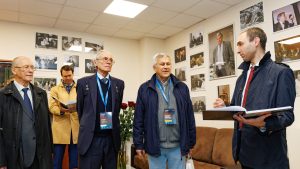
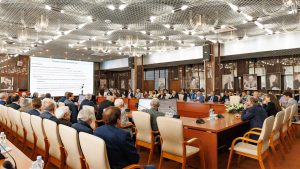
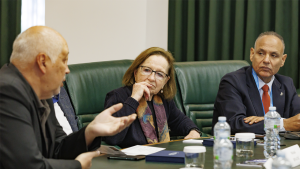
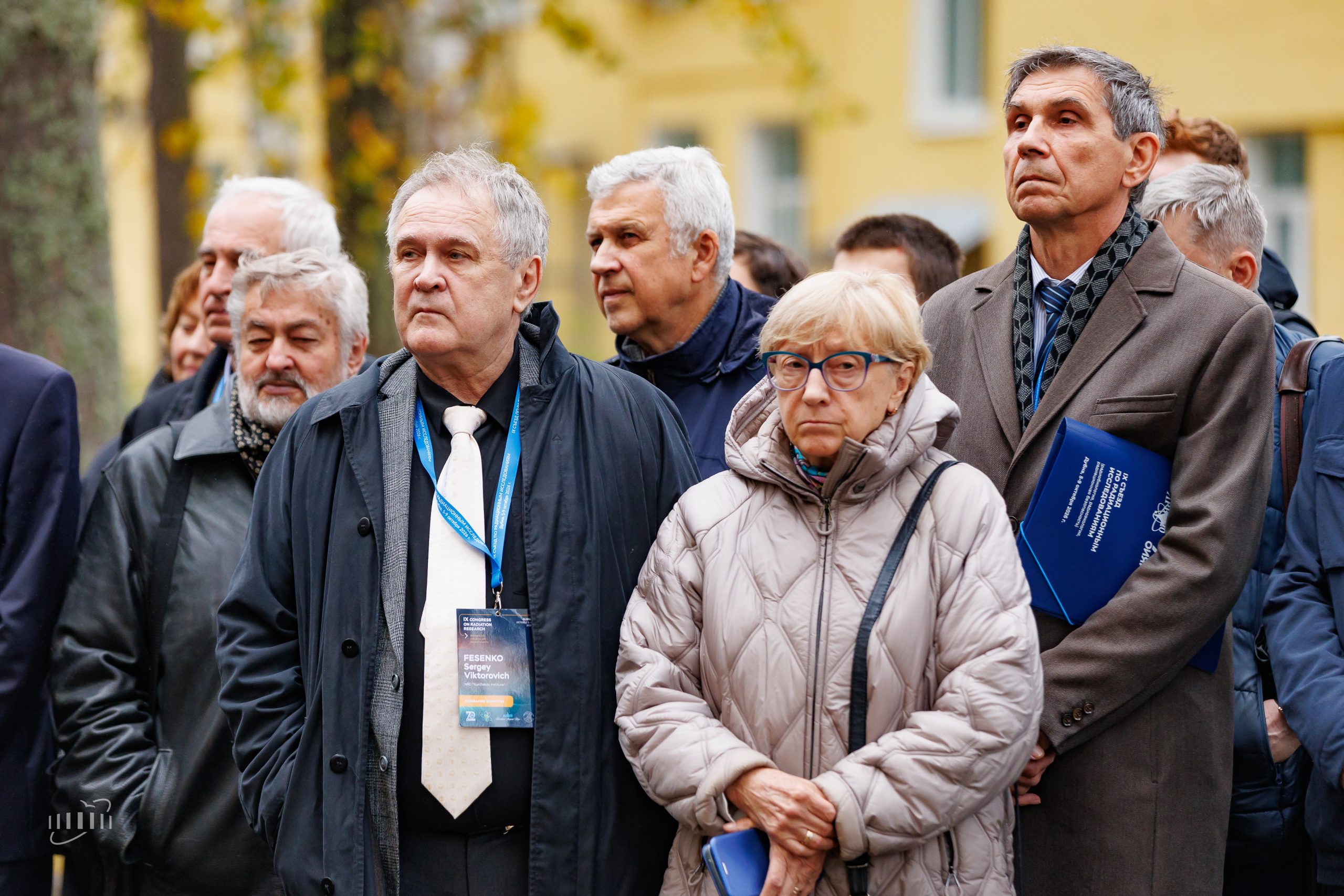
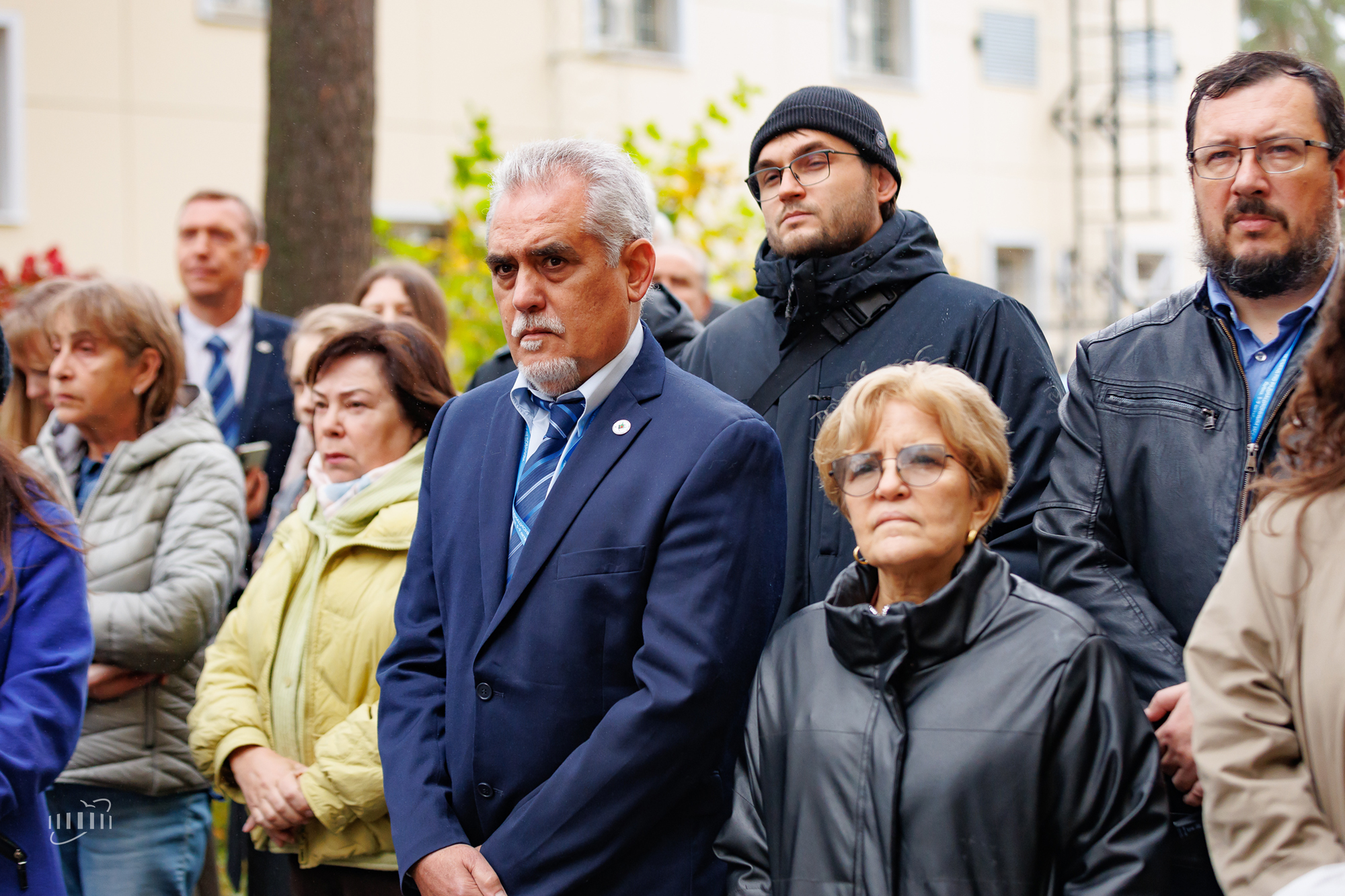
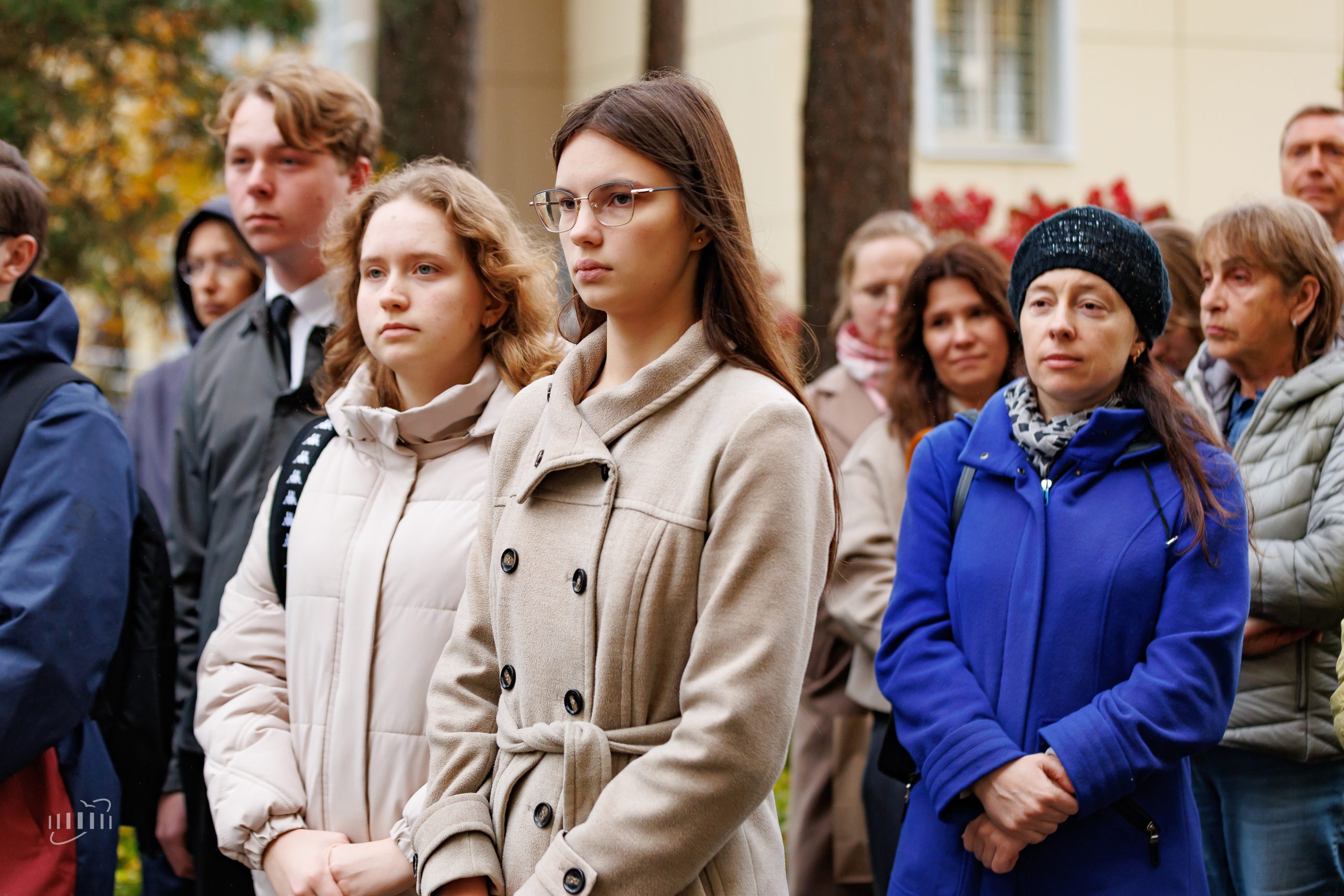
On 6 October 2026, a ceremony took place at the Laboratory of Radiation Biology at JINR to unveil a plaque and open a memorial office dedicated to outstanding radiobiologist, Corresponding Member of the Russian Academy of Sciences (RAS) Evgeny Aleksandrovich Krasavin. As part of the events, a commemorative album dedicated to his life and career was presented. The event brought together the Institute’s leadership, Evgeny Krasavin’s colleagues and students as well as participants of the 9th Congress on Radiation Research underway in Dubna.
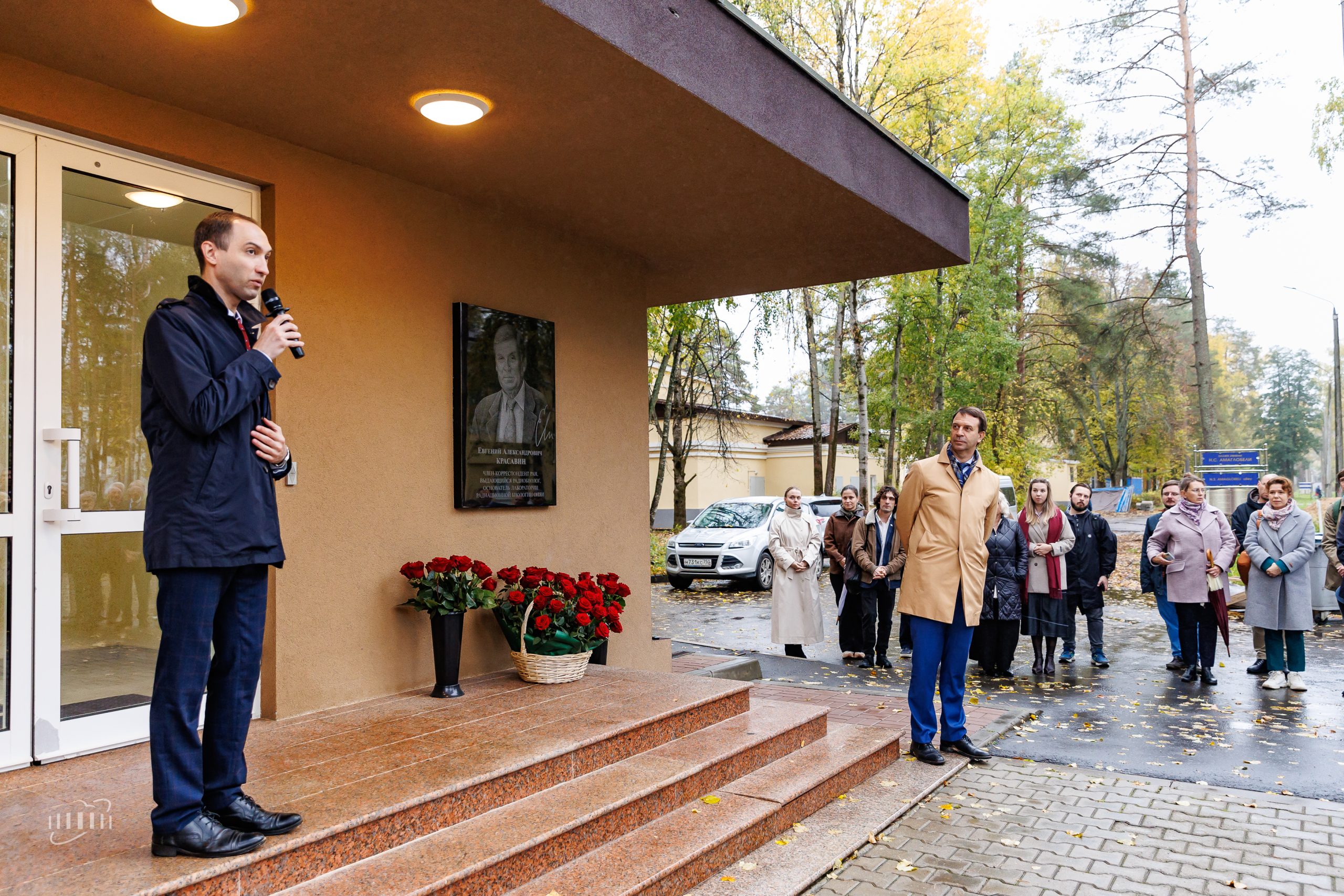
Evgeny Aleksandrovich Krasavin is one of the leading radiation biology researchers whose works largely determined the development of this science. Having started as an LHE JINR physician and eventually become the Director of the Laboratory of Radiation Biology created in 2005 on his initiative, he established a whole range of prospective areas of study. Evgeny Krasavin pioneered research on the biological effects of accelerated heavy ions and proposed a new concept for assessing the radiation risks of interplanetary human flights. On his initiative, a new area – astrobiology – was established at JINR, including large-scale experiments on the synthesis of prebiotic compounds under cosmic irradiation. For 30 years, the researcher was a member of the RAS Scientific Council on Radiobiology and chaired it in the last years of his life.
In his welcome speech at the ceremony at the building of the Laboratory of Radiation Biology, LRB Director Aleksander Bugay emphasised the stature of the department’s founder: “One thing is certain: without Evgeny Krasavin, neither this building nor the very science of radiation biology would exist in Dubna. For us, he was not only the scientific school founder, but also a remarkable person who gave his all to his beloved cause – science”.
In his welcome speech, JINR Director, RAS Academician Grigory Trubnikov highlighted Evgeny Krasavin’s unique path: from a student of Soviet radiobiology founders to the creator of his own international scientific school. He emphasised that Krasavin’s key achievements were his unique ability to engage the best minds from around the world in the Institute’s projects and his prowess in building a team of gifted researchers. “Evgeny Krasavin drew outstanding biologists not only from Russia, but also from other countries to Dubna to participate in studies. In doing so, he secured his historical legacy, setting the highest standard. Those he entrusted to continue the work in LRB are energetic, strong, and immensely promising”, Grigory Trubnikov noted.
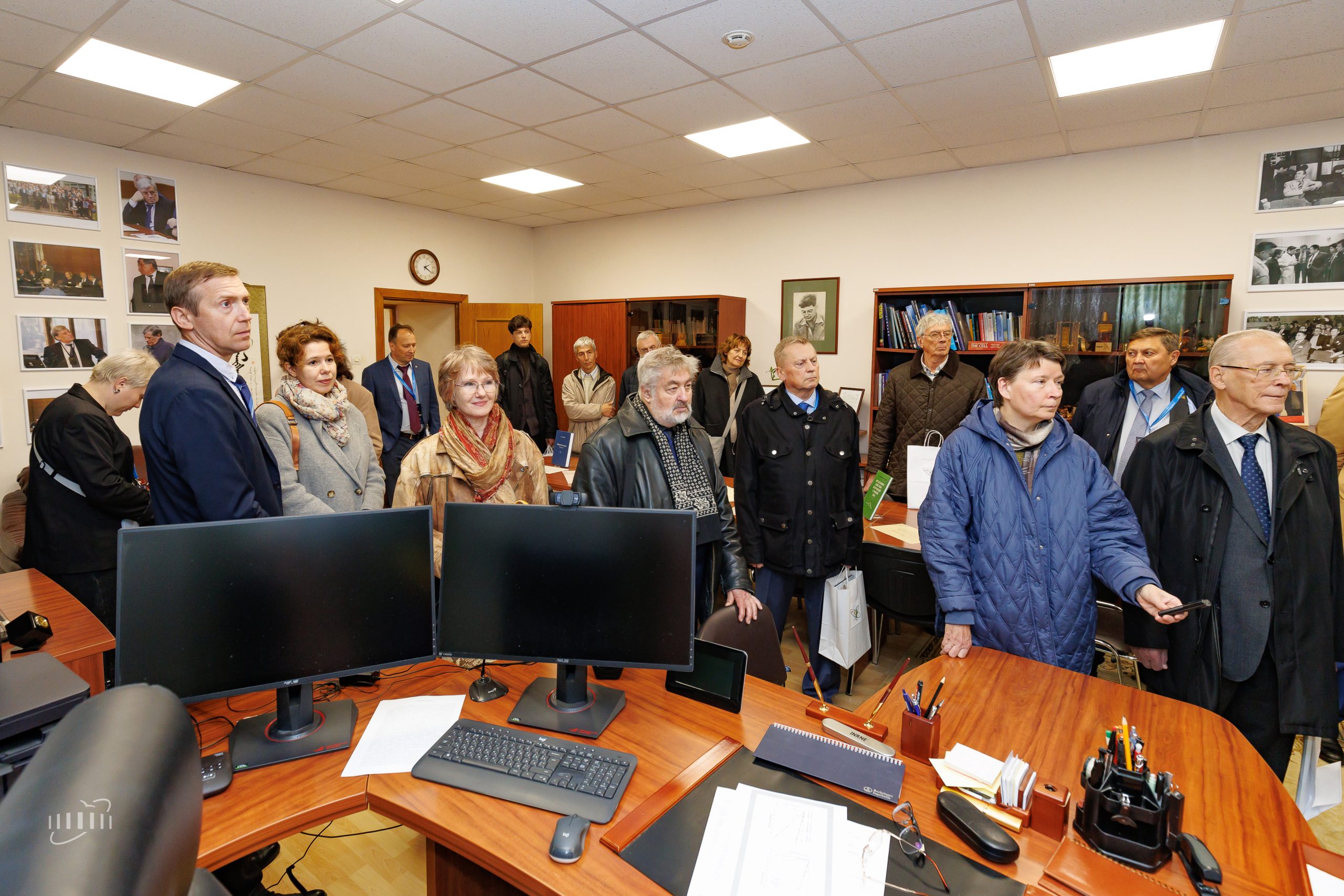
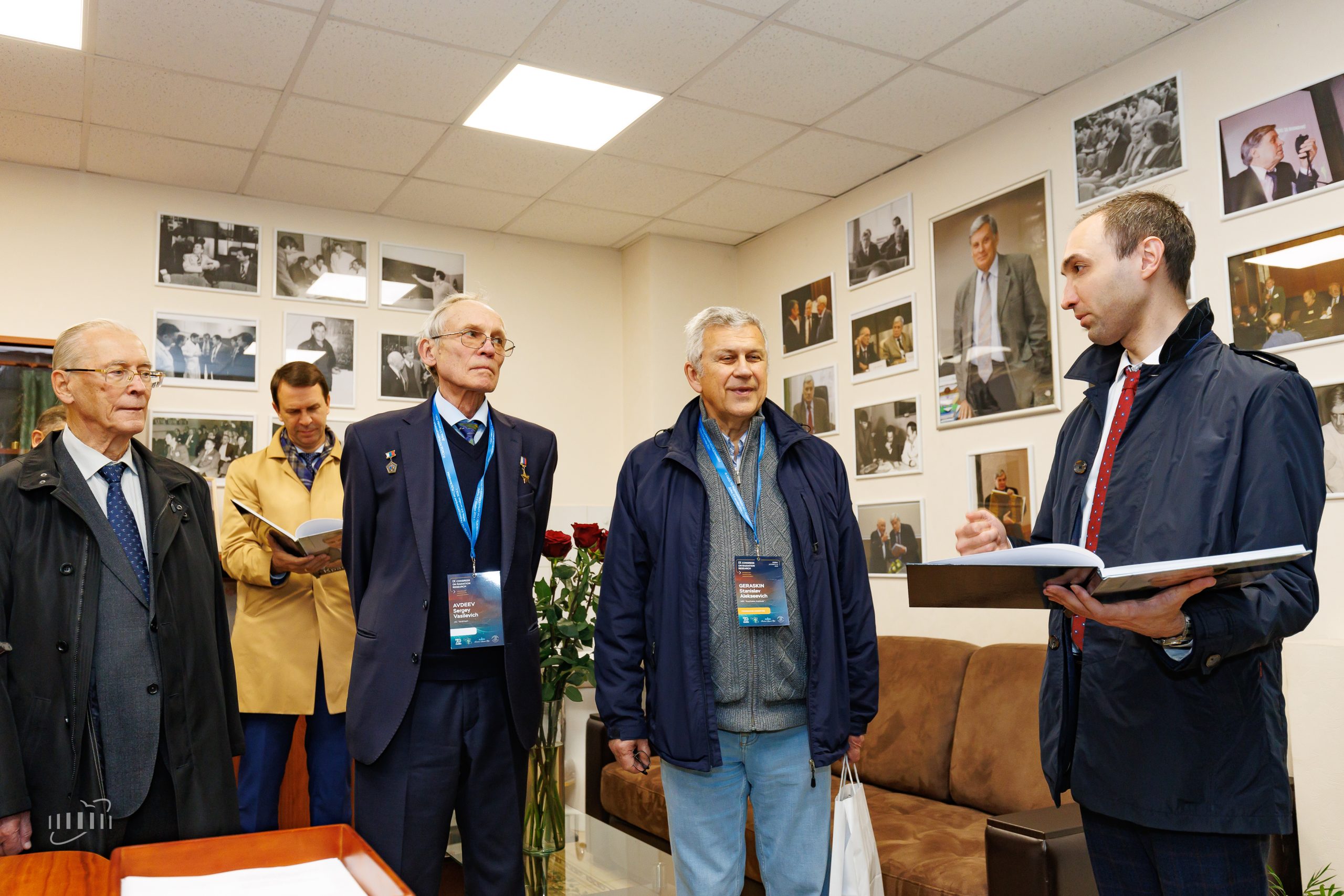
The commemorative events continued with the opening of Evgeny Krasavin’s memorial office. His authentic working environment was preserved within these walls, where key scientific ideas in radiobiology were born and discussed for many years. The interior is complemented by a photo gallery with rare archival images capturing bright moments from the researcher’s career and everyday life. Visitors can see personal belongings, work diaries, and get acquainted with scientific monographs and works.
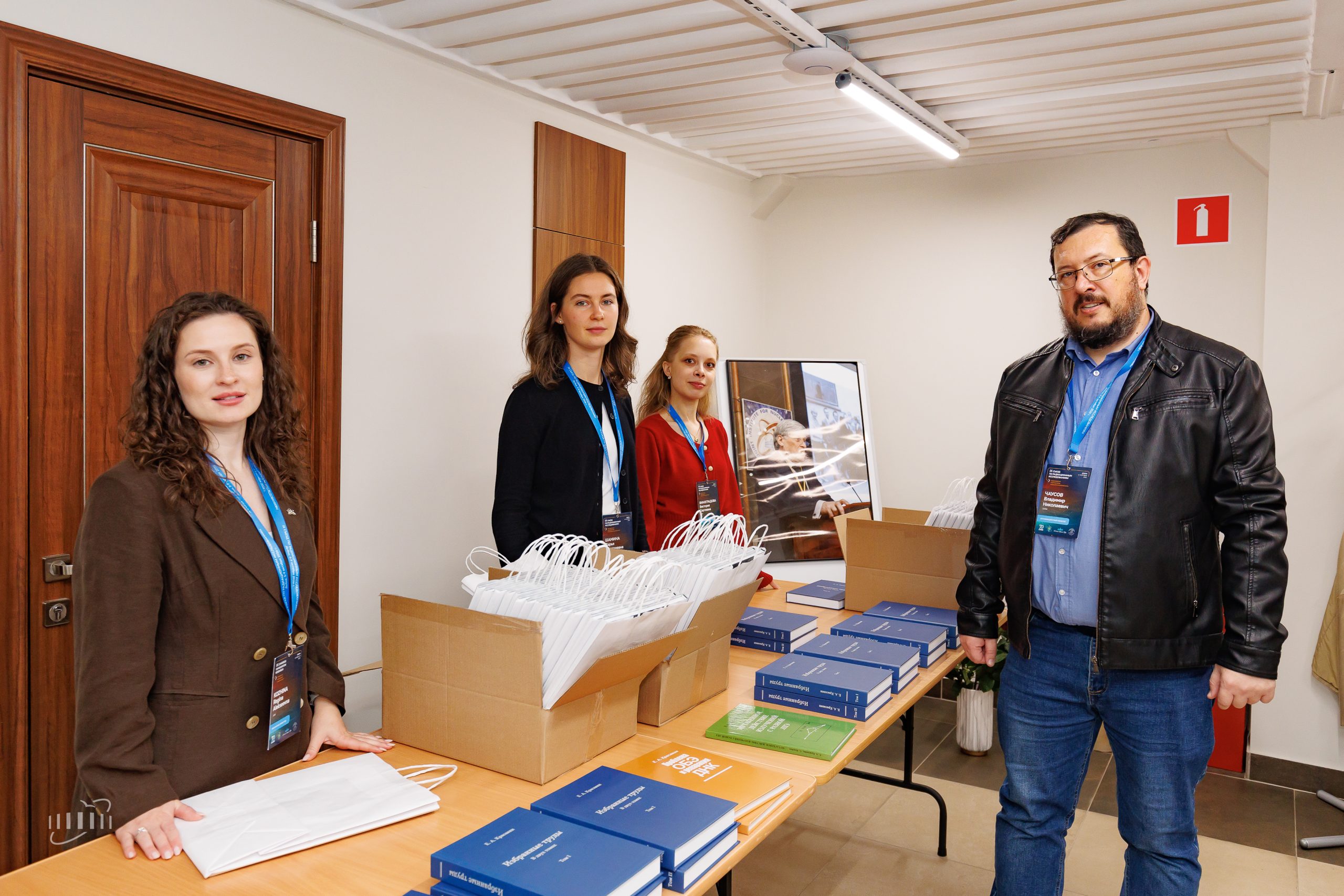
The memorial office served as a venue for the presentation of a gift album. Aleksander Bugay introduced the publication, noting that it features unique facts from the biography of Evgeny Krasavin – one of the few members of the Russian Academy of Sciences from Dubna. The album includes the recollections of family, colleagues, and students as well as historical documents illustrating the laboratory’s most important milestones. Various facets of the researcher’s life outside science were presented: his passion for swimming, car trips, playing the guitar, and his meetings with cultural figures Andrei Voznesensky, Alexander Galich, and Vladimir Vysotsky.
The commemorative events at LRB clearly demonstrated the Joint Institute’s commitment to preserving Evgeny Krasavin’s legacy. Today, his colleagues and students continue to develop the scientific areas he established, solving the current tasks of radiation biology, and contributing to JINR’s international research.