A new Megascience master’s specialisation will be available at the Information Technologies, Mechanics and Optics University (ITMO, Saint Petersburg) in the 2026–2027 academic year. The organizers are ITMO and the Joint Institute for Nuclear Research. The goal of the two-year academic programme is to train multidisciplinary specialists experienced in working in international collaborations. The course has no analogues in Russia.
The Megascience master’s specialisation is part of the Advanced Quantum and Nanophotonic Systems programme. Enrolment is open for those with bachelor’s degree in technical sciences who decided to start their journey in fundamental science. Entrance testing requires engineering skills and basic knowledge of quantum mechanics, classical electrodynamics, particle physics, programming, and data processing.
Students can choose one of three fields: theoretical physics, experimental physics, or programming. Graduates will be able to apply for positions as a researcher, engineering physicist for the operation of accelerator complexes, specialist in the processing of data from physics experiments, detector system developer, and experimental particle physicist.
As part of the programme, leading scientists from the Joint Institute for Nuclear Research will give lectures on neutrino and accelerator physics, as well as experimental methods of particle physics and other disciplines. In addition, future scientists will master methods of data processing and analysis using artificial intelligence. Training will be conducted in Russian and English. Special attention will be paid to practical aspects: the master’s students will undergo internships at JINR and work as part of international collaborations in which the Joint Institute participates.
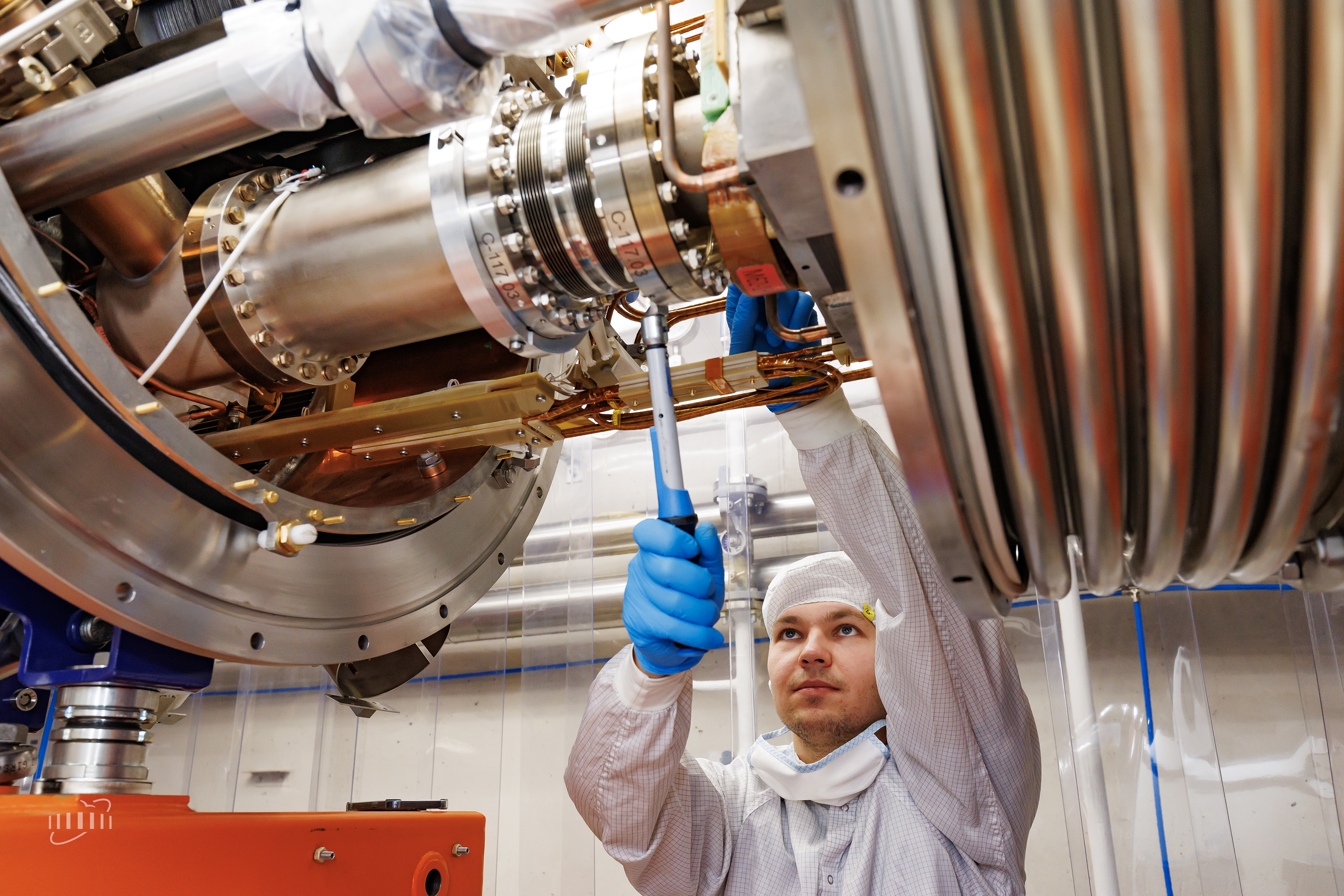
Practical skills in working with data and equipment of megascience facilities can be obtained in one of such projects as:
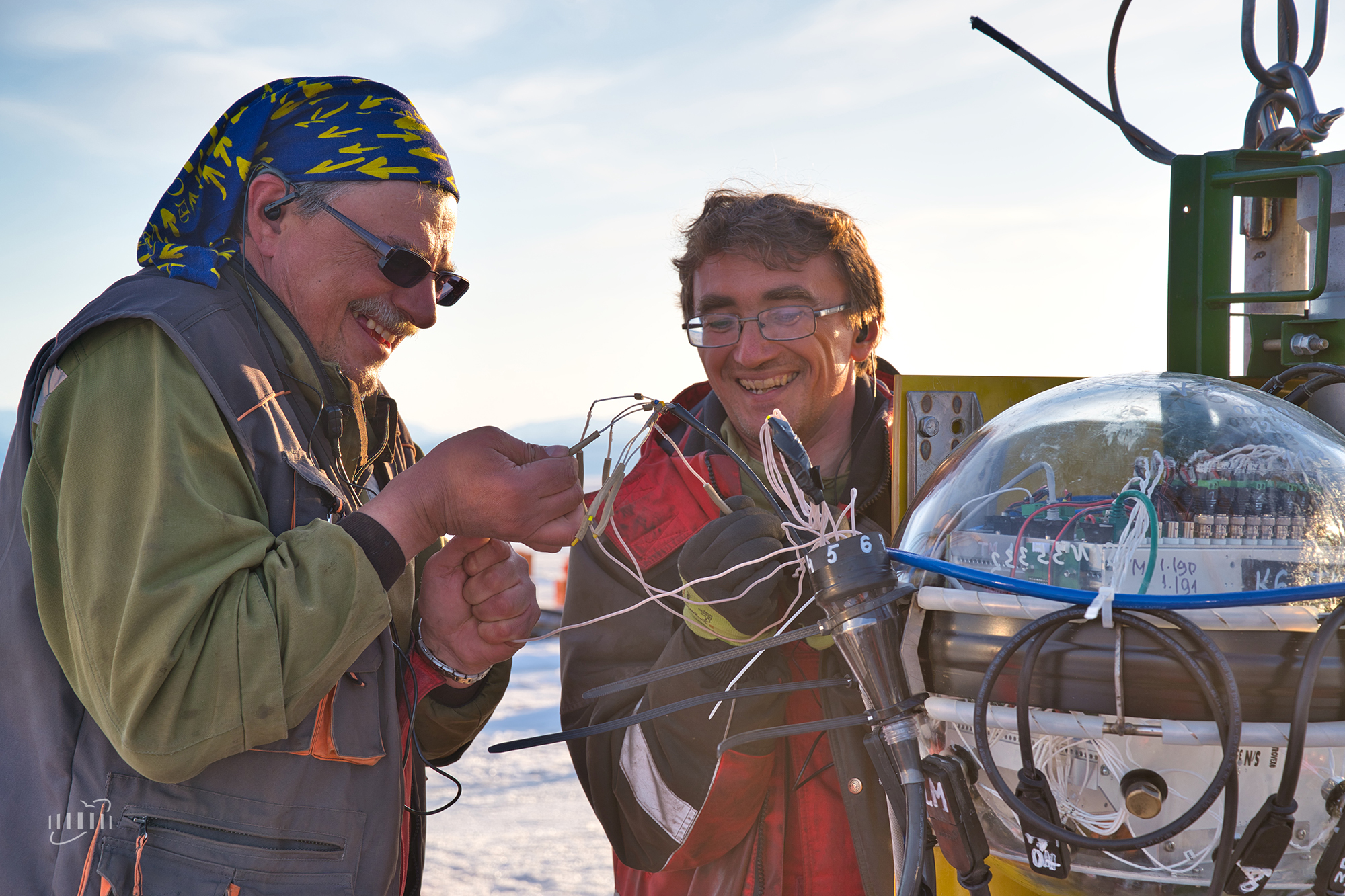
- Baikal-GVD Deep Underwater Cubic-Kilometre Neutrino Telescope,
- NICA Collider (JINR),
- SKIF Synchrotron (Budker Institute of Nuclear Physics),
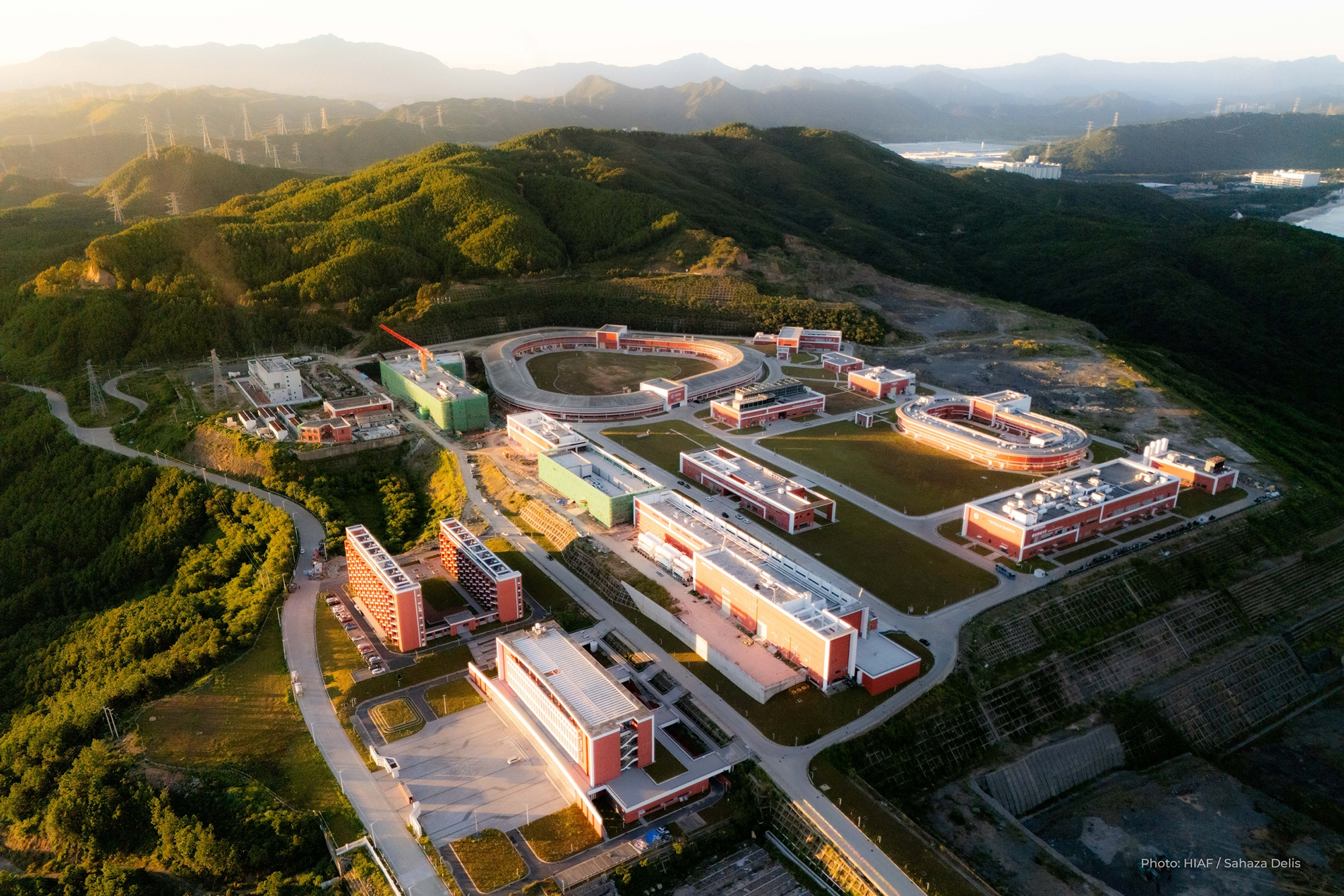
- HIAF Accelerator Complex at the Institute of Modern Physics of the Chinese Academy of Sciences, and others.
The Centre for Advanced Research is being created at ITMO with the participation of the Joint Institute for Nuclear Research. The centre will provide students an opportunity to engage in research during their studies.
Deputy Director of the Laboratory of Nuclear Problems at JINR, JINR Neutrino Programme Head Dmitry Naumov and Megascience specialisation head, leading researcher at the ITMO Faculty of Physics Dmitry Karlovets commented on the introduction of the new specialisation.
“The idea of creating a joint master’s programme by ITMO and JINR for training specialists for large interdisciplinary projects was discussed for several years. What makes it in-demand is personnel deficit, which will only increase if no efforts are made to counter it”, Dmitry Naumov emphasised. “JINR and the institutes of the Russian Academy of Sciences, together with a number universities and institutes in Russia and abroad, are building a neutrino telescope in Lake Baikal. This is the largest facility of its kind in the Northern Hemisphere; in a year or two, it will become the largest in the world. Collaborations of other neutrino telescopes number 300-400 people, while the Baikal-GVD Collaboration consists of only 60-70 specialists. At the same time, we are actively working on a joint project with the People’s Republic of China on a future similar facility with a 30 times larger volume. This will require a huge number of collaboration participants. The only effective solution seems to be training specialists independently”. “Existing university programmes are somewhat fragmentary and do not comply with all the requirements of modern experiments. I therefore see the the Megascience specialisation at ITMO, as well as the online Neutrino Physics and Particle Astrophysics programme, extremely in demand today. Students receive up-to-date knowledge necessary for both theoretical and experimental work first-hand”, Dmitry Naumov concluded.
“Today there is not just a great need for personnel for megascience experiments – there is a need for specialists with complex complementary competencies, a broad outlook, programming skills, and knowledge of modern machine learning methods”, Dmitry Karlovets noted. He added that ITMO has everything necessary to create the new academic programme: a physics faculty developing over 20 scientific areas and joint projects with JINR in experimental and theoretical physics, for example, the application of machine learning methods in the Baikal-GVD Project. “We will train broad specialists in particle physics, who will be able to participate in different experiment stages: theoretical research; experimental data modelling, analysis, and processing; as well as engineering”, Dmitry Karlovets summarised.