Baikal-GVD Neutrino Telescope on Russian postage stamps
News, 06 February 2026
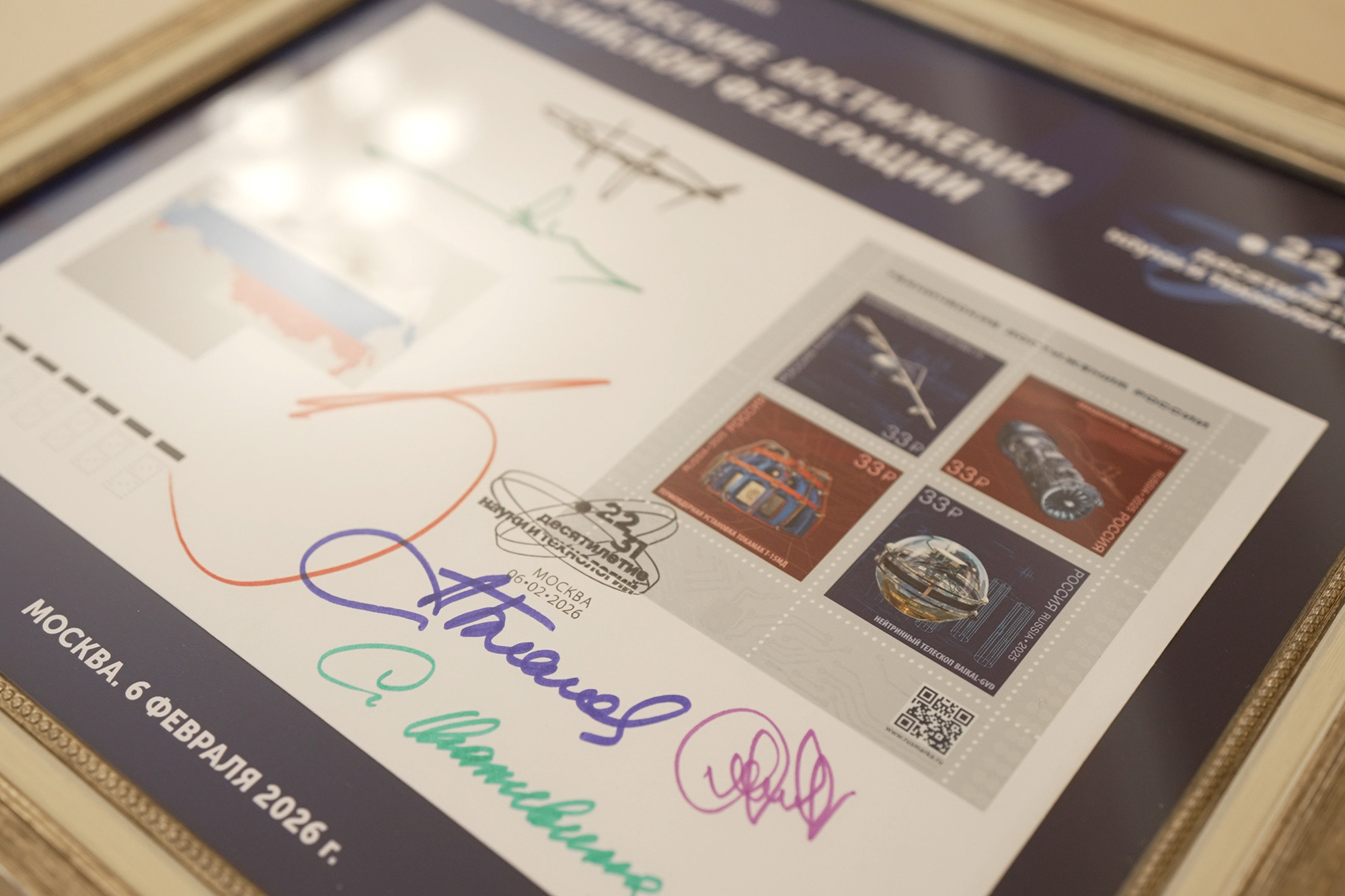
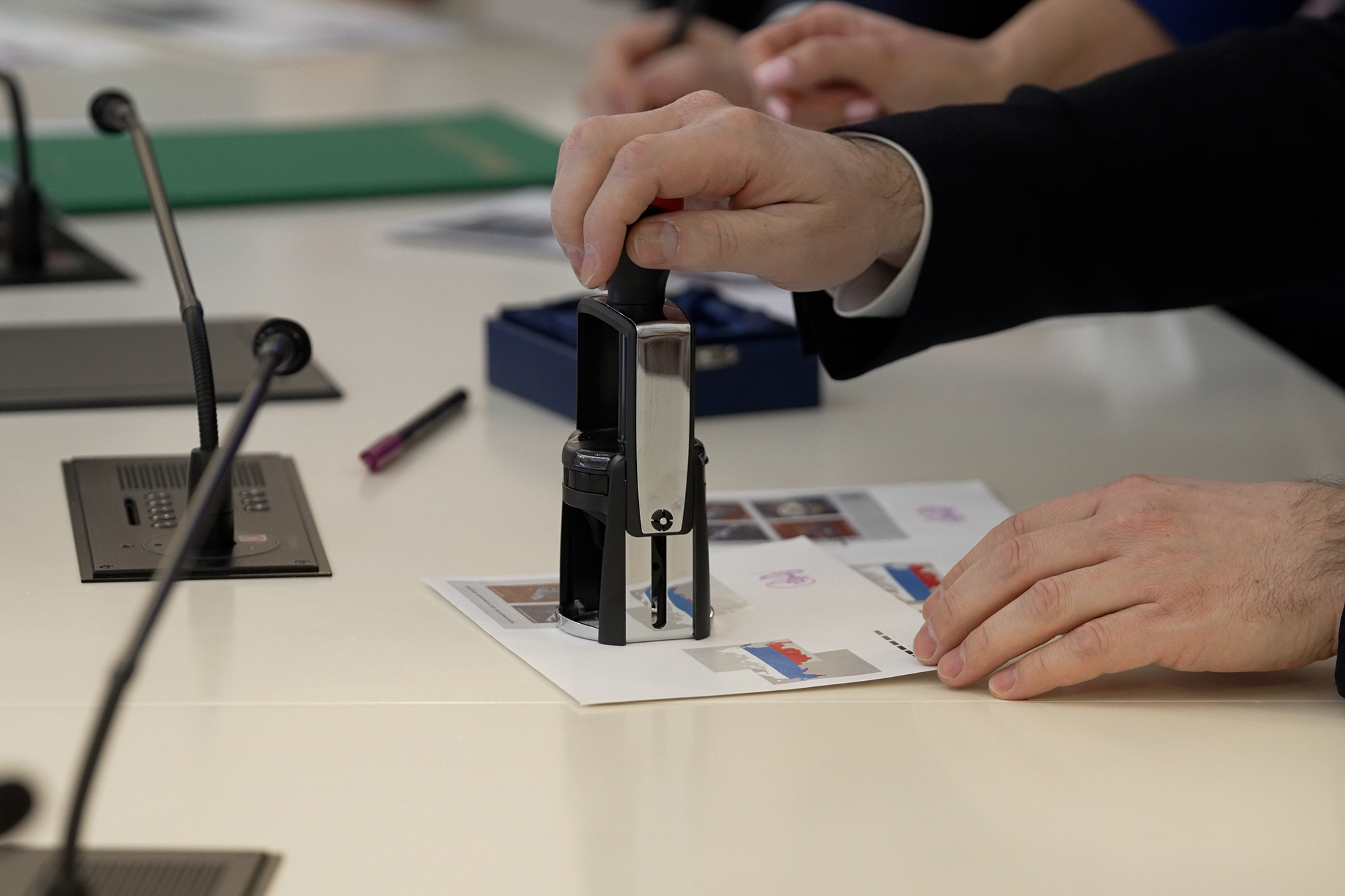
On 6 February 2026, a stamp cancellation ceremony took place at the Ministry of Science and Higher Education of the Russian Federation, just before the Day of Russian Science, and as part of the Decade of Science and Technology. The new series is dedicated to the key technological achievements of science and industry in Russia. One of the central motifs of new stamps is Baikal-GVD, a flagship project of the Joint Institute for Nuclear Research.

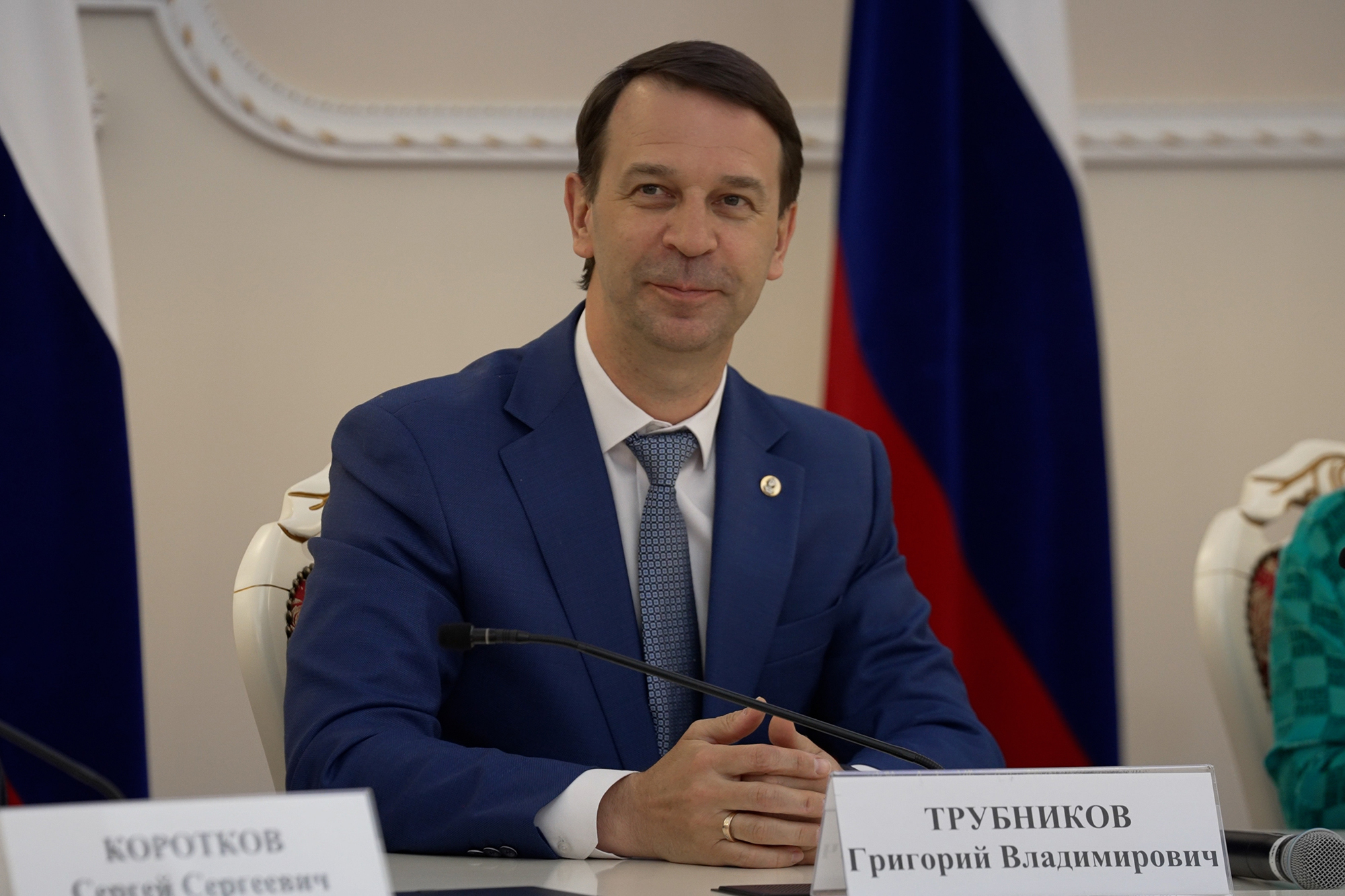
JINR Director, Academician of the Russian Academy of Sciences Grigory Trubnikov took part in the ceremony. He noted the importance of this event for science in Russia. “All the achievements of science and technology, presented on the stamps, were created thanks to the extensive cooperation of dozens and hundreds of organizations across the country”, the academician emphasised. “This event is a great gift for the Russian scientific community”.
In his speech, Grigory Trubnikov talked about the project, in the implementation of which the Joint Institute plays a special role. Baikal-GVD (Gigaton Volume Detector) is an international scientific collaboration that creates one of the world’s largest neutrino detectors in Lake Baikal. This facility is designed to register and study ultrahigh energy neutrino fluxes from astrophysical sources. The data obtained with the help of the telescope allows scientists to study the unique processes that took place in the Universe at the early stages of its evolution.
Along with Baikal-GVD, the Technical Achievements of Russia series presents the S-76 unmanned transport system, the “Product 177S” aircraft engine, and the Tokamak T-15MD thermonuclear facility, developments in unmanned technologies, aircraft construction, and controlled thermonuclear fusion. The presence of the Baikal Neutrino Telescope among the symbols of modern scientific and technological progress underlines the special significance of the project for the world of fundamental science and its contribution to the development of high energy astrophysics.
The new stamps, which perform not only postal, but also scientific and educational functions, have already entered circulation and are available in Russian post offices. The total circulation of the series is 57 thousand copies.