61st PAC CMP meeting: resumption of IBR-2 operation and modernisation of its instruments
News, 01 July 2025
On 26 June 2025, the 61st meeting of the Programme Advisory Committee for Condensed Matter Physics took place at the JINR International Conference Centre. The PAC members discussed the launch of the IBR-2 Research Reactor after the long shutdown and the development of its spectrometer complex.
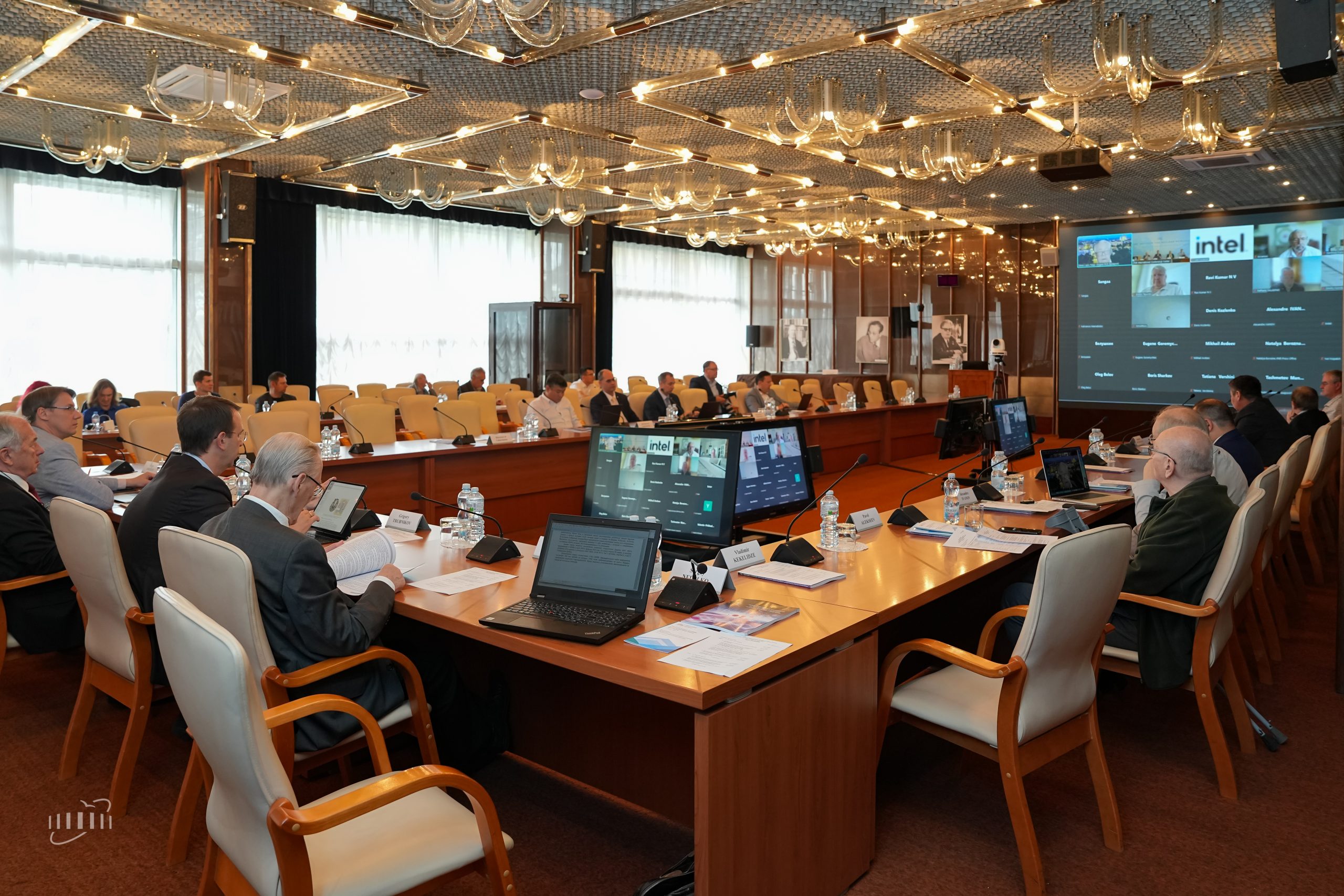
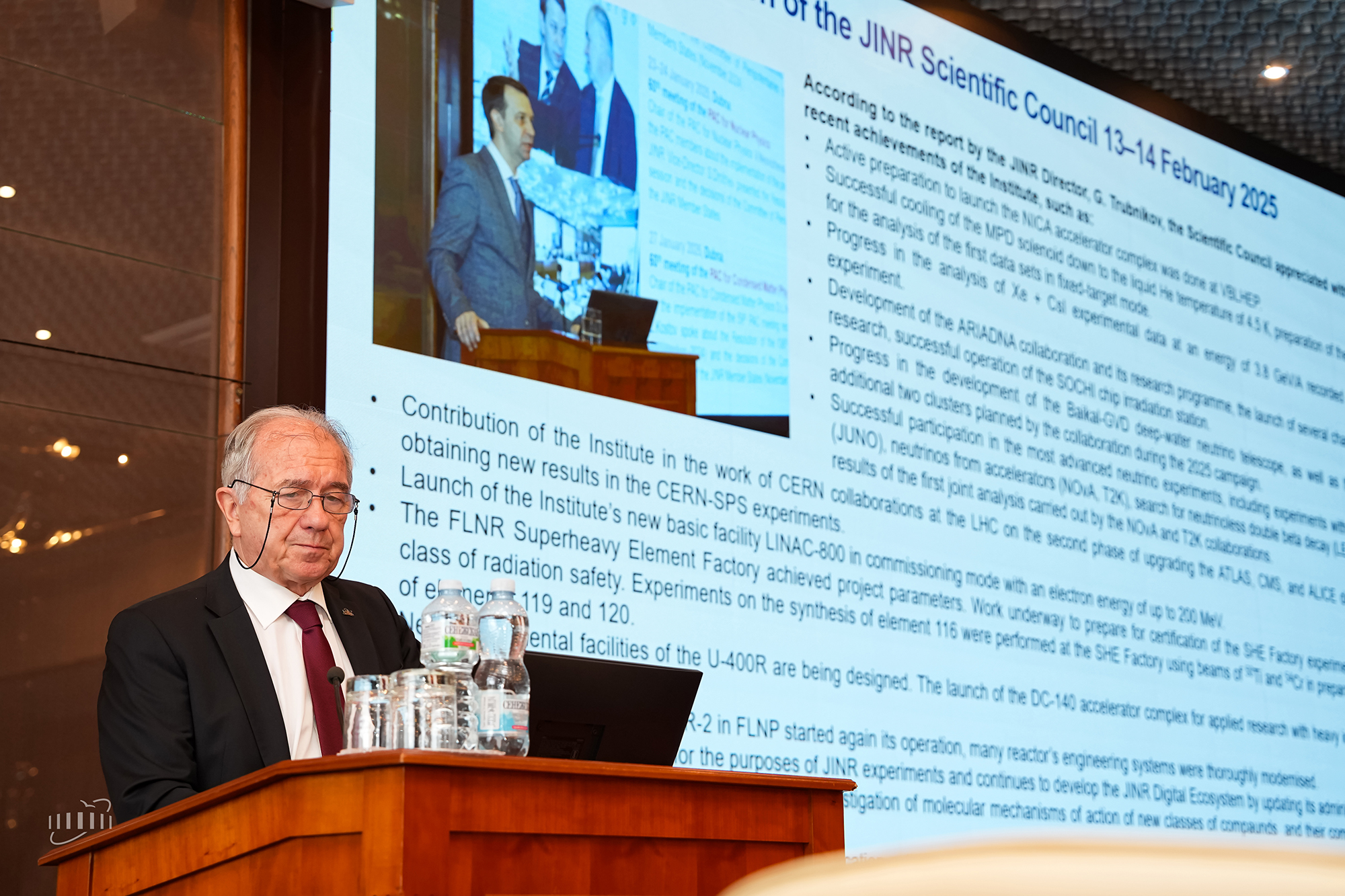
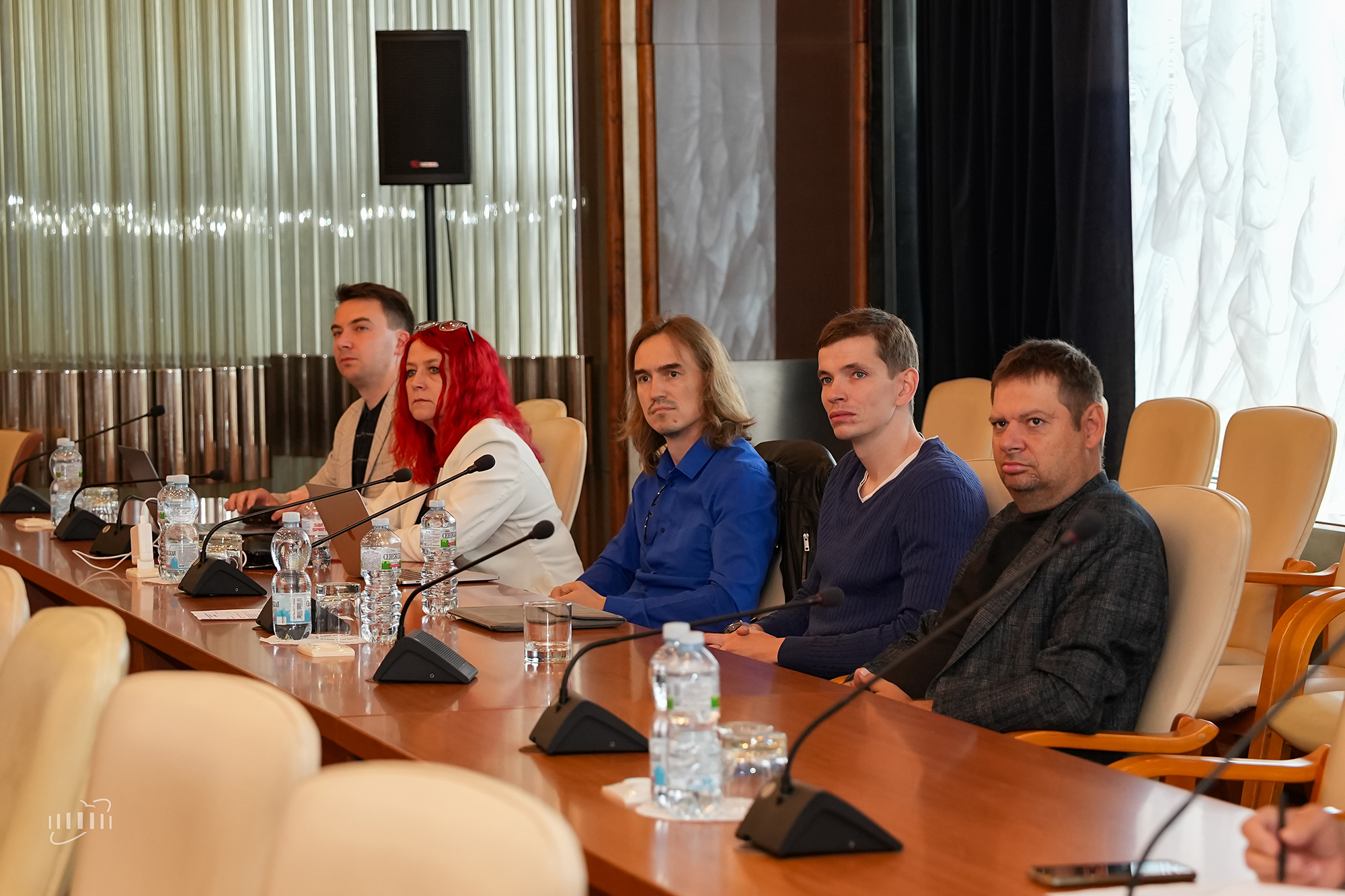
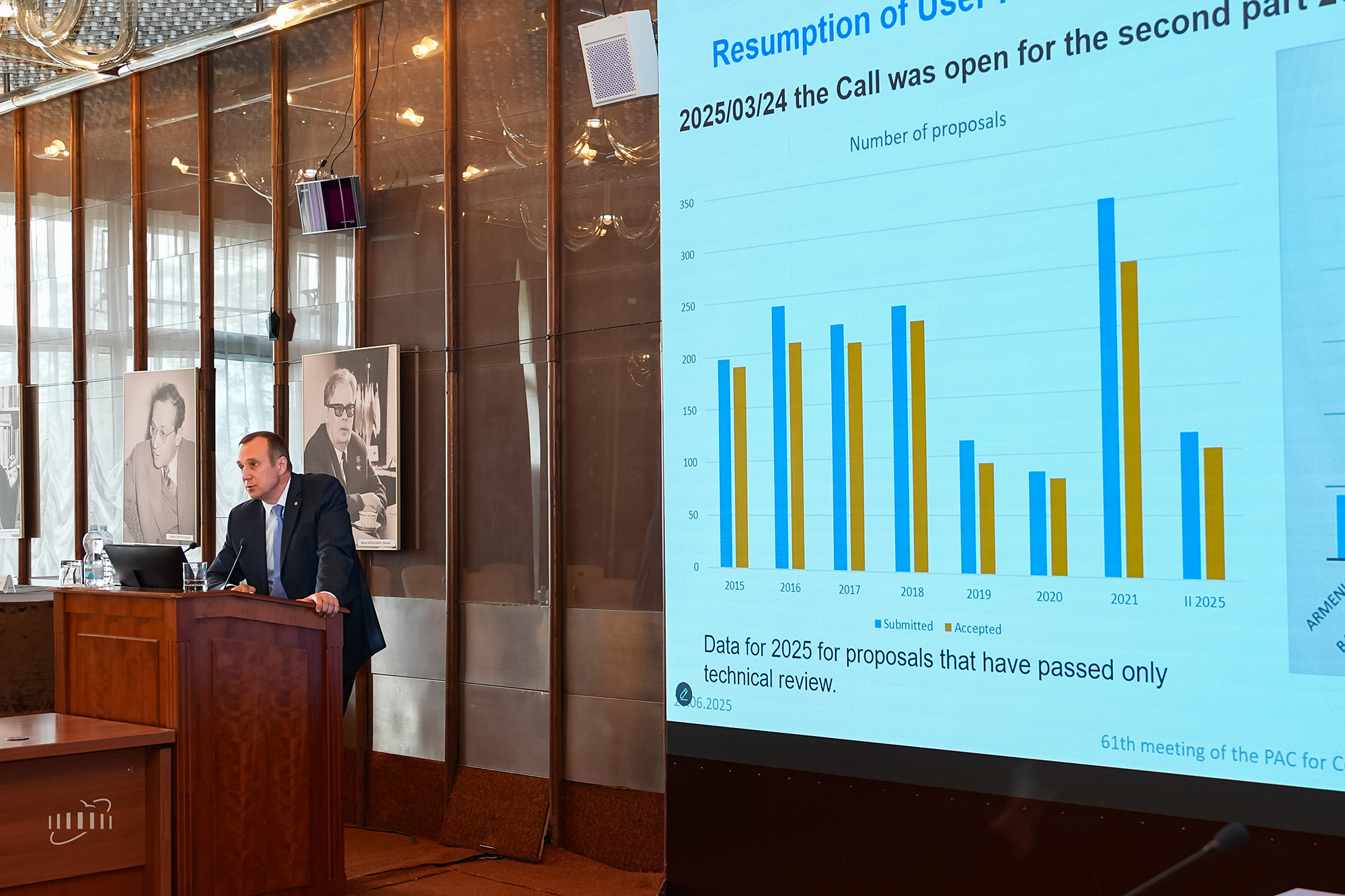
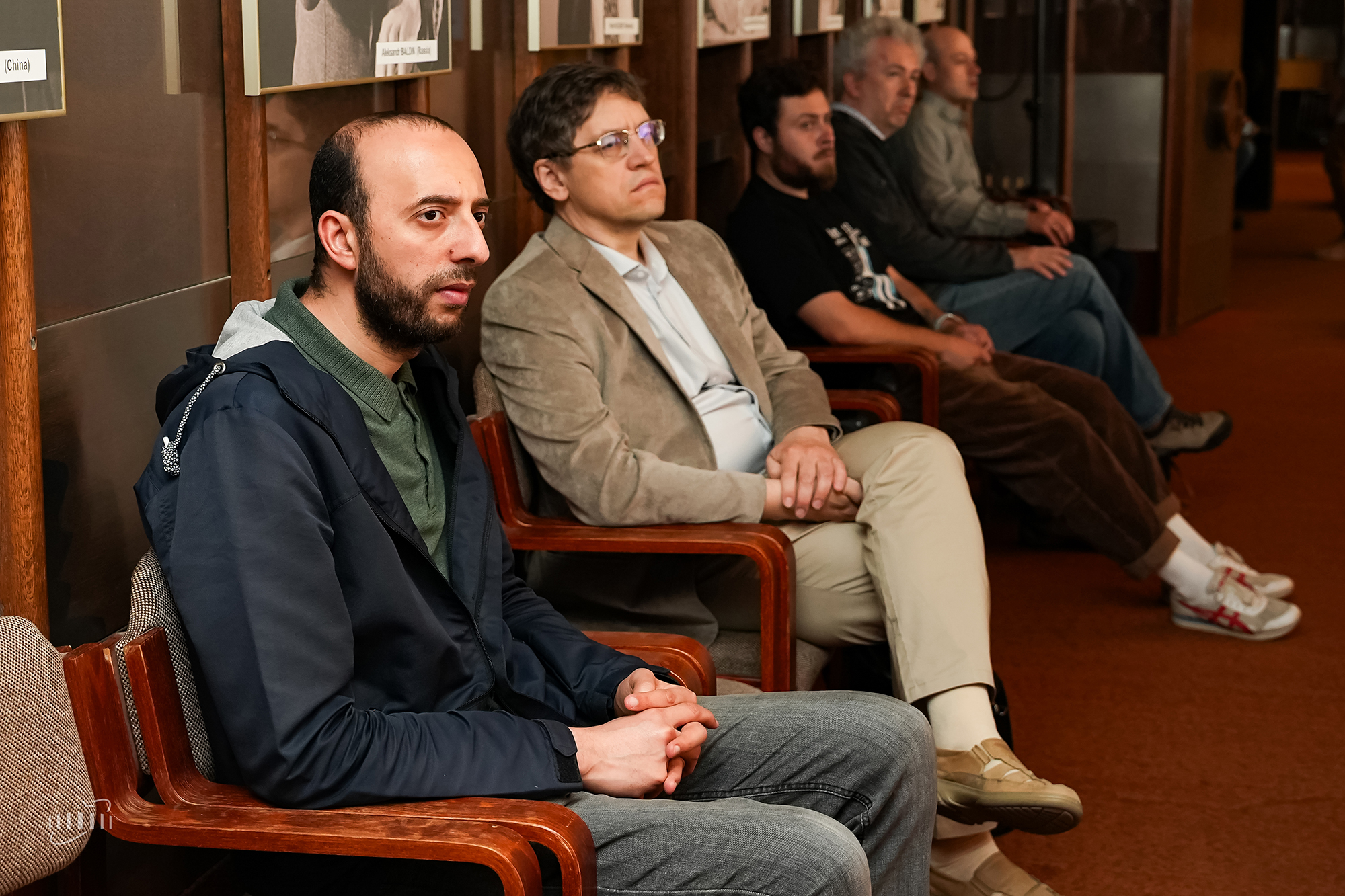
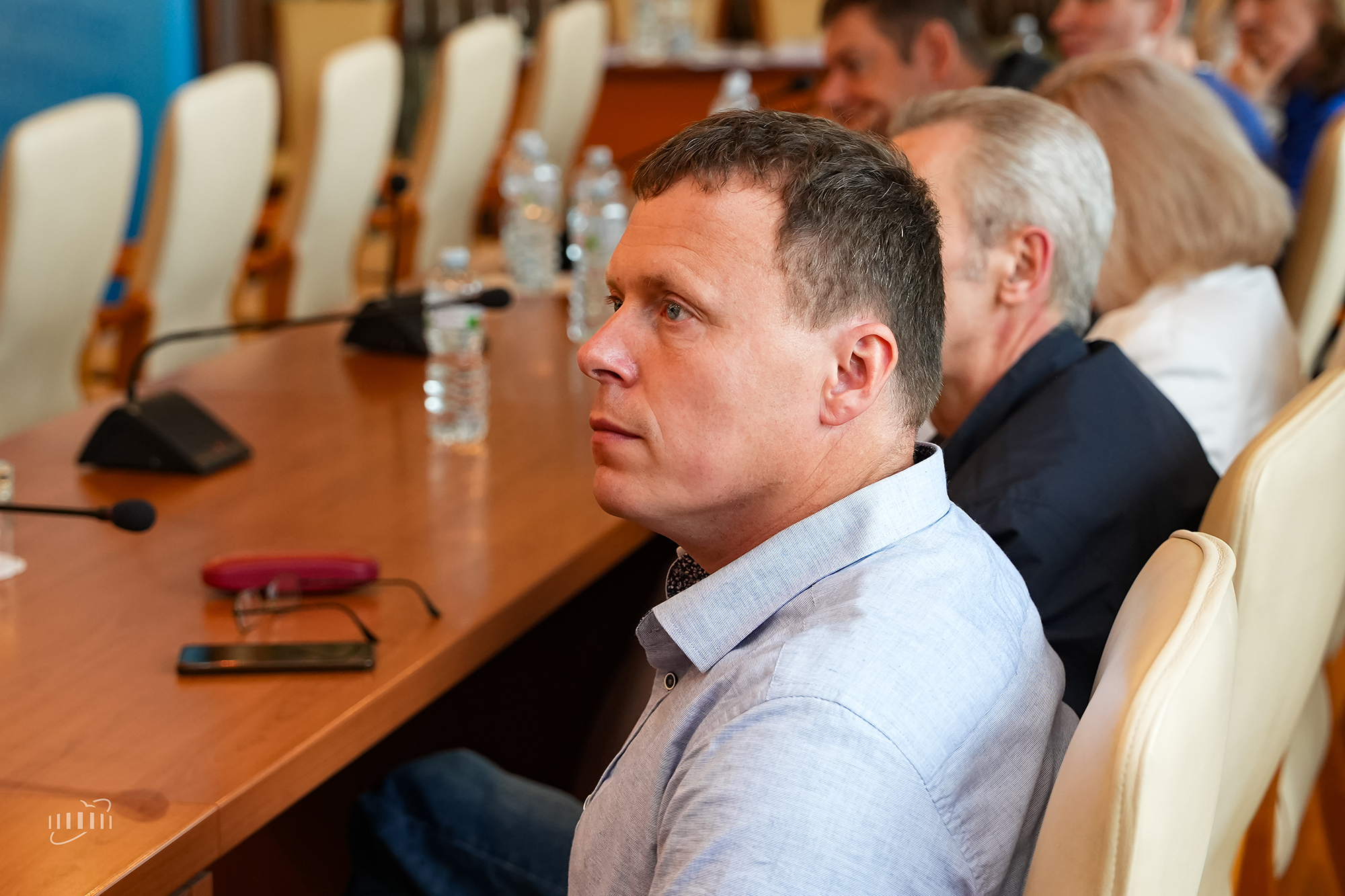
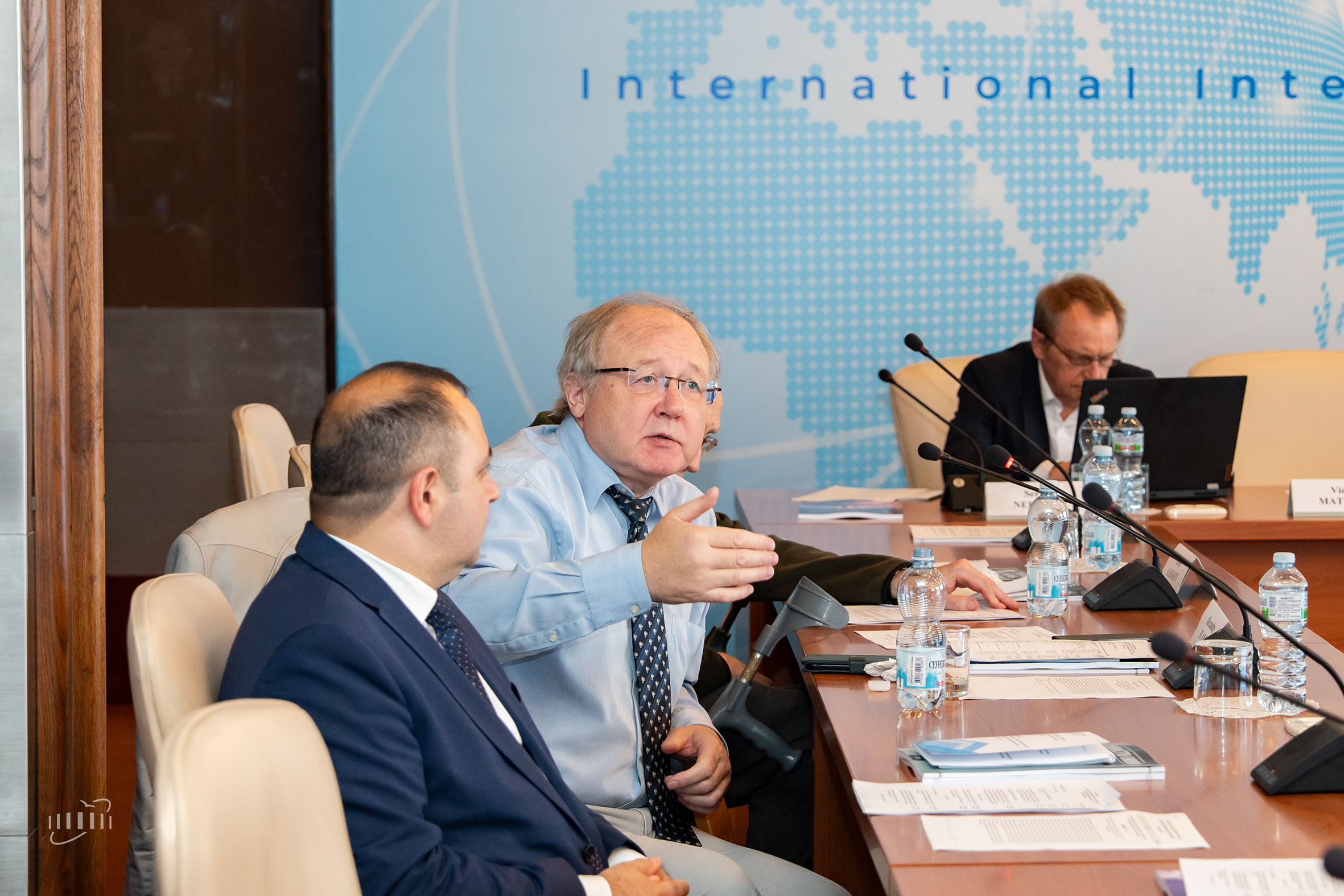
At the opening of the event, Chair of the PAC for Condensed Matter Physics Dénes Lajos Nagy presented information on the implementation of the recommendations of the 60th meeting of the Committee in January 2025. JINR Vice-Director Latchesar Kostov gave a talk on the resolution of the 137th session of the Scientific Council (February 2025) and the decisions of the Committee of Plenipotentiaries of the Governments of the JINR Member States (March 2025). At the end of the event, the PAC members met with the JINR Directorate.
A presentation by Director of the Laboratory of Neutron Physics at JINR Egor Lychagin was devoted to the progress of the IBR-2 Reactor. “We have completed three operation cycles after the longest shutdown in the reactor’s history, more than three years long. The main result is that the IBR-2 operates stably, functioning just as well as it did before the shutdown,” Egor Lychagin concluded. During the spring cycles, FLNP employees tested all experimental facilites of the reactor. The user programme, scheduled for autumn, includes 11 of the 14 facilities.
The configuration of the other three spectrometers – HRFD (High Resolution Fourier Diffractometer), RTD (Real Time Diffractometer), and EPSILON Strain and Stress Measurement Diffractometer – was modified due to the replacement of detectors. However, their electronic systems cannot cope with the flow of recorded data, and these systems require modernisation. In addition, EPSILON is being adapted for texture measurements. “It will take us another six months to complete the modernisation. We plan to include these instruments in the user programme next spring,” FLNP Director noted.
Head of the FLNP Scientific and Experimental Department of Neutron Research in Condensed Matter Denis Kozlenko said that new and upgraded elements of the instrument cluster were put into operation at the IBR-2 facilites, which made it possible to improve their characteristics by 2-10 times, and the current technical parameters of the facilities were defined. In addition, studies were conducted for internal users.
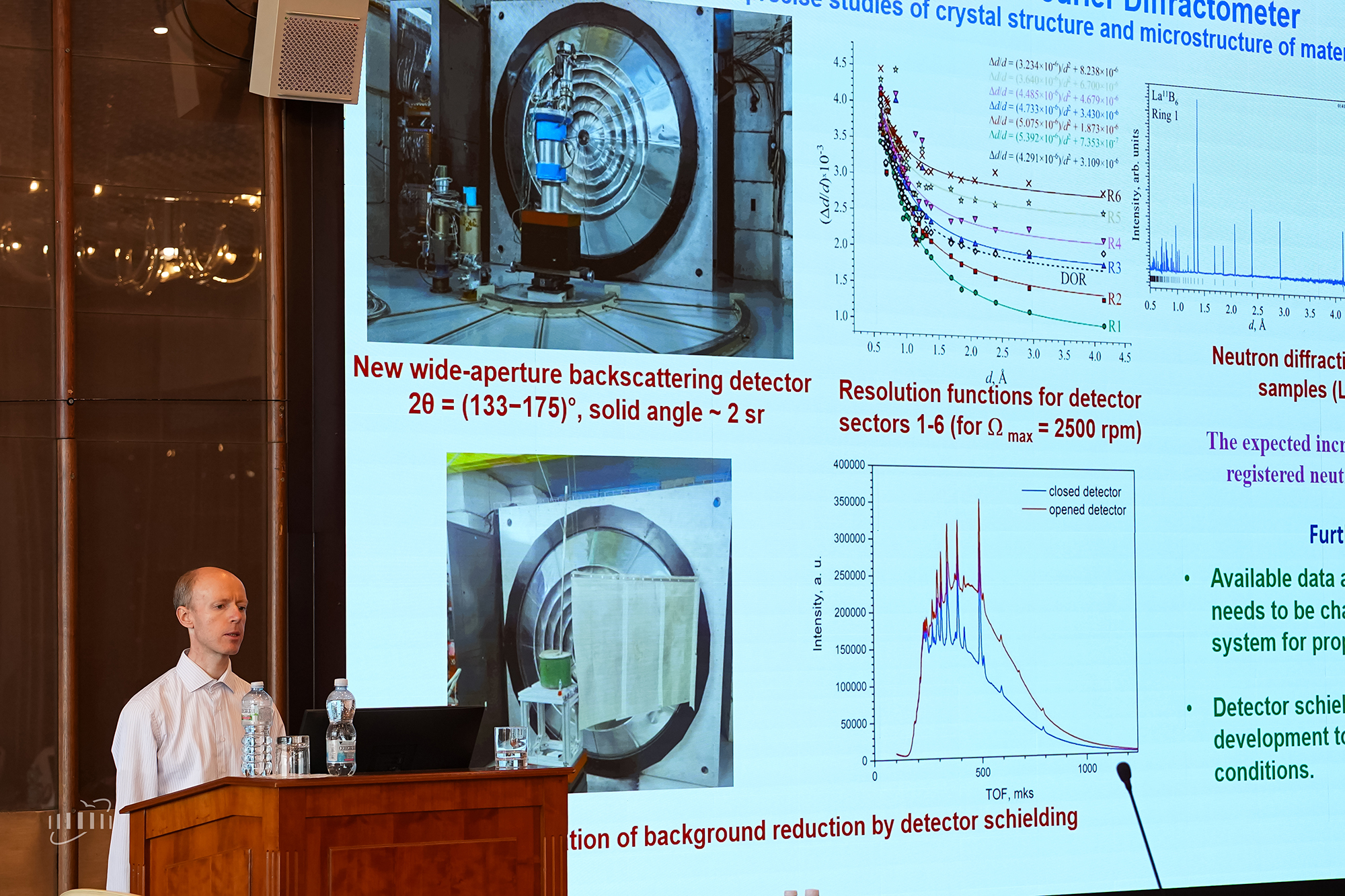
The HRFD Diffractometer received a new wide-aperture backscattering detector, which is an order of magnitude better in performance than the previous one. However, testing of the detector revealed two problems. The chosen standard of the electronic data collection system does not allow processing the amount of data obtained in an experiment at IBR-2. As a result, another standard was chosen to ensure the system’s stable operation. New electronic components are under development. In addition, it is necessary to reduce the background of the detector, for which a new shielding system is being produced. The new ASTRA Detector System was put into operation at the FSD Diffractometer, which has the same problem as the HRFD. It will take some time to finally test and commission the new data collection systems.
The central part of the neutron guide was replaced at DN-6, and a new model of the forward scattering detector was installed. An automated device for moving samples was upgraded at the RTD. The detector system was updated at DN-12, and a new model of the forward scattering detector is being developed. A detector system was created for SKAT. Two samples can now be measured simultaneously. EPSILON’s detector frame was modified, new helium-based counters were installed, and detector modules were moved to new positions for better pole figure measurements. A new prototype system for reflectometric studies in static and oscillating magnetic fields was tested at REMUR. Methodological studies were conducted on YuMO, REFLEX, and GRAINS.
Denis Kozlenko mentioned three striking experiments conducted at IBR-2 this spring: studies of thin silicate films doped with Pt/Pd nanoparticles (jointly with the Kurchatov Institute), research of the vibrational dynamics of ibuprofen and ketoprofen, and a neutron tomography study of the spearhead of an ancient Greek warrior (jointly with the Institute of Archaeology of the Russian Academy of Sciences).
An FLNP senior researcher Oleksandr Ivankov discussed progress of the YuMO Small-Angle Neutron Scattering Spectrometer. He noted that new electronics for position sensitive detector had been tested, the Direct Beam Detector was upgraded, and the chopper was optimised to improve its performance with the cold moderator. The facility’s software is being updated. Specialists plan to reconstruct the spectrometer’s collimation system and modernise its vacuum system.
“Our department has a sample preparation room equipped with a density meter, a spectrophotometer, and other devices for obtaining preliminary information about the samples we are studying,” Oleksandr Ivankov added. The available chromatographic system allows obtaining monodisperse systems and avoiding artifacts when processing small-angle neutron and X-ray scattering data associated with aggregation and oligomerisation of the sample under study.
About 30 scientific experiments, including test ones, were conducted at the YuMO Spectrometer during the spring operation cycles. In addition, 35 applications were submitted for scientific experiments as part of the laboratory’s user programme for autumn 2025.
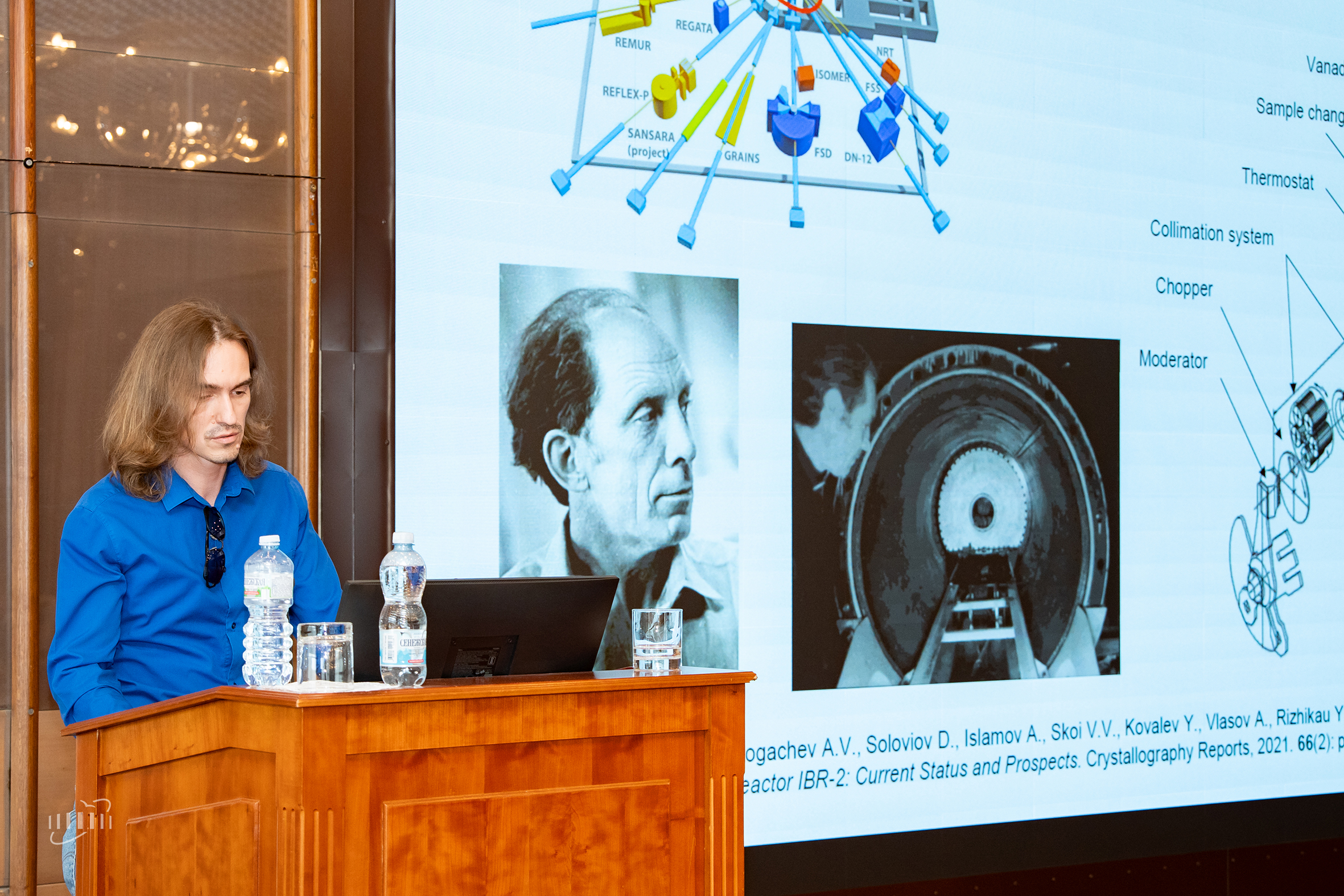
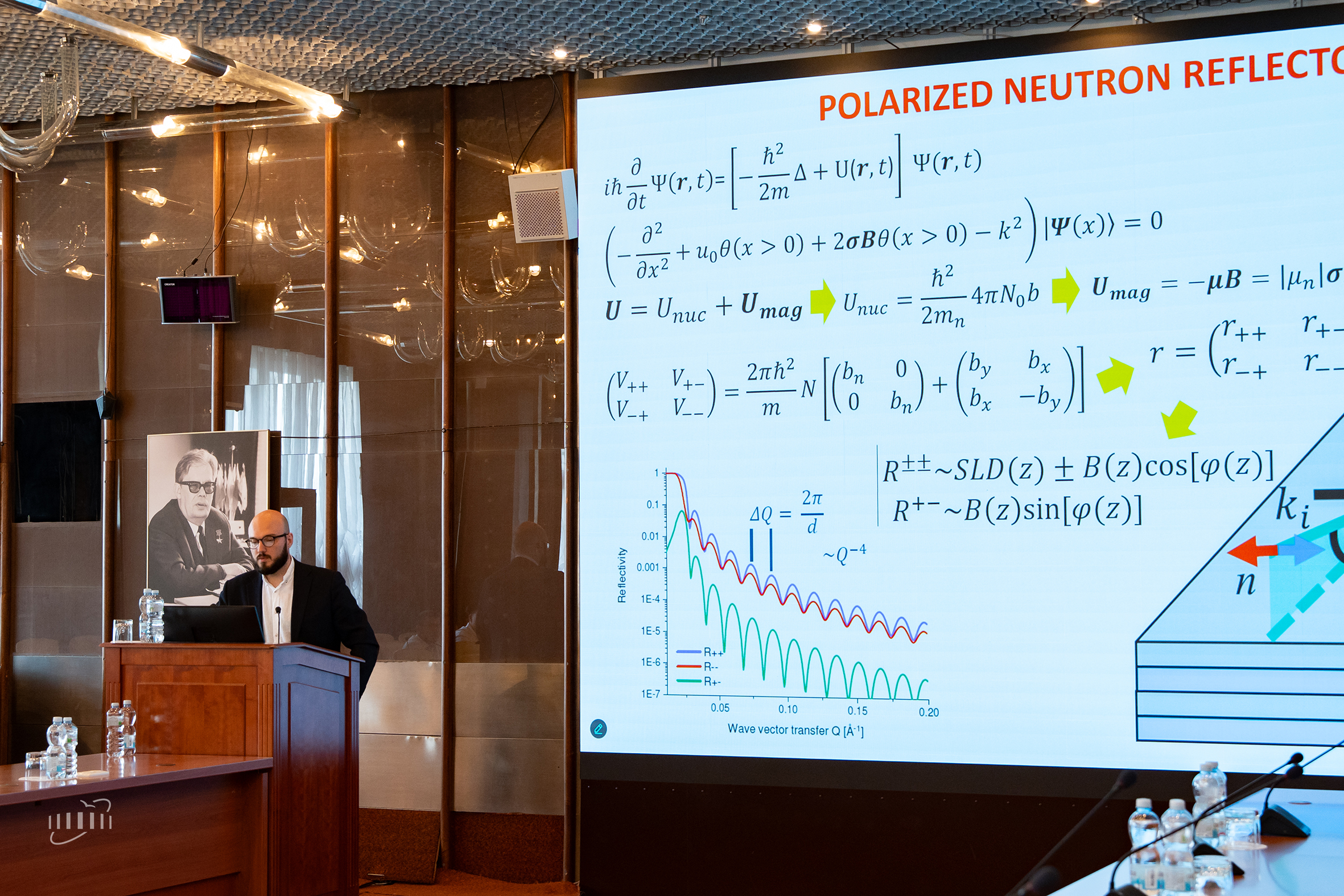
An FLNP researcher Vladimir Zhaketov gave a scientific talk “Magnetism and superconductivity in periodic and quasi-periodic low-dimensional layered systems”. A FLNP junior researcher Yersultan Arynbek made a presentation “Conformational dynamics of amyloid-β42 in liposome under varying pH conditions: a combined spectroscopic and computational approach”.
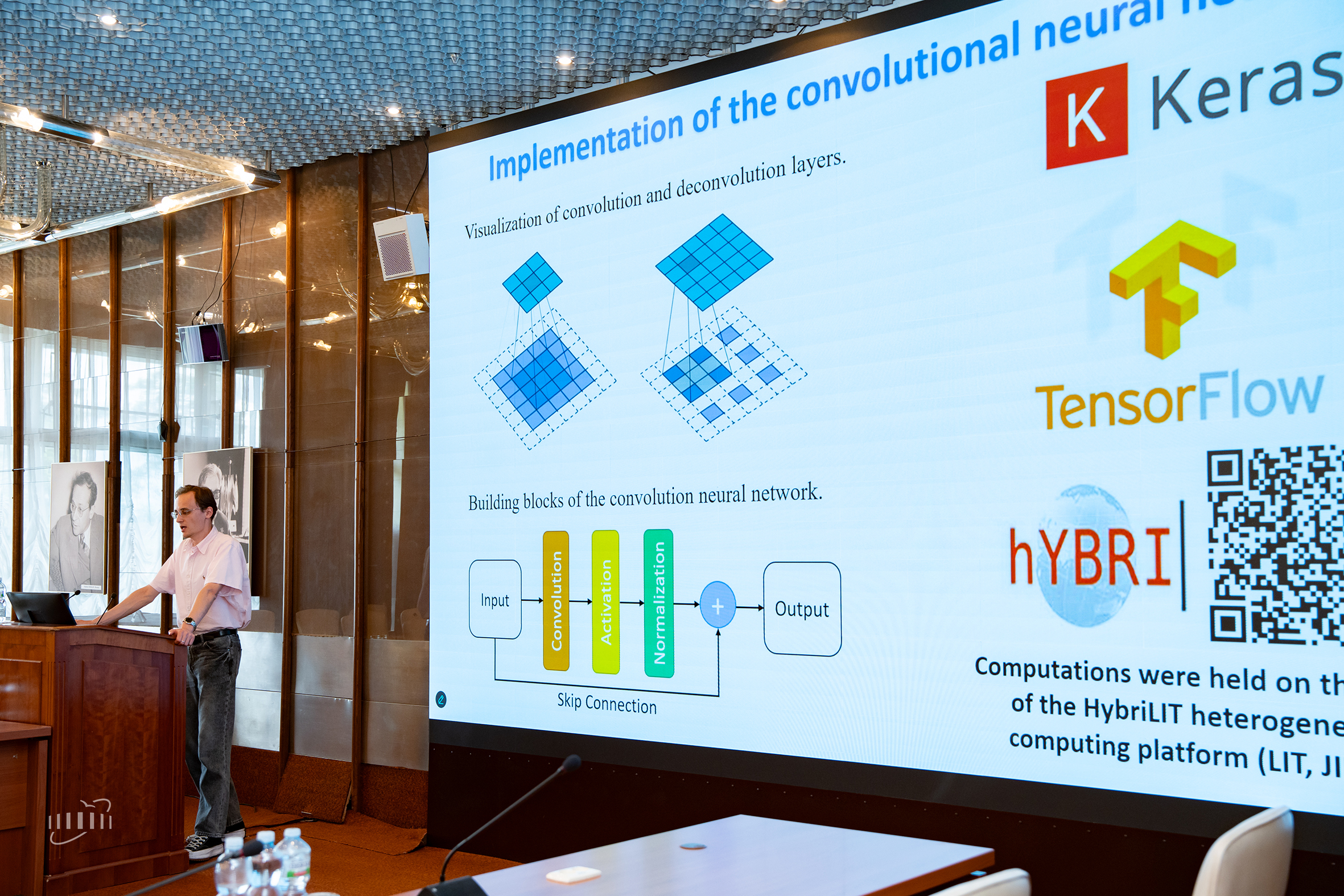
A competition of presentations on condensed matter physics among young scientists took place: FLNP employees Bulat Bakirov (“Automated segmentation of pores and cracks using a Unet3+ convolutional neural network on neutron, synchrotron, and X-ray tomography data”), Varvara Chausova (“The structure of the vesicular nanomedicines: analysis based on small-angle neutron scattering data”), Duc Huy Le (“Synthesis of few-layers MoS2 by CVD: their structural and optical properties”), Dmitry Norov (“Helimagnetic ordering in Dy and Ho thin films”). Bulat Bakirov’s work won the first place and was selected for presentation to the JINR Scientific Council members in September.
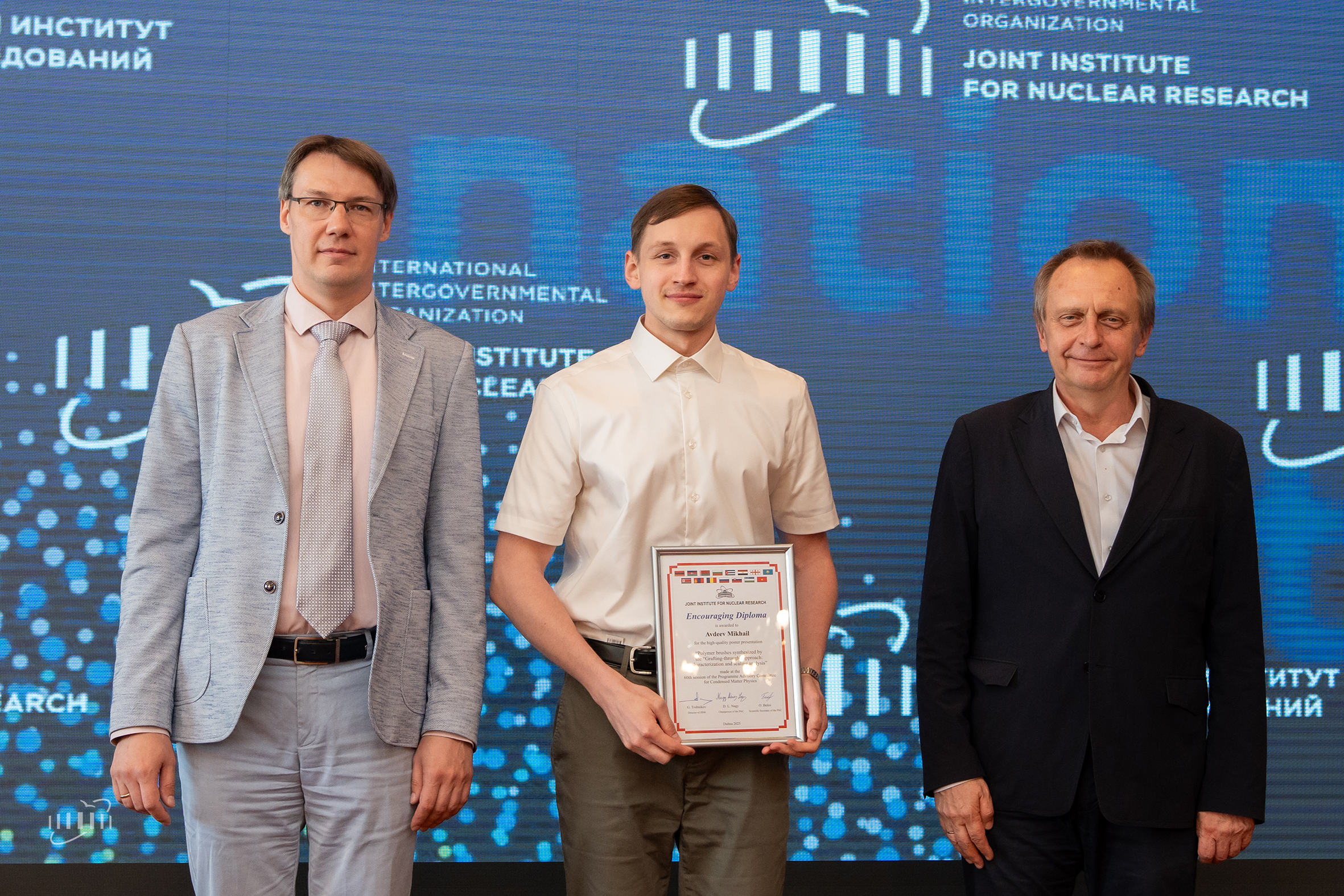
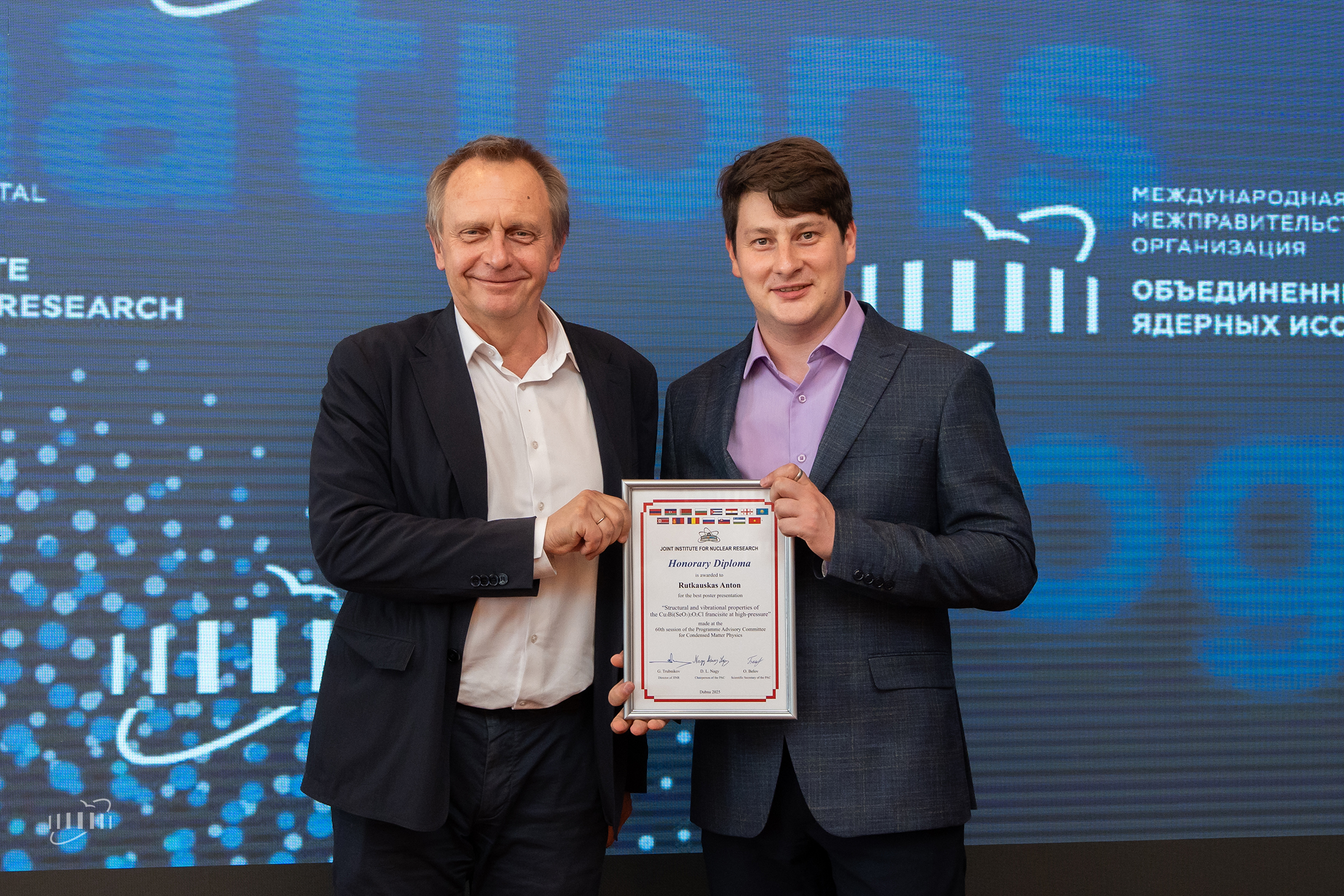
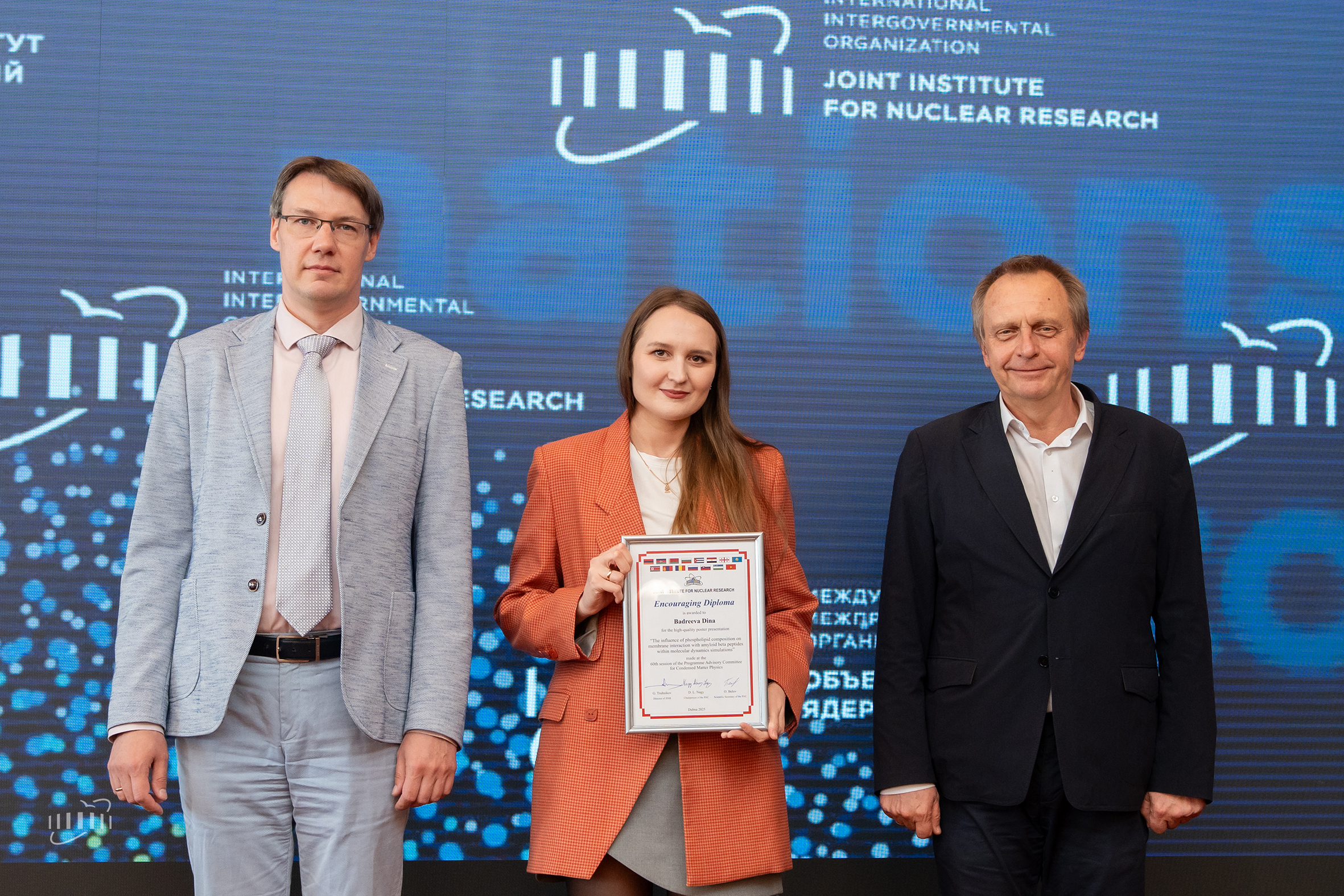
The winners of the previous poster session, Anton Rutkauskas, Dina Badreeva, and Mikhail Avdeev, were awarded.
Institute’s Chief Scientific Secretary Sergey Nedelko informed the PAC members on JINR’s achievements in international cooperation in recent months, including official meetings and major scientific events with Bulgaria, Brazil, Cuba, France, India, Russia, South Africa, Uzbekistan, and Vietnam.
The meeting ended with a general discussion and proposals for the agenda of the next session.