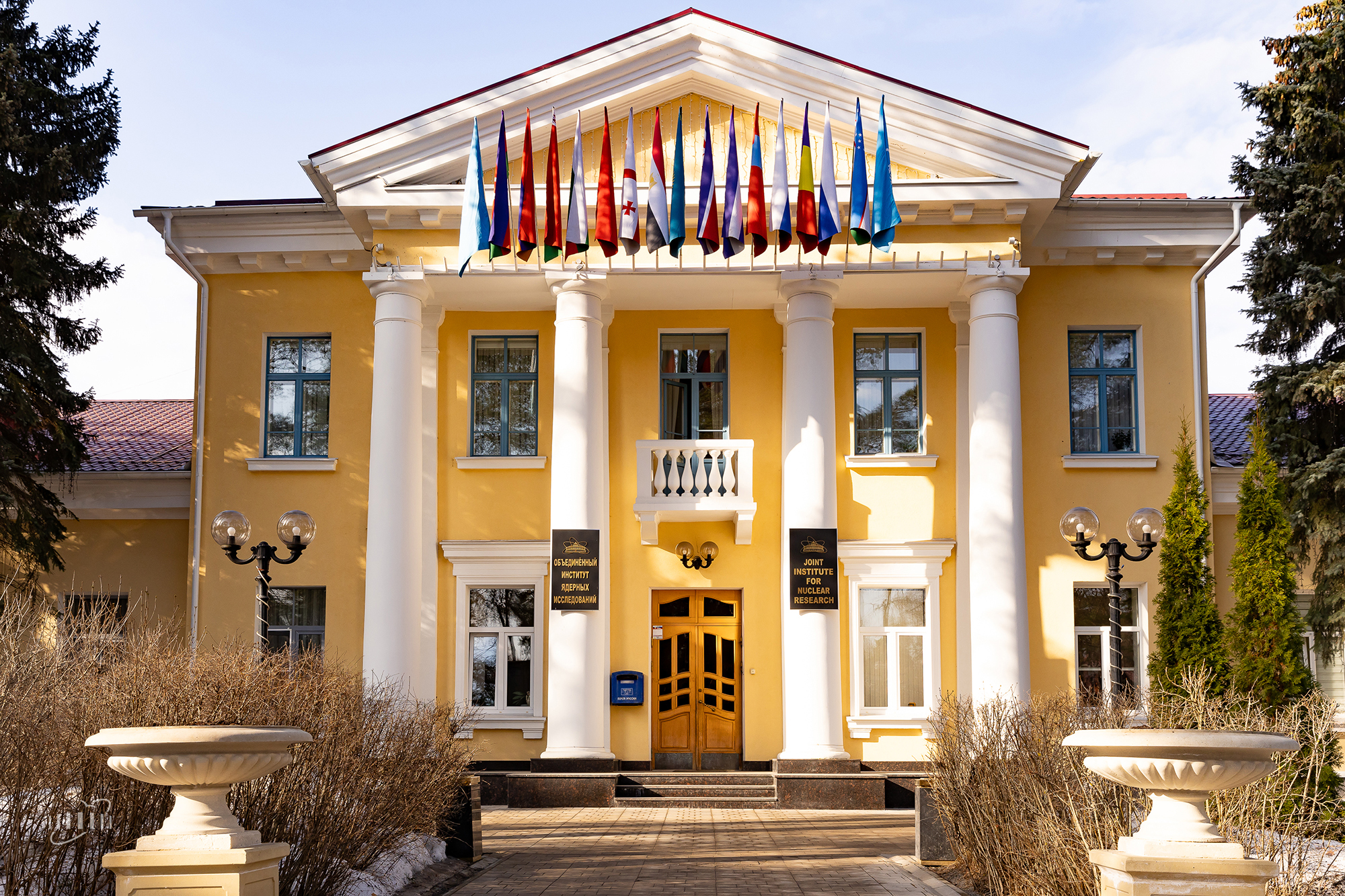
JINR – 70 years of history
70th JINR anniversary, 26 March 2026
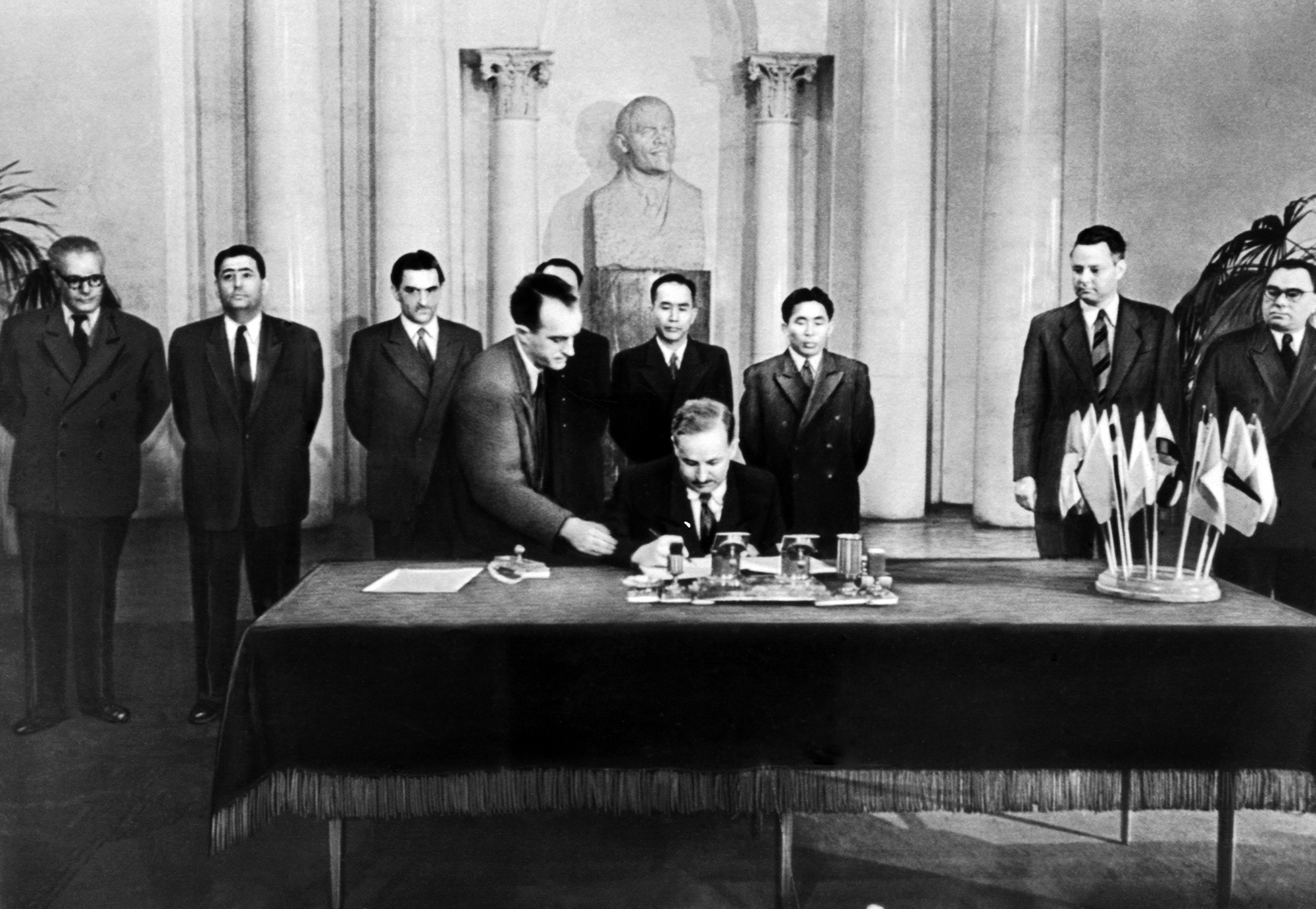 The moment the agreement to establish JINR was signed
The Joint Institute for Nuclear Research was founded by a decision of 11 states on 26 March 1956. The agreement to establish the new international organization was signed by Albania, Bulgaria, Czechoslovakia, the Democratic People’s Republic of Korea, the German Democratic Republic, Hungary, Mongolia, the People’s Republic of China, Poland, Romania, and the USSR. Two more countries, Vietnam and Cuba, became Member States in the summer of 1956 and in 1976.
Peaceful studies in nuclear and high-energy physics were set as JINR’s primary task. The USSR provided the Institute, upon its establishment, with the territory of the Dubna city in the Kalinin Region (currently in the Moscow Region) and two accelerators: a 680 MeV proton synchrocyclotron of the Institute of Nuclear Problems of the USSR Academy of Sciences (headed by M. G. Meshcheryakov) and a proton synchrotron under construction – a synchrophasotron with a record energy of 10 GeV – of the Electrophysical Laboratory of the USSR Academy of Sciences (INP, headed by V. I. Veksler). Corresponding Member of the USSR Academy of Sciences Dmitry Blokhintsev was elected director of the new Institute. Marian Danysh and Václav Votruba became vice-directors.
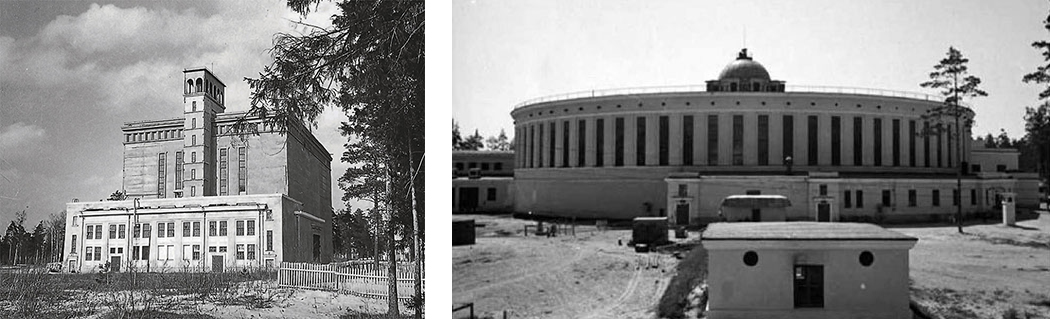 Buildings of the synchrocyclotron (left) and synchrophasotron (right) of JINR
The creation of the new Institute began with the creation of its units – the laboratories. The first ones were the Laboratory of Theoretical Physics, the Laboratory of Nuclear Problems (BLTP, formerly the Institute for Nuclear Phyics), the Laboratory of High Energies (formerly the Electrophysics Laboratory of the USSR Academy of Sciences), and the Laboratory of Neutron Physics (FLNP). The Laboratory of Nuclear Reactions (FLNR) was created later as well. Simultaneously with operating the synchrocyclotron and finishing the construction of the synchrophasotron (launched in April 1957), JINR designed and built new facilities: a unique pulsed neutron source named the IBR Research Reactor and a heavy ion accelerator named the U-300 Cyclotron.
 Director of the Laboratory of Nuclear Reactions Georgy Flerov and Yuri Oganessian at the U-300 Cyclotron
The synchrocyclotron’s main application was the research of the pion and muon properties, as well as nucleon-nucleon and pion-nucleon interactions at intermediate energies. In addition, the synchrocyclotron’s proton beams made it possible to conduct radiochemical studies and begin the first biophysical experiments. The creation of experimental equipment laid the foundation of methodological studies and the development of new particle detector types. In addition, it allowed to lay significant groundwork for low-temperature physics (in 1965, JINR achieved the world’s lowest temperature of 0.22 K, and subsequently achieved 25 mK) and to master the design and creation of new accelerators – cyclotrons. Some of these accelerators later successfully worked in the JINR Member States: Czechoslovakia, Poland, and Uzbekistan. By the mid-1960s, the LNP synchrocyclotron required modernisation to become one of the so-called “meson factories” – an accelerator for precise experiments in meson physics and the search for rare decays. The project was unfortunately slowed down as Albania and China withdrew their membership from JINR in 1961 and 1965, and the modernisation only finished in the first half of the 1980s. The synchrocyclotron became a new accelerator – the phasotron. Due to the 1990s economic issues of the Member States, the accelerator was never brought to its design parameters. Until its complete shutdown in 2023, its main goal was proton therapy of cancer. It should be noted that LNP JINR started pioneering work in this field using synchrocyclotron beams in 1967.
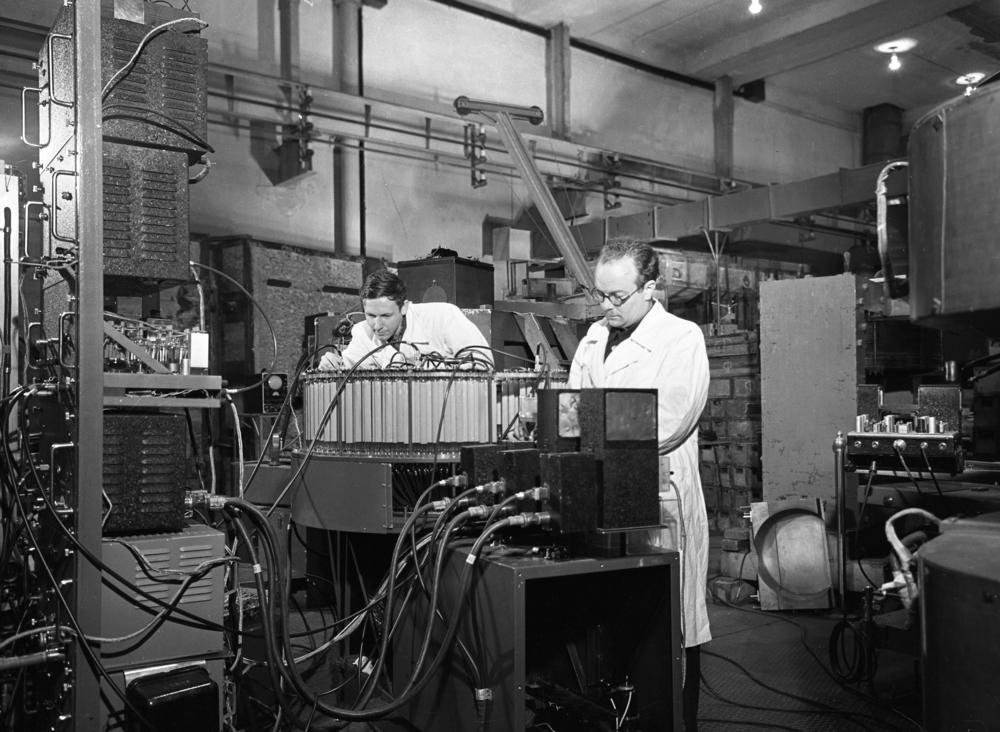 In the synchrocyclotron hall at the Laboratory of Nuclear Problems. In the foreground is I. M. Vasilevsky
The second large facility, the 10 GeV proton synchrophasotron with a 36 000-tonne magnet, had the record parameters for almost three years, until the launch of CERN‘s proton synchrotron. An international team led by Wang Ganchang discovered a new particle, antisigma-minus-hyperon, using the synchrophasotron. The researchers measured cross sections of proton-proton and proton-nuclear reactions in a wide range of energies and nuclei. Important patterns of their interaction were found. However, due to the launch of the U-70 Accelerator in the USSR in 1967, Protvino became a new site for experiments at record high proton energies. Teams of JINR physicists actively participated in these experiments, which marked the beginning of many years of successful cooperation between JINR and the Institute for High Energy Physics. The synchrophasotron’s new primary task was accelerating heavy nuclei and producing polarised beams of protons and deuterons. In 1973, a project was proposed to build a new accelerator, the superconducting heavy ion synchrotron named Nuclotron and successfully constructed in 1993. To create this facility, specialists had to develop a new unique technology for superconducting magnet production. The Nuclotron is now the main element of the NICA Accelerator Complex.
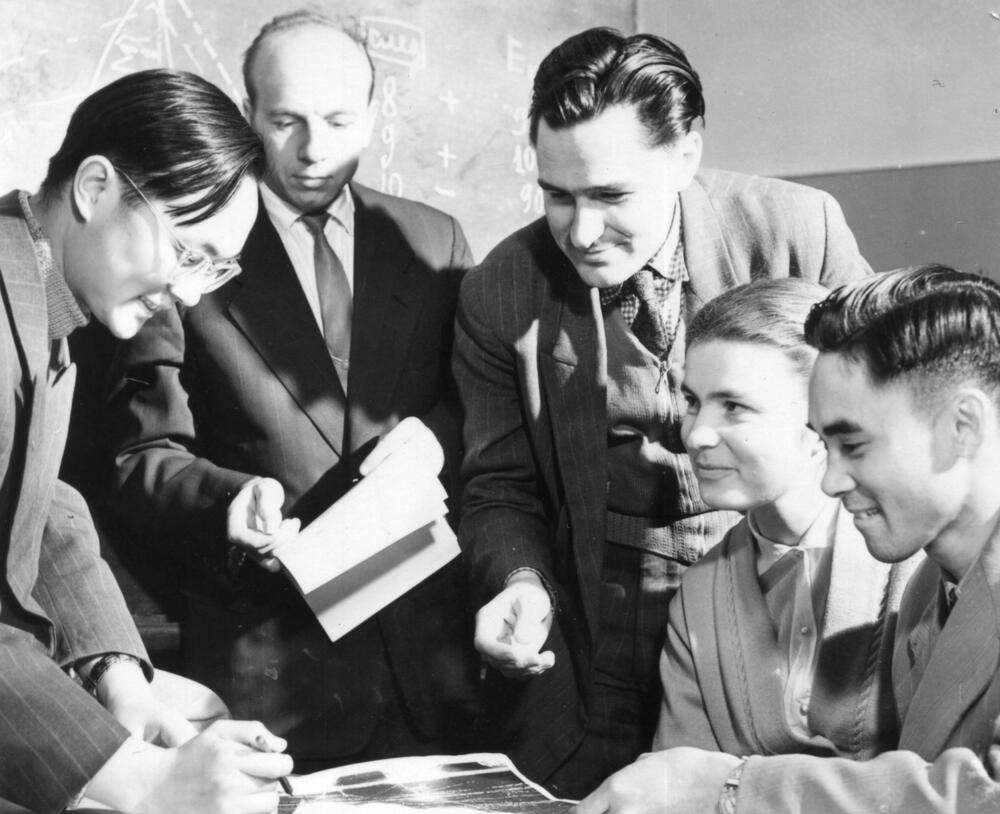 In the photo (from left to right): Ding Dazhao (China), A. A. Kuznetsov (USSR), A. Mihul (Romania), E. Kladnitskaya (USSR), Nguyen Dinh Tu (Vietnam) – co-authors of the discovery of the anti-sigma-minus-hyperon particle
In 1966, the new Laboratory of Computing Techniques and Automation was established for the processing of experimental data. It quickly turned into an independent research centre focusing on the development and application of computational methods, system programming, and high-performance data processing. One of the first supercomputers was the BESM-6 Computer, for which JINR specialists created the Dubna Operating System. The laboratory is called the Laboratory of Information Technologies (MLIT) since 2000, and its Multifunctional Information and Computing Complex, including the Govorun Supercomputer, is now a Tier-1 node of the WLCG – the distributed data processing system of the Large Hadron Collider.
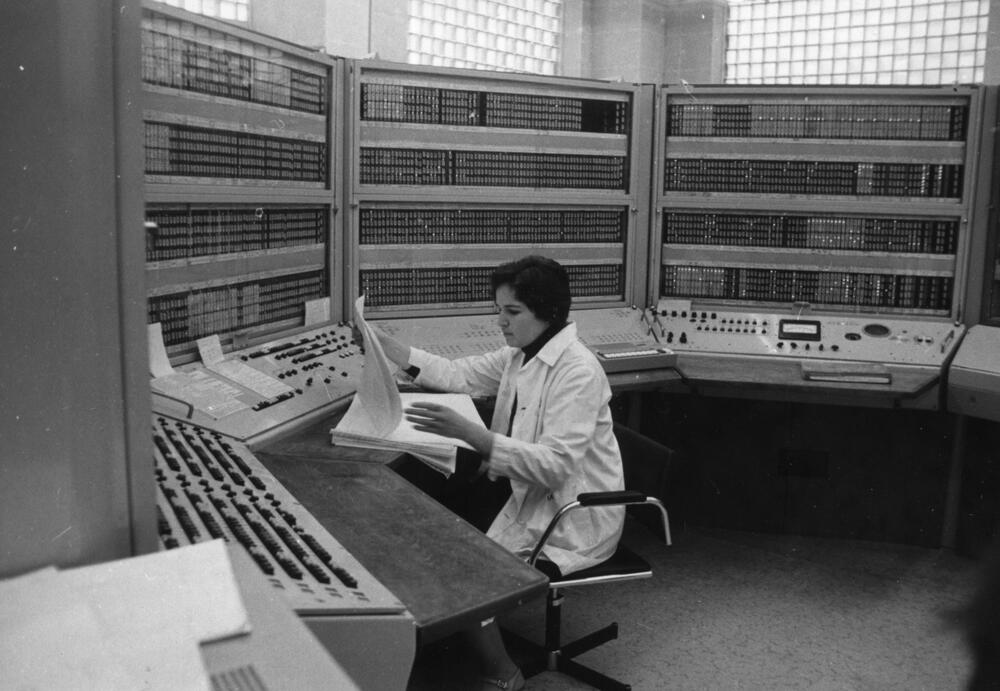 Operator Liudmila Kartashova working at the central processor of the BESM-6 Computer
Neutrino studies play an important role in JINR’s history. Back in 1957, a Dubna physicist Bruno Pontecorvo proposed a neutrino oscillation mechanism. JINR employees conducted experiments to search for oscillations at accelerators in Dubna and Protvino, later joining international collaborations of other scientific centres around the world. JINR is currently participating in the JUNO and NOvA Neutrino Experiments, experiments of the Kalinin Nuclear Power Plant, and COMET – an experiment to search electron-muon oscillations. In addition, JINR is engaged in a series of low-background neutrino experiments to search for double neutrinoless beta decay.
In addition to neutrino experiments, neutrino astronomy plays an important role in JINR’s work. In cooperation with the Institute for Nuclear Research of the Russian Academy of Sciences and a number of other institutes, JINR is creating a deep underwater neutrino telescope, Baikal-GVD, in Lake Baikal, set to reach a volume of 1 cubic kilometre. Exploratory and methodological studies started at the INR RAS back in the mid-1980s, with JINR joining a decade later.
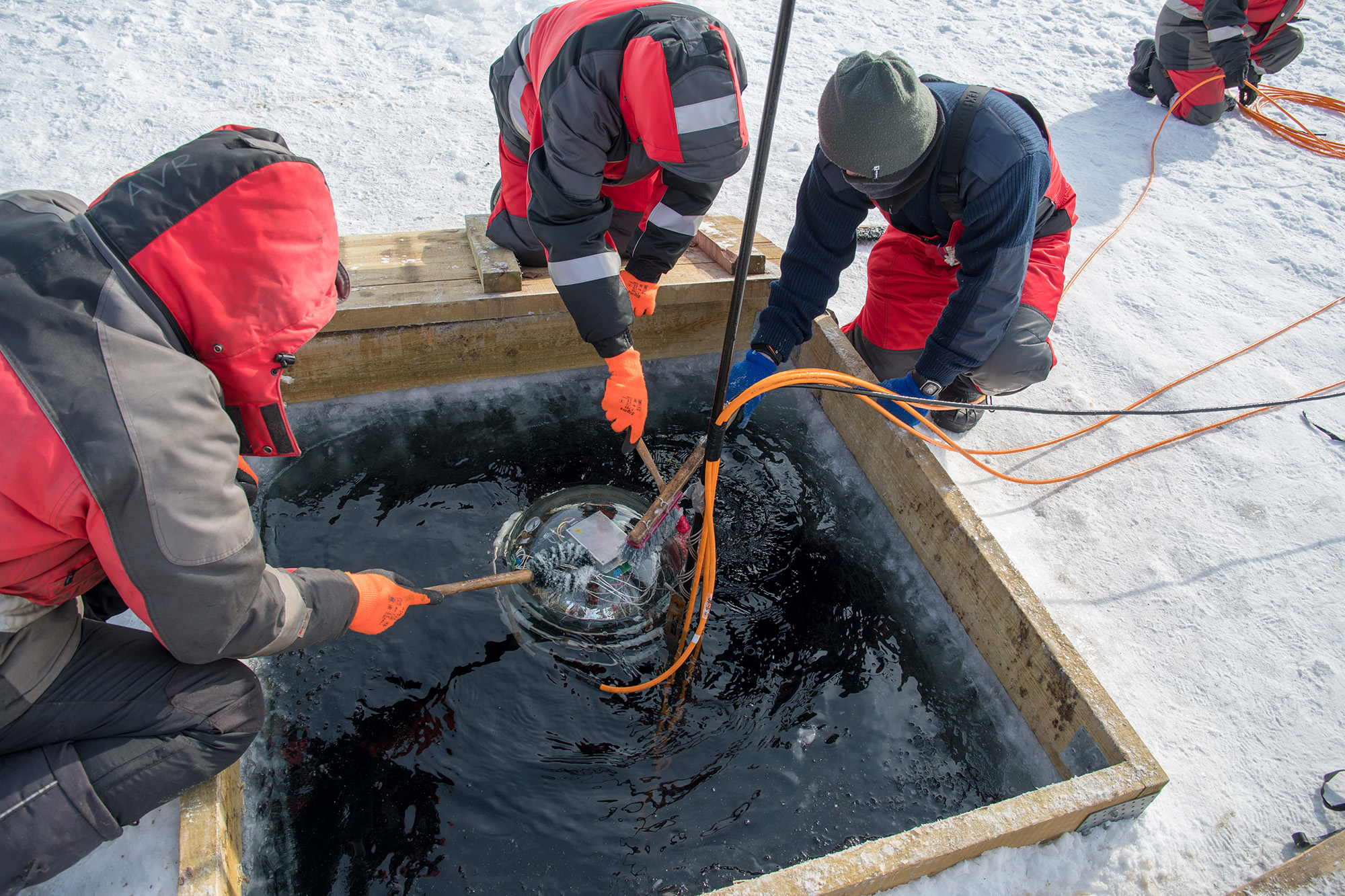 Members of the annual expedition lower the telescope’s new optical module into the water
JINR’s most famous nuclear physics achievement is the discovery of new chemical elements. Academician Georgy Flerov played a pivotal role in the development of this field of study. Impressive results were made possible by the creation of the U-300, U-400, U-400M, and, finally, the DC-280 (Superheavy Element Factory) cyclotrons, along with unique experimental equipment, accomplishments in radiochemistry, original formulation and experimentation. JINR has synthesised 14 new chemical elements (No, Rf, Lr, Db, Sg, Bh, Hs, Cn, Fl, Lv, Nh, Mc, Ts, Og) and was the first to synthesise ten of these. In addition to the superheavy element synthesis, the Laboratory of Nuclear Reactions conducts interesting research into the properties of light exotic nuclei and applied studies in radiation materials science and nanotechnologies.
The IBR Reactor, the design of which was proposed by Dmitry Blokhintsev, was originally created to study the fundamental properties of the neutron. However, the work of the Laboratory of Neutron Physics under the guidance of Nobel Laureate Ilya Frank promptly showed that using neutrons allows studying condensed matter. The reactor got surrounded by a complex of spectrometers (later repeatedly upgraded), which make it possible to obtain unique data on the structure of matter for solving problems in biology, materials science, ecology, and nanoscience. The reactor was upgraded, receiving the name IBR-30. Later, a new reactor was built; the physics launch of the new IBR-2 took place in 1977. After another upgrade in 2010, the IBR-2M Reactor is still one of the world’s best sources of high-density neutrons.
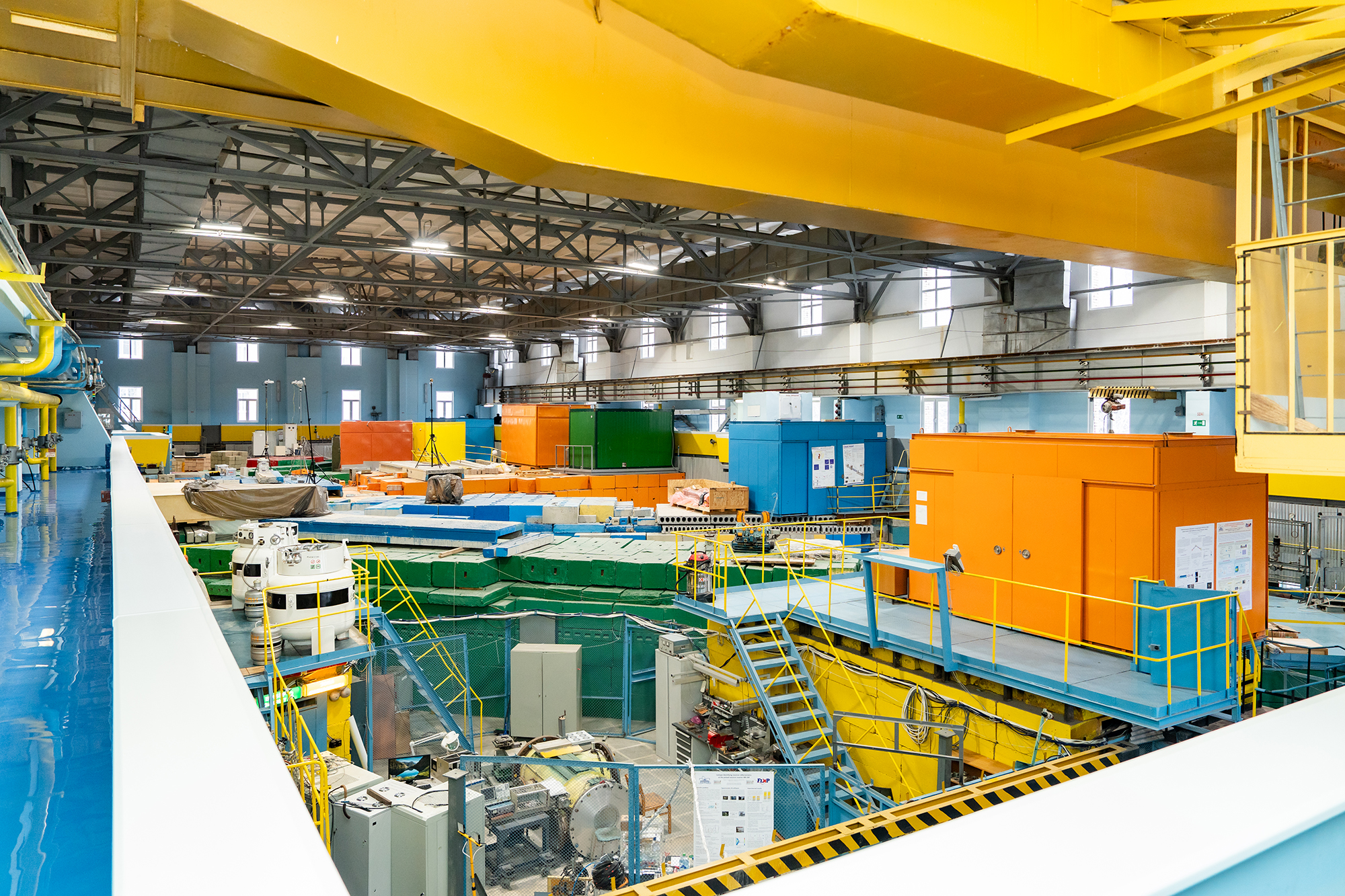 At the experimental equipment hall of the IBR-2 Research Reactor
Biophysical research using the DLNP synchrocyclotron’s beams started back in 1950, long before JINR was founded. Subsequently, with ion accelerators available at JINR and the notable participation of Vladimir Korogodin and by Evgeny Krasavin, a new direction in radiobiological research emerged at the Institute. Cooperation with the Institute of Biomedical Problems, which began back in the 1960s, allowed the Institute to conduct space radiobiology studies. In 2001, the new Laboratory of Radiobiology (LRB) opened. The field is now among the most actively developing areas of study at the Institute.
A key JINR achievement is theoretical physics research. Throughout the years, such outstanding theorists as Dmitry Blokhintsev, Nikolay Bogoliubov, Albert Tavkhelidze, Nguyen Van Hieu, Hu Ning, and Zhou Guangzhao worked at JINR. Within the walls of the Laboratory of Theoretical Physics, dispersion relations in quantum field theory were proved (Bogoliubov, 1956), a microscopic theory of superconductivity was created (Bogoliubov, 1957), and a new quantum number, “colour”, was discovered (Bogoliubov, Struminsky, and Tavkhelidze, 1965). Currently, the Laboratory of Theoretical Physics conducts studies in quantum field theory, nuclear theory, condensed matter, and mathematical physics.
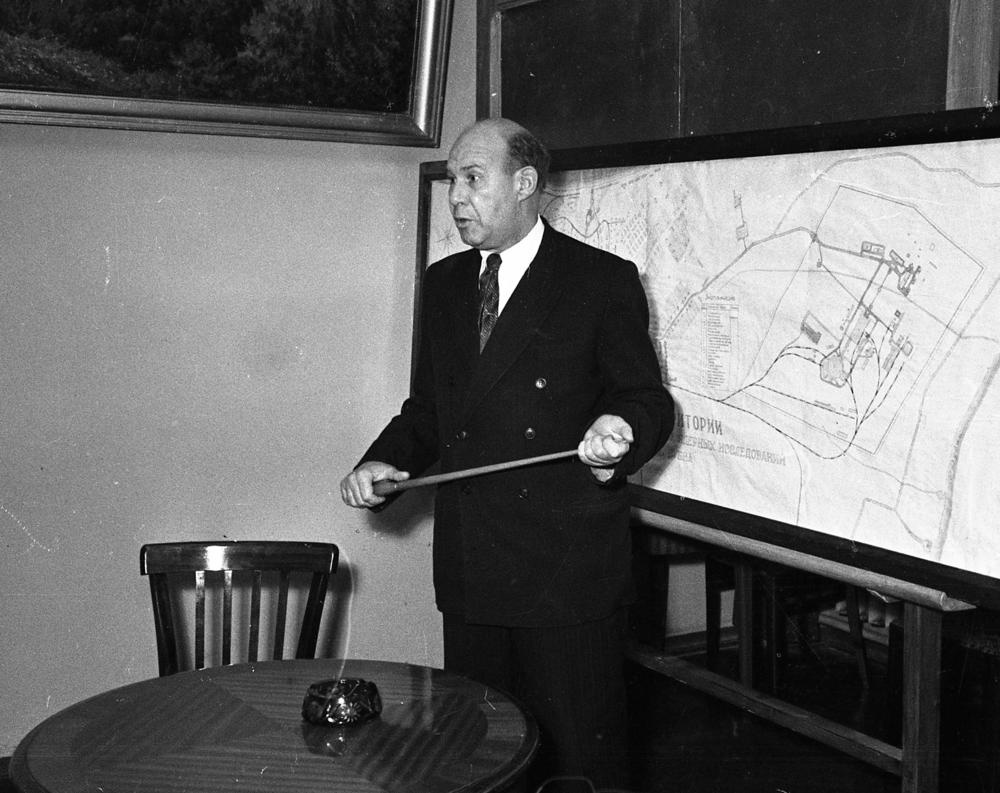 First JINR Director, Corresponding Member of the USSR Academy of Sciences Dmitry Ivanovich Blokhintsev
JINR faced significant difficulties due to the dissolution of the Soviet Union in 1991 and the economic difficulties in the JINR Member States. In 1992, JINR consisted of Azerbaijan, Armenia, Belarus, Bulgaria, Vietnam, Georgia, Kazakhstan, Democratic People’s Republic of Korea, Cuba, Moldova, Mongolia, Poland, Russia, Romania, Slovakia, Uzbekistan, Ukraine, Czech Republic. As part of intergovernmental agreements, cooperation continued with Hungary and Germany. Agreements were concluded with Italy, Serbia, South Africa, and Egypt as well. In 2019, Egypt became a JINR Member State.
The fall of the iron curtain opened up opportunities for broad international collaboration, particularly joint work with CERN, which began in the 1960s and reached its peak during the creation of the Large Hadron Collider. In addition to its participation in three experiments (ALICE, ATLAS, and CMS), JINR specialists are involved in accelerator physics and engineering as part of the project. Mutually beneficial cooperation has been established with almost all scientific centres of the world conducting research in the particle and nuclear physics.
JINR is actively developing its research infrastructure and conducting a wide range of fundamental and applied studies. It remains an important centre for knowledge exchange and employee training. In recent years, cooperation has been established with China, Brazil, and Mexico at the governmental level. Nevertheless, 70 years of JINR’s successful history prove that science brings nations together and allows us to stay optimistic about the future.