Third OGANESSON Prize awarded
News, 25 February 2026
On 20 February 2026, the Pushkin State Museum of Fine Arts in Moscow hosted the OGANESSON–2025 Prize ceremony. This is the third time that the honorary international prize was awarded to outstanding researchers for their significant contribution to the development of natural sciences, as well as for the popularisation of science.
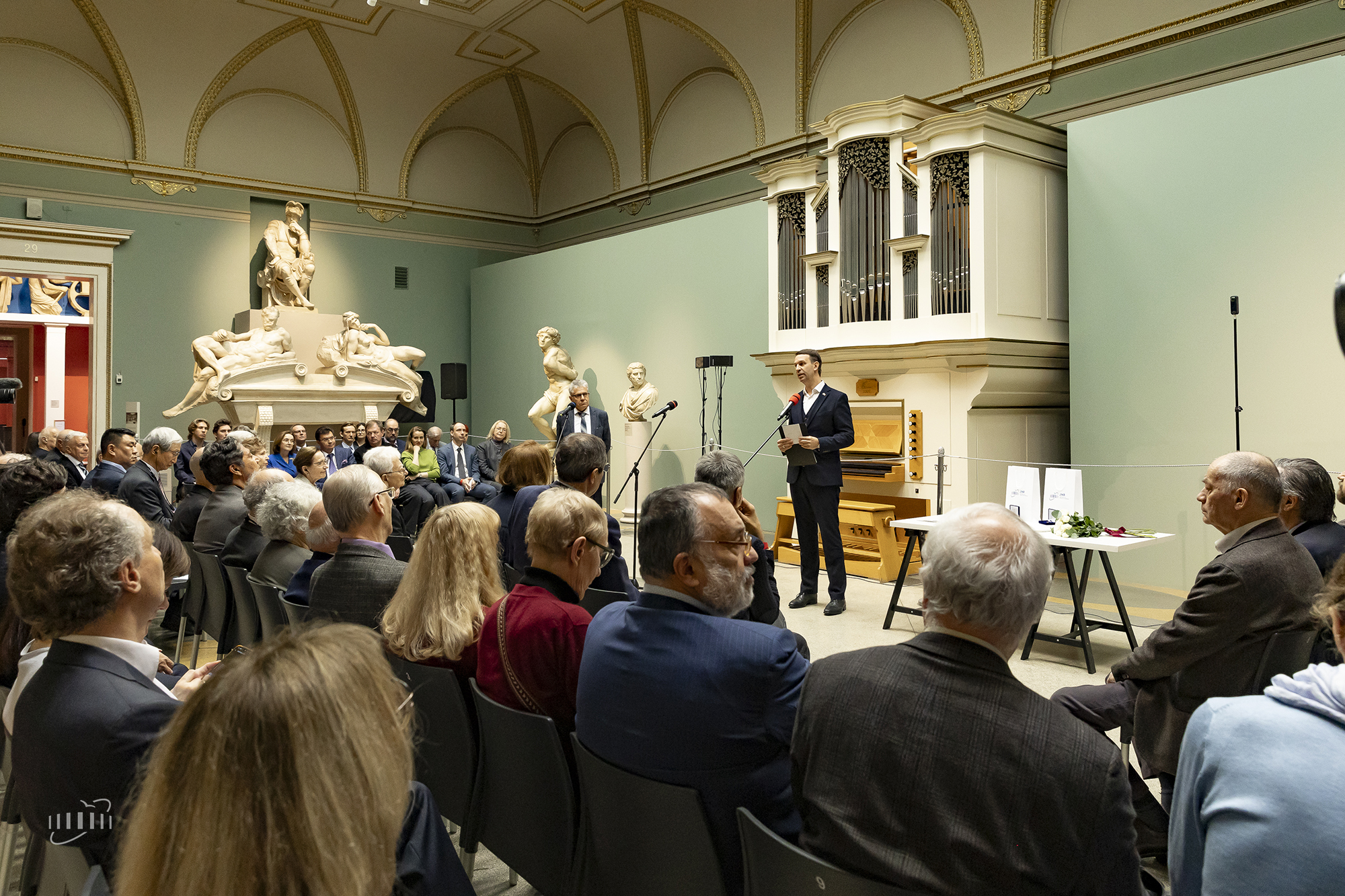
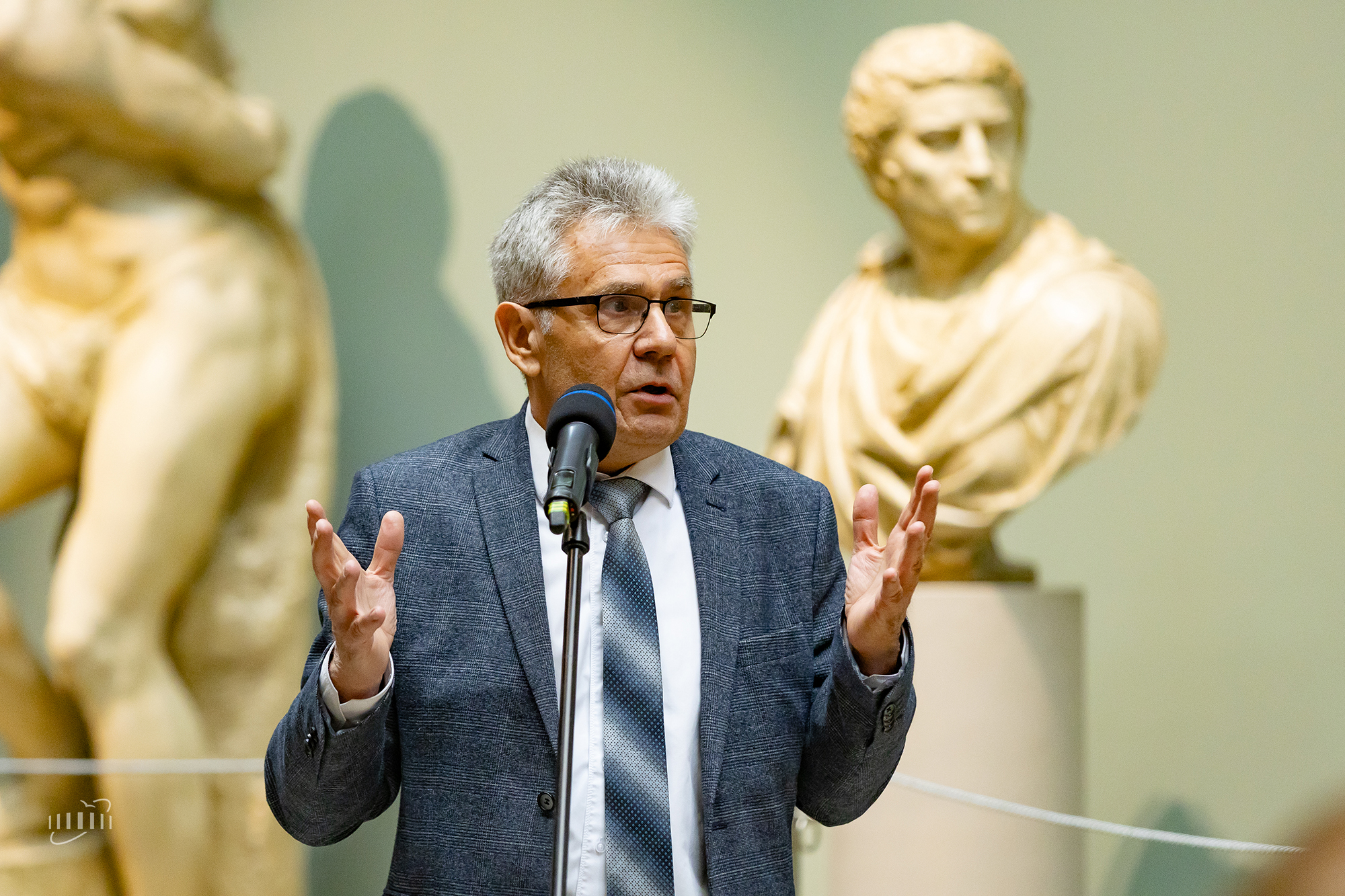
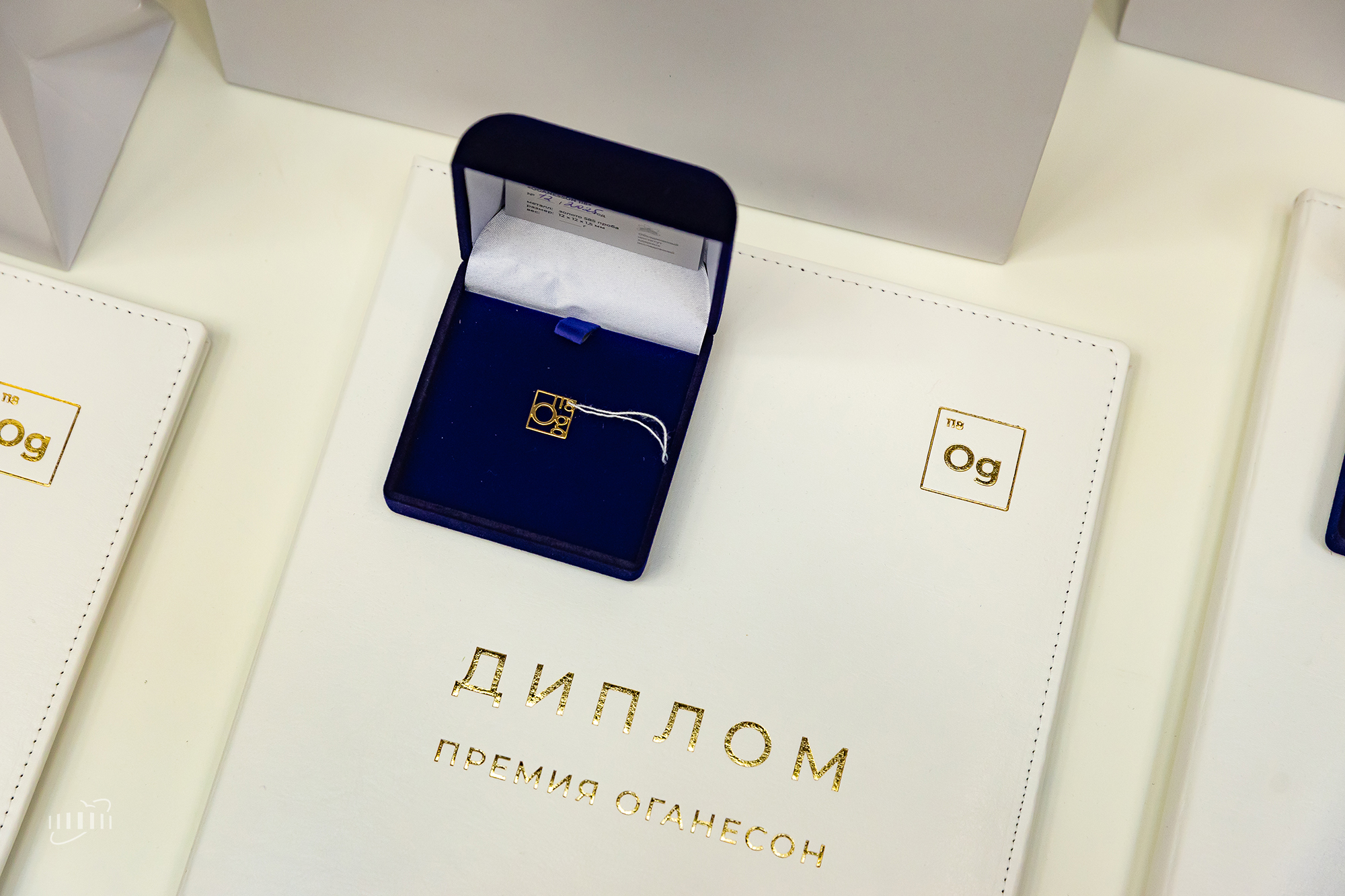
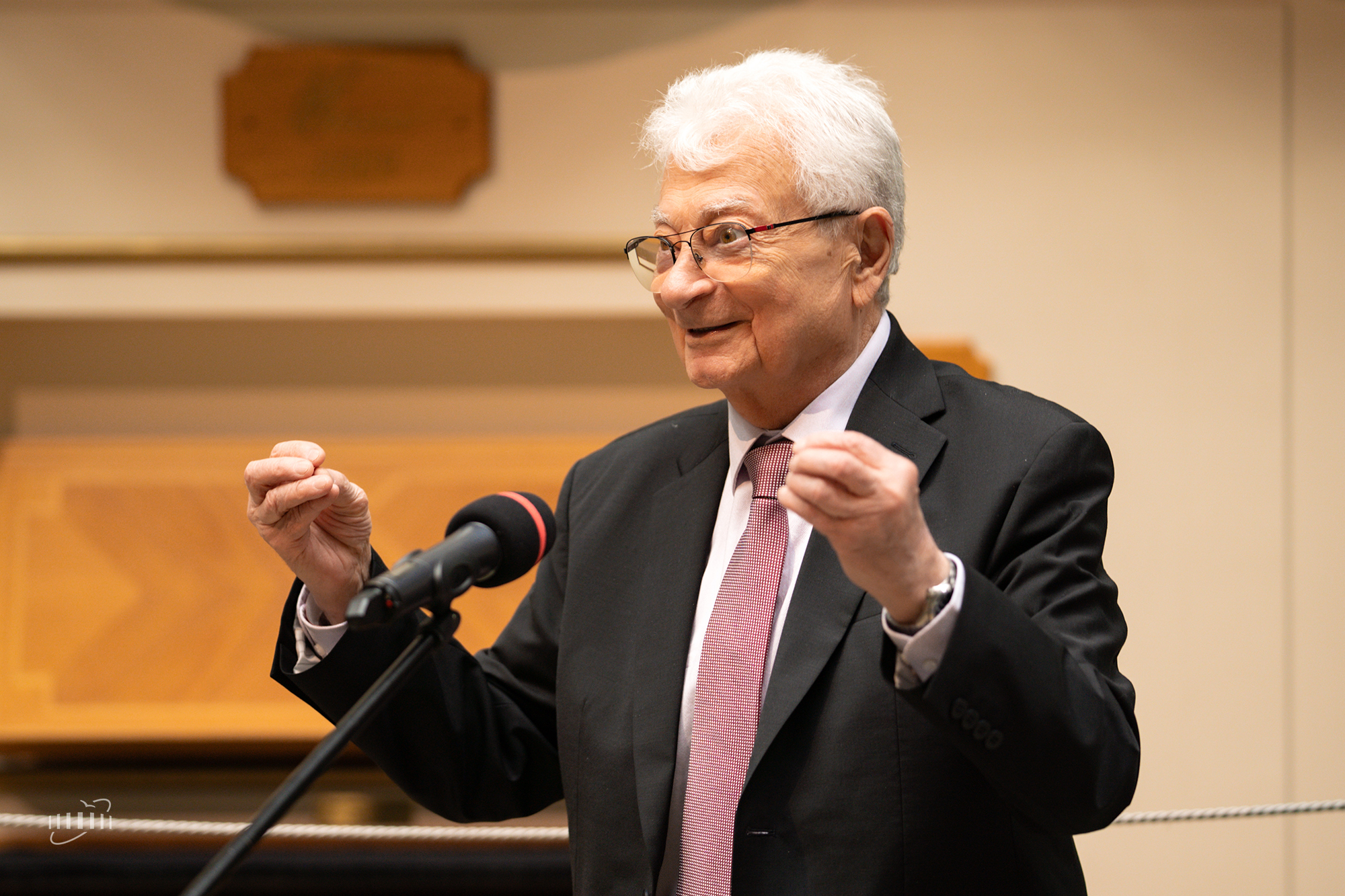
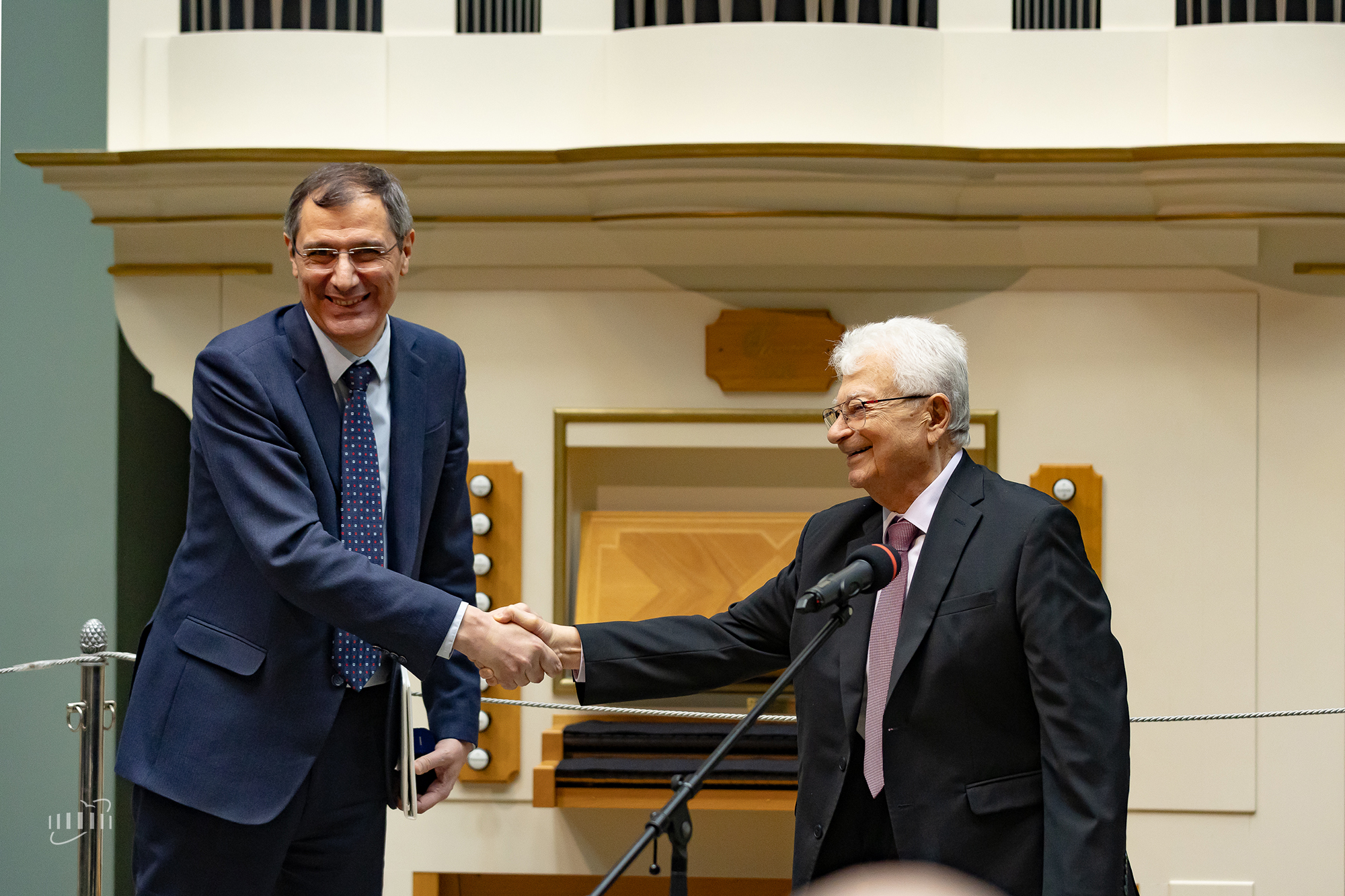
In his welcome speech, JINR Director, Academician of the Russian Academy of Sciences (RAS) Grigory Trubnikov gave an overview of the prize’s history and noted that the ceremony is supported by the Ministry of Culture, the Ministry of Foreign Affairs, and the Ministry of Science and Higher Education of the Russian Federation. “For the first time in history, ten superheavy elements were synthesised at the Joint Institute for Nuclear Research, and it is symbolic that oganesson is currently the heaviest and most elusive of them. Much like the element it was named after, the prize carries weight in the scientific community, and becoming a laureate is just as difficult as filling in new rows of Mendeleev’s Periodic Table”, Grigory Trubnikov emphasised.
Prize Committee Chair, Scientific Leader of the National Centre for Physics and Mathematics, Academician Alexander Sergeev noted that in recent years, the number of non-governmental prizes for researchers increased in Russia. What makes these particularly important is that scientific community chooses laureates independently. “Each year, we celebrate the outstanding researchers honoured with this prize. Today we welcome a most worthy addition to the brilliant galaxy of laureates”, Alexander Sergeev said.
Having highlighted the international character of the prize – a reflection of the fact that fundamental science has no nationality – JINR Director Grigory Trubnikov announced the 2025 laureates.
Professor Michel Spiro, a member of the JINR Scientific Council, who headed the International Union of Pure and Applied Physics for a long time, received the prize for outstanding research in high energy physics and nuclear physics, along with passionate leadership in global initiatives supporting fundamental science. “Professor Spiro united several dozen countries with his initiative to hold the International Year of Basic Sciences“, Grigory Trubnikov said.
Doctor of Physics and Mathematics, Head of the Laboratory of the Theory of Fundamental Interactions at the RAS Lebedev Physical Institute Alexey Semikhatov was awarded for significant contribution to the Russian science communication, including quantum physics popularisation. “Alexey Mikhailovich Semikhatov is not just a great researcher and science communicator, whose lectures are always overcrowded”, the JINR Director noted.
Natalia Tarasova – Doctor of Chemistry, Professor, RAS Corresponding Member, Director of the Institute of Chemistry and Sustainable Development Problems at the Mendeleev University of Chemical Technology of Russia – became an OGANESSON–2025 Prize laureate for her great contribution to cooperation with international organizations and scientific unions (UNESCO, IUPAC, ISC), aimed at achieving the Sustainable Development Goals. “Natalia Tarasova is an excellent researcher and an outstanding organizer of world–class scientific activities. For a long while, she was the president of the International Union of Pure and Applied Chemistry. Natalia Tarasova devoted her entire life not only to doing science, but also to educating personnel, as well as creating and developing a school of fundamental chemistry,” Grigory Trubnikov emphasised.
Among the laureates is Academician Arutyun Avetisyan, Doctor of Physics and Mathematics, RAS Professor, Director of the RAS Ivannikov Institute for System Programming (ISP RAS), Head of departments at Moscow State University, Moscow Institute of Physics and Technology, and the Higher School of Economics. He was honoured with the prize for his great contribution to the creation of trustworthy artificial intelligence in scientific and applied fields, as well as the training of highly qualified young specialists in modern information technologies. “He is one of the lecturers who can talk about the possibilities of artificial intelligence without ever mentioning these words in his lecture. Arutyun Ishkhanovich heads not just the ISP RAS, but also a large number of scientific commissions and councils, managing to work in Russia, Armenia, and many other countries of the world”, Grigory Trubnikov introduced the laureate.
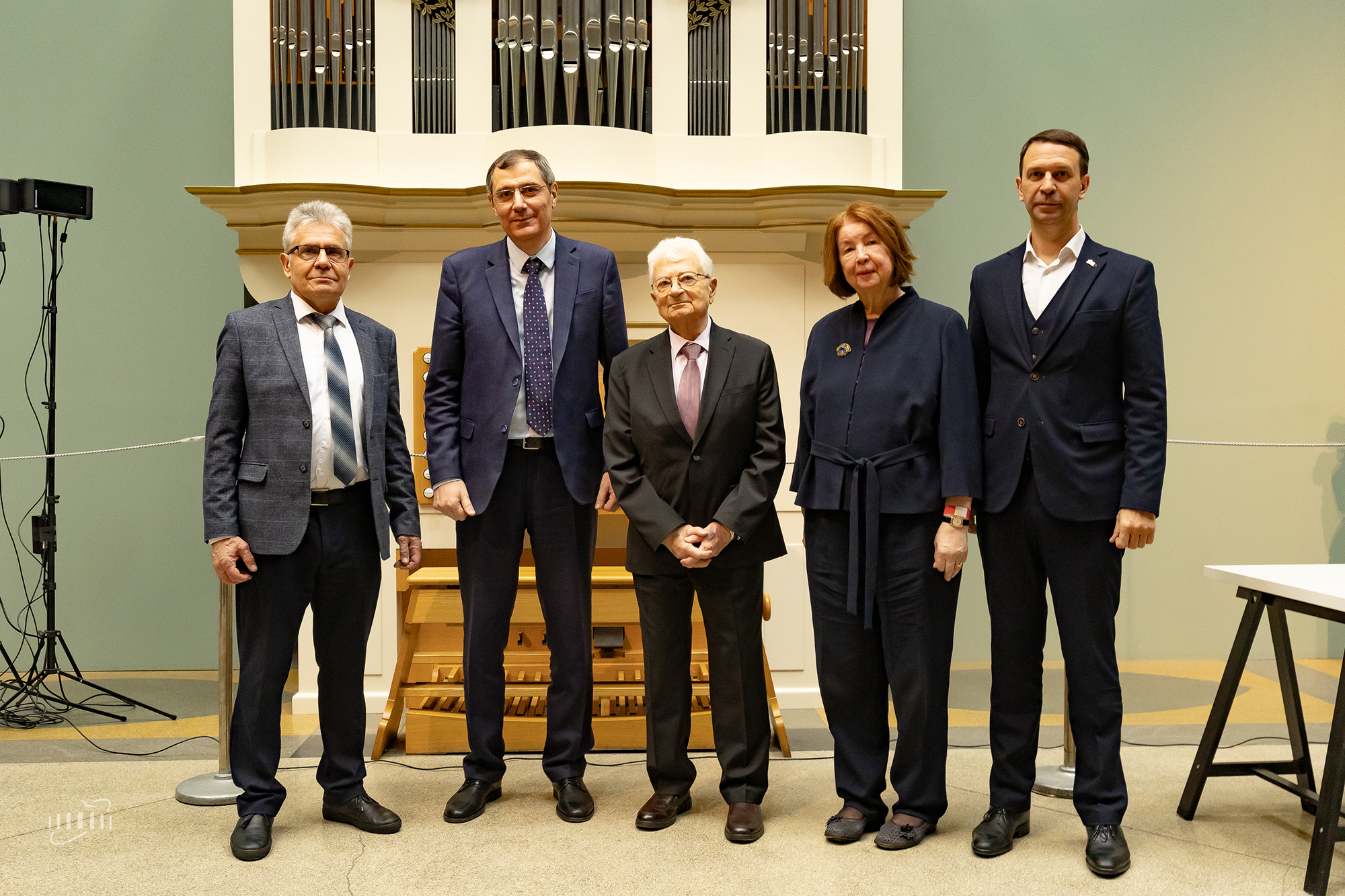
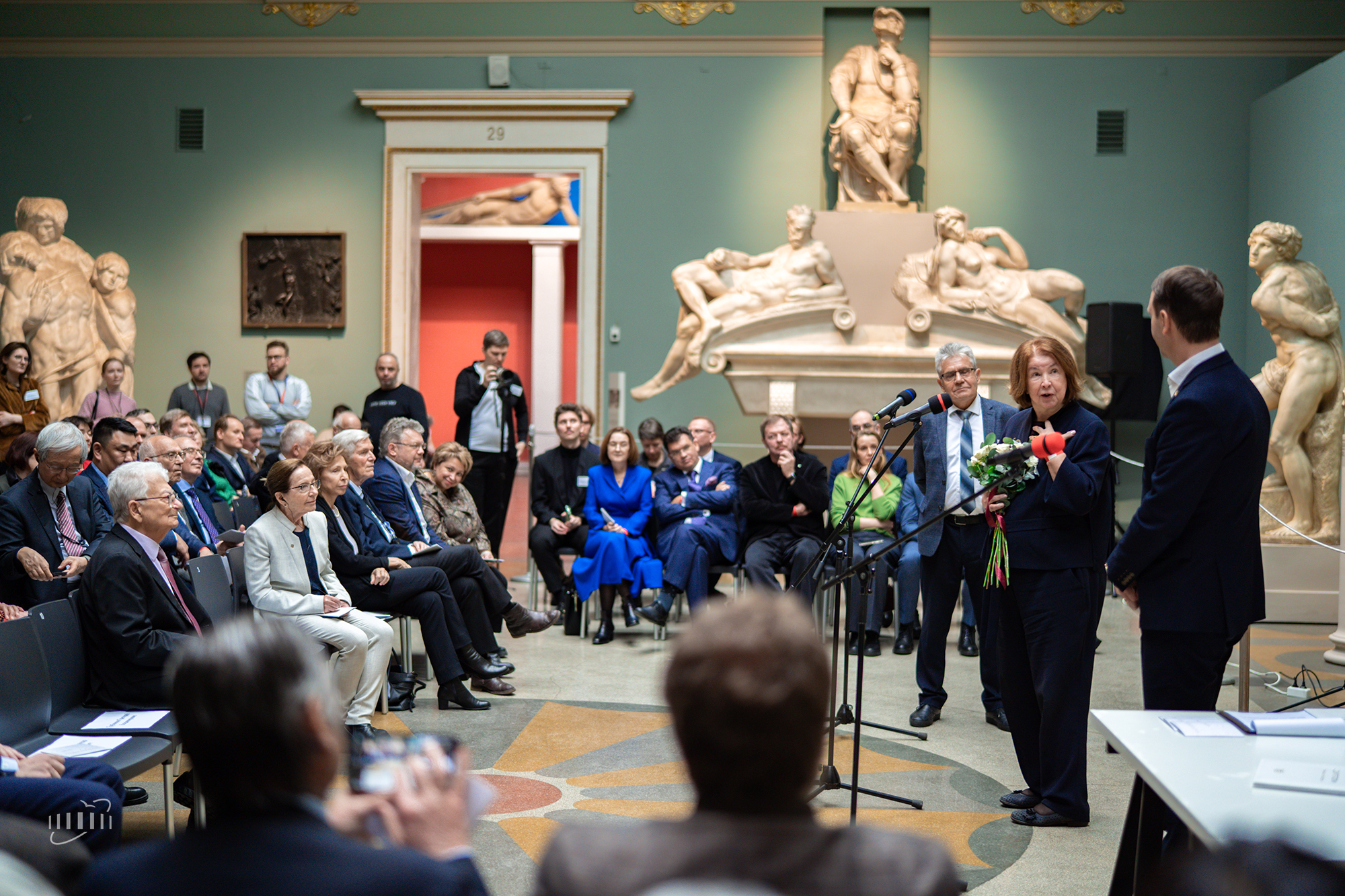
Two of the awardees were able to personally attend the ceremony and express their gratitude to the jury, the Joint Institute, and Academician Oganessian.
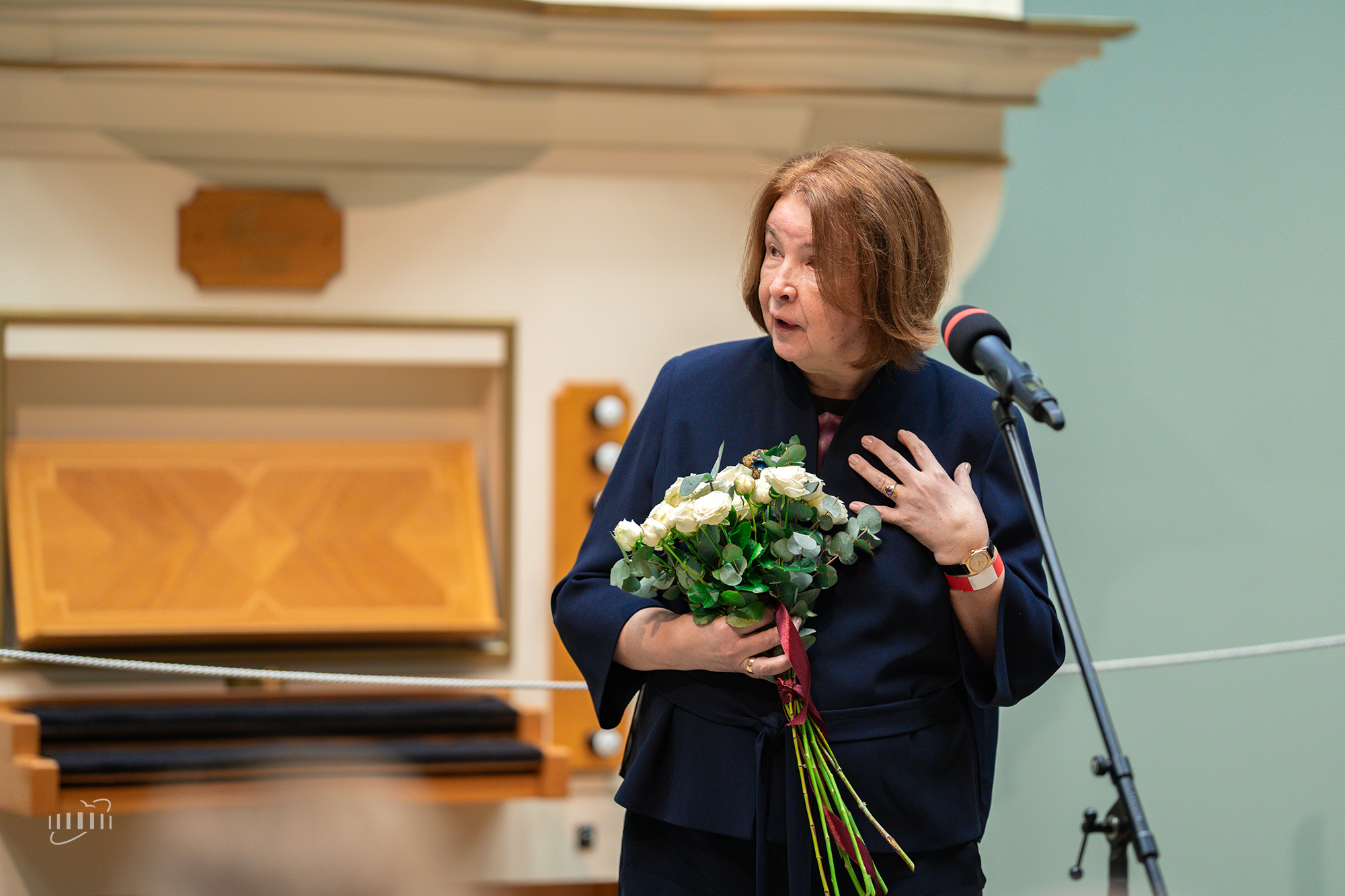
Natalia Tarasova stated that receiving the OGANESSON Prize is a great honour. She noted that the concept of sustainable development is essentially “the science of the boundaries that are allowed to humankind in order for life to be infinite”. “Standing on the shoulders of giants, it was impossible not to receive this award. I sincerely thank the jury and Yuri Tsolakovich, Honorary Doctor of Mendeleev University, for the fact that sustainable development found such recognition among the scientific community”, Natalia Tarasova concluded. Scientific Leader of the Laboratory of Nuclear Reactions at JINR, RAS Academician Yuri Oganessian congratulated his colleague, paying particular attention to the long time they agree on research and moral values.
Accepting the award, Arutyun Avetisyan shared the achievements of the ISP RAS, from participation in creating a Russian mRNA cancer vaccine using artificial intelligence to the initiative to create international repositories of trusted AI solutions available anywhere in the world. The laureate sees the special value of the prize in its academic, human nature: “I have always said that agency is very important to me. When it comes to artificial intelligence, I say, “It has no agency”, because a work of art becomes such only with the author’s signature. This prize is also agential. I get it from the community, which recognised me as one of its members, and this is extremely important”. Yuri Oganessian, in turn, called this award not only a personal triumph of the laureate, but also a tribute of deep respect to the outstanding mathematical school of Armenia. “Artificial intelligence, one of the fields Arutyun Ishkhanovich works in, belongs to applied mathematics. And the merit of our laureate lies in the fact that he speaks about artificial intelligence absolutely clearly, so it immediately becomes obvious how AI can play a very significant role in the life of the human society”, Yuri Oganessian commented.
To conclude the evening, the JINR Director announced the start of application submission for the fourth OGANESSON Prize, the jury’s decision on which will be announced in September. “This year is radically different from previous years. In January, after ten years of construction and the most difficult launch, the NICA Collider started working, circulating beams. In the future, the collection of physical data will begin. And in May, the Laboratory of Nuclear Reactions will make its first attempt at synthesising element 119. That is why this year’s procedure for choosing laureates and the status of the award itself will acquire specific value”, Grigory Trubnikov concluded.
The ceremony was attended by representatives of the Directorate and heads of laboratories of the Joint Institute for Nuclear Research, members of the Institute’s Scientific Council, members of the Prize jury, and past laureates, along with employees of leading scientific centres, representatives of business, and the media.
The OGANESSON Prize was founded by academician Yuri T. Oganessian, who received the Sber Scientific Prize for outstanding achievements in 2022. Yuri Oganessian directed the prize money to the annual support of researchers working in natural sciences and popularisers of science. The award’s founders are Yuri Oganessian and JINR. The Prize was first awarded in 2023.