PAC NP 61: infrastructure development and new projects
News, 23 June 2025
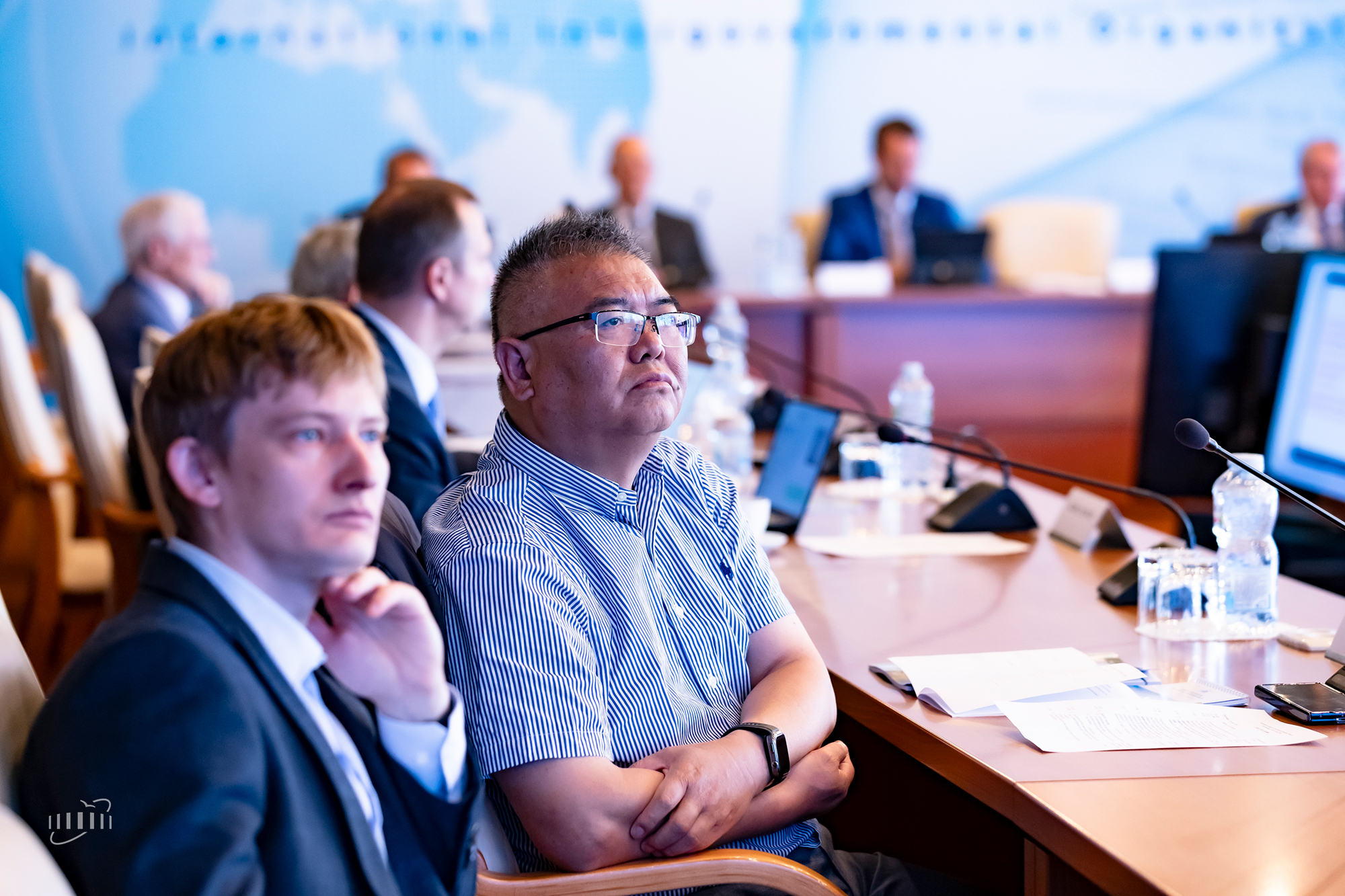
On 19–20 June 2025, the JINR International Conference Centre hosted the 61st meeting of the Programme Advisory Committee for Nuclear Physics (PAC NP). The PAC NP members got acquainted with the latest research results at the Superheavy Element Factory (SHE) and the modernisation of the EG-5 Electrostatic Accelerator. Employees of the Laboratory of Neutron Physics and the Laboratory of Nuclear Problems at JINR presented prospective projects of new facilities.
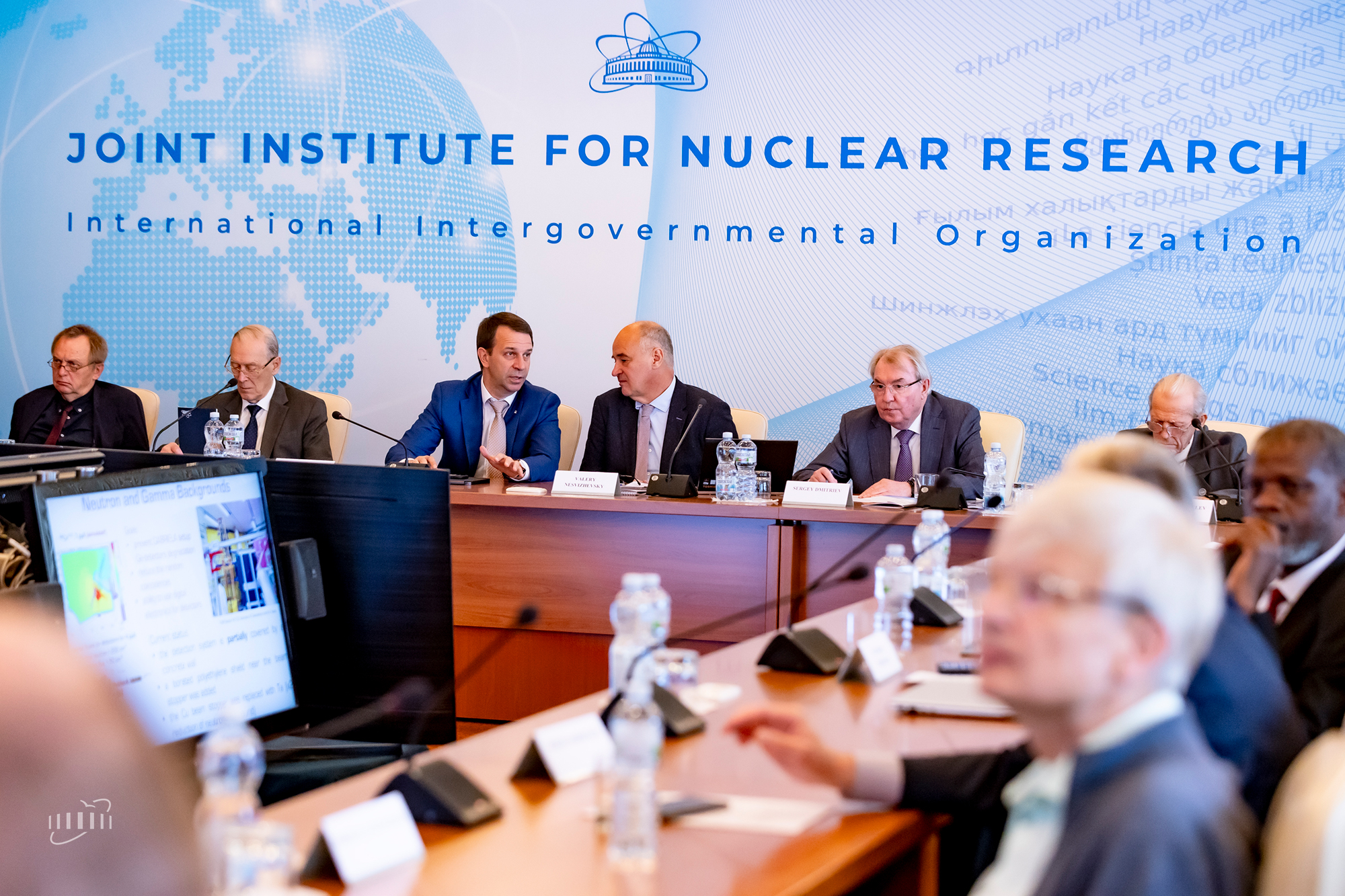

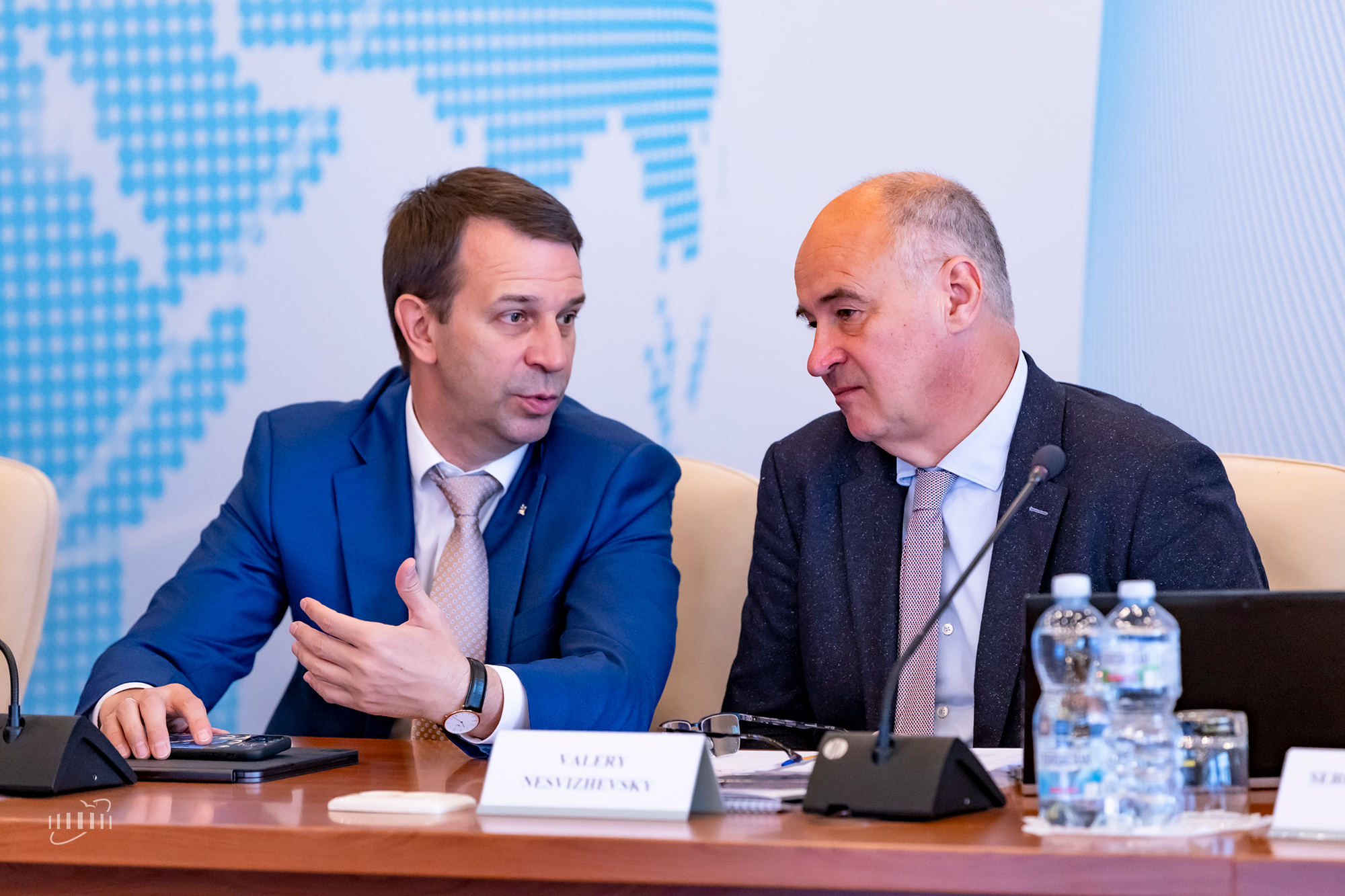
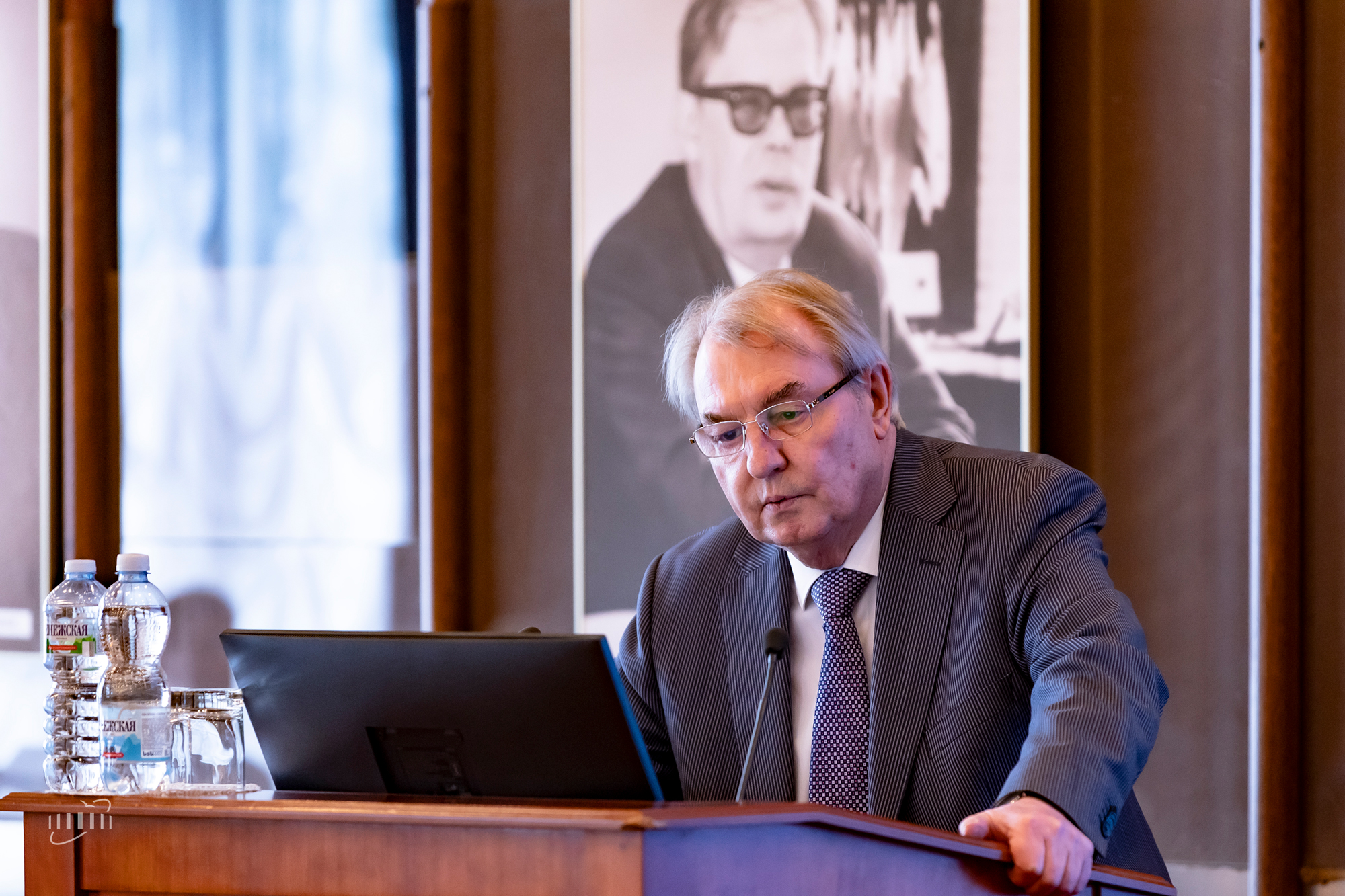


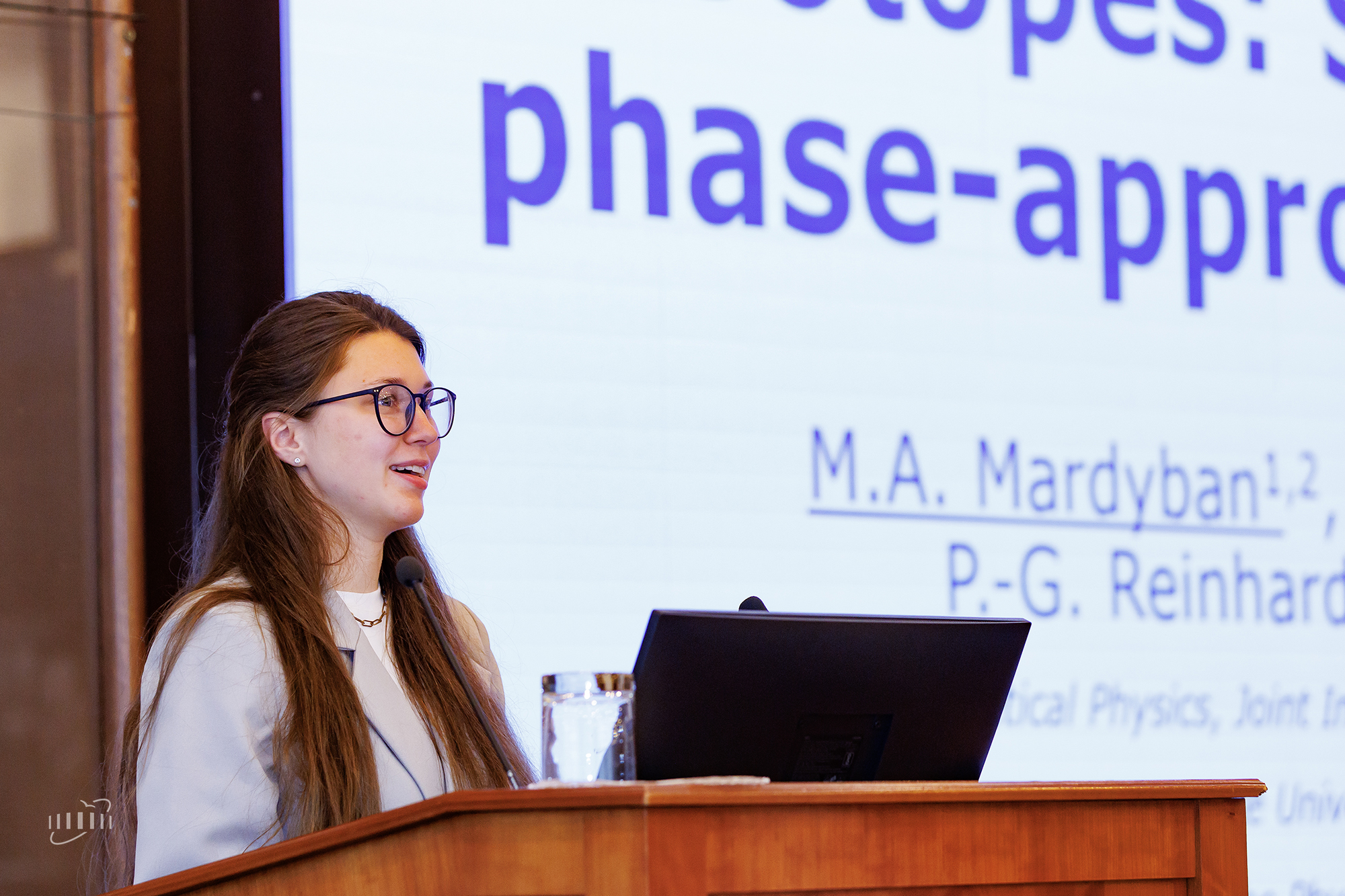
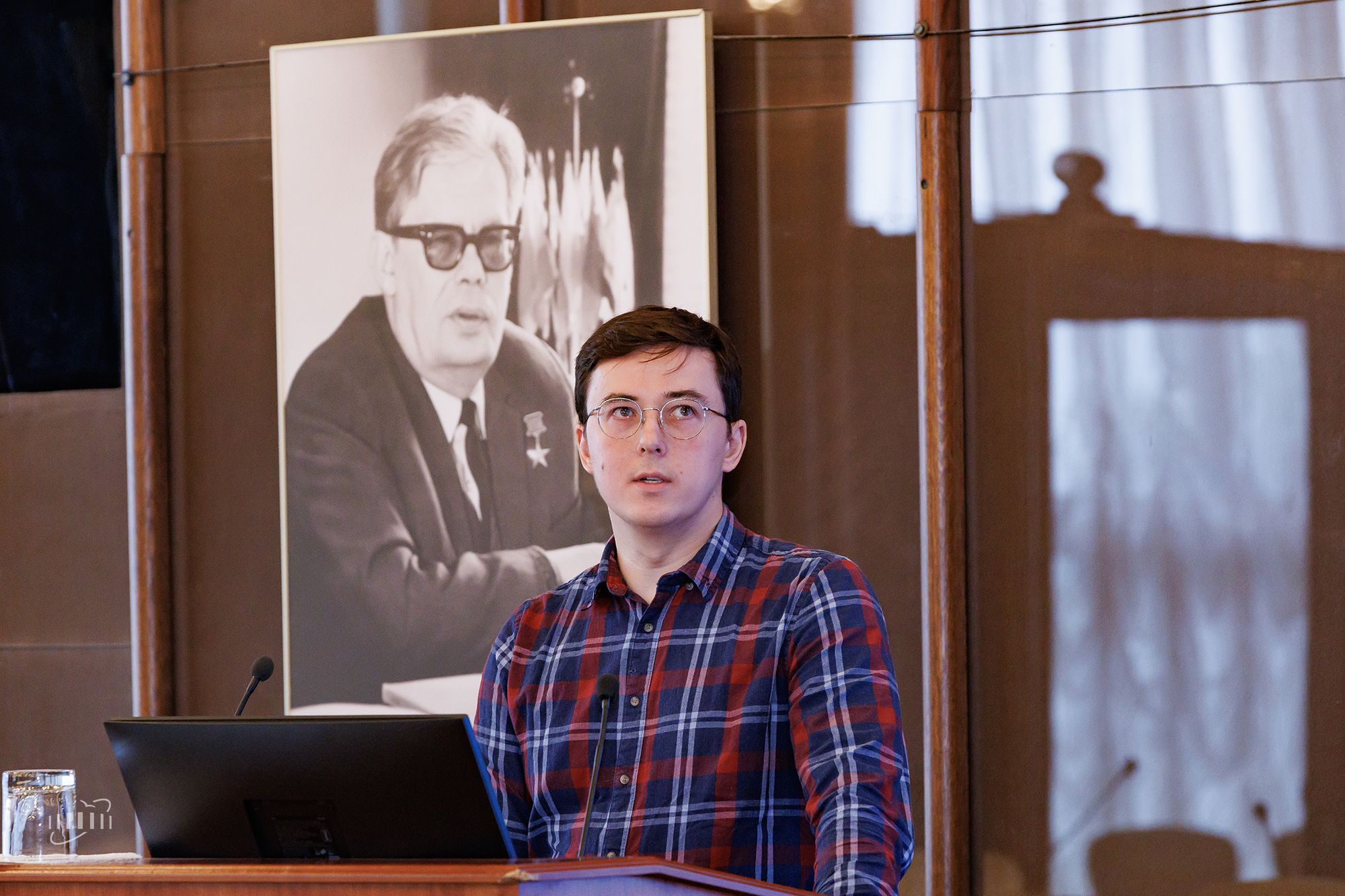
At the opening of the event, PAC NP Chair Valery Nesvizhevsky spoke on the implementation of the recommendations of the 60th meeting. The Committee members heard a talk by JINR Vice-Director Sergey Dmitriev on the results of the 137th session of the Scientific Council (February 2025) and the decisions of the Committee of Plenipotentiaries of the Governments of the JINR Member States (March 2025).
Head of the VASILISA Facility Group Andrey Isaev discussed the progress and plans of experiments to study the physico-chemical properties of superheavy elements at the Laboratory of Nuclear Reactions.
In 2025, researchers completed a four-week experiment at the SHE Factory to study the chemical properties of flerovium (Fl) and copernicium (Cn) isotopes. The work was carried out using the gas chromathermatography method at the new Cryodetector Facility located in the focal plane of the GRAND Separator. A preliminary data analysis confirmed the high efficiency of the facility and its readiness for long-term experiments.
“During the previous experiment, we obtained six decay chains of flerovium, which is a significant success, ” Andrey Isaev said. “In the future, we plan to study the chemical features of this isotope in detail and continue the research programme on superheavy nuclei”.
In order to increase the efficiency of these experiments, the new GASOL Separator based on a superconducting gas-filled solenoid is being developed. The construction of its magnetic system is in the final stages. Meanwhile, one of the experimental halls of the SHE Factory is being prepared for the installation of this separator.
FLNR specialists are conducting offline test measurements on a gas catcher and working on design documentation for elements of a multi-reflection time-of-flight mass spectrometer (MR-TOF) for precision measurement of SHE masses, one of the key tasks in studying superheavy elements.
Head of the FLNP JINR Sector for the Research of Fundamental Properties of Neutrons German Kulin presented a project of a concept for an ultracold neutron (UCN) source at the IBR-2 Pulsed Reactor. It will be a unique facility thanks to a number of engineering solutions that have no analogues in world practice. The main feature of the project will be the implementation of the principle of pulsed neutron accumulation in a trap. It is expected that with its help, the density of accumulated neutrons will be about 250 n/cm3.
The scientific programme of the future ultracold neutron source is aimed at solving the fundamental problems of neutron optics and developing long-term research at FLNP at JINR in cooperation with partner scientific centres. German Kulin pointed out three priority areas:
- the study of the law of neutron wave dispersion;
- the verification of the theoretical prediction of the acceleration effect in the quantum sector;
- the development of a new approach based on gravitomagnetic spectroscopy with increased sensitivity to the magnitude of gravity acceleration.
Sector Head at the Laboratory of Neutron Physics at JINR Aleksandr Doroshkevich provided an update on the modernisation of the EG-5 Electrostatic Accelerator and its experimental infrastructure.
The EG-5 Electrostatic Accelerator is part of a modern complex of main facilities. It remains one of the most effective and convenient nuclear physics tools, helping solve many urgent scientific problems in the field, such as obtaining nuclear data necessary for nuclear and thermonuclear energy, as well as astrophysical research.
The first stage of the accelerator modernisation by JINR specialists with the support of colleagues from the Budker Institute of Nuclear Physics included updating the main EG-5 service systems and putting a lithium target neutron source (20,800 keV) into operation. In addition, the accelerator’s vacuum system underwent major upgrades, and a new power supply for the analytical magnet was installed.
In accordance with the nuclear physics tasks, the high-pressure compressor and reducing devices were replaced, the interlocking and radiation control systems were upgraded, and the necessary changes were made to the zones of the facility’s premises.
As a result, the specialists increased the ion beam current (from 1 to 30 µA) and the accelerated particle energy (from 2,8 to 3,5 MeV). As Aleksandr Doroshkevich noted, by the end of 2025, it is planned to resume operation of the EG-5 in the basic configuration with an operating time of at least 1,500 hours /year.
DLNP Chief Engineer Sergei Yakovenko spoke about a new project to create test benches for checking individual systems of the MSC-230 Proton Accelerator. The project is aimed at creating the MSC-230 Superconducting Medical Cyclotron and preparing infrastructure for comprehensive radiobiological studies. This initiative will ensure the continuity and development of the JINR long-term research in proton beam therapy, previously conducted at DLNP’s Phasotron.
The talk presented the progress of preparation for the commissioning of the MSC-230 and the creation of the cyclotron’s key systems. Sergey Yakovenko noted that by the end of 2025, it is planned to complete the manufacture of the benches for checking individual cyclotron systems and the preparation of the treatment room and beam transport channel projects. In 2026, the MSC-230 will be commissioned and is expected to operate at design parameters. During this time, medical certification of the proton beam and dosimetry equipment is to be carried out as well. The implementation of the radiobiological research programme will begin in 2027.
The key advantage of the superconducting cyclotron will be the high intensity of the proton beam: up to 1 µA in continuous mode and 10 µA in pulsed mode. This will create unique opportunities for new research in flash therapy that revolves around delivering therapeutic doses in an ultra-short time (10-100 ms), which significantly reduces damage to healthy tissues.
In the afternoon, BLTP and FLNR employees gave scientific talks. A BLTP leading researcher Timur Shneidman discussed the achievements in the description of spontaneous fission of transfermium nuclei. An FLNR senior researcher Aidos Azhibekov made a presentation about nucleon and cluster transfer in reactions with the 9Be nucleus.
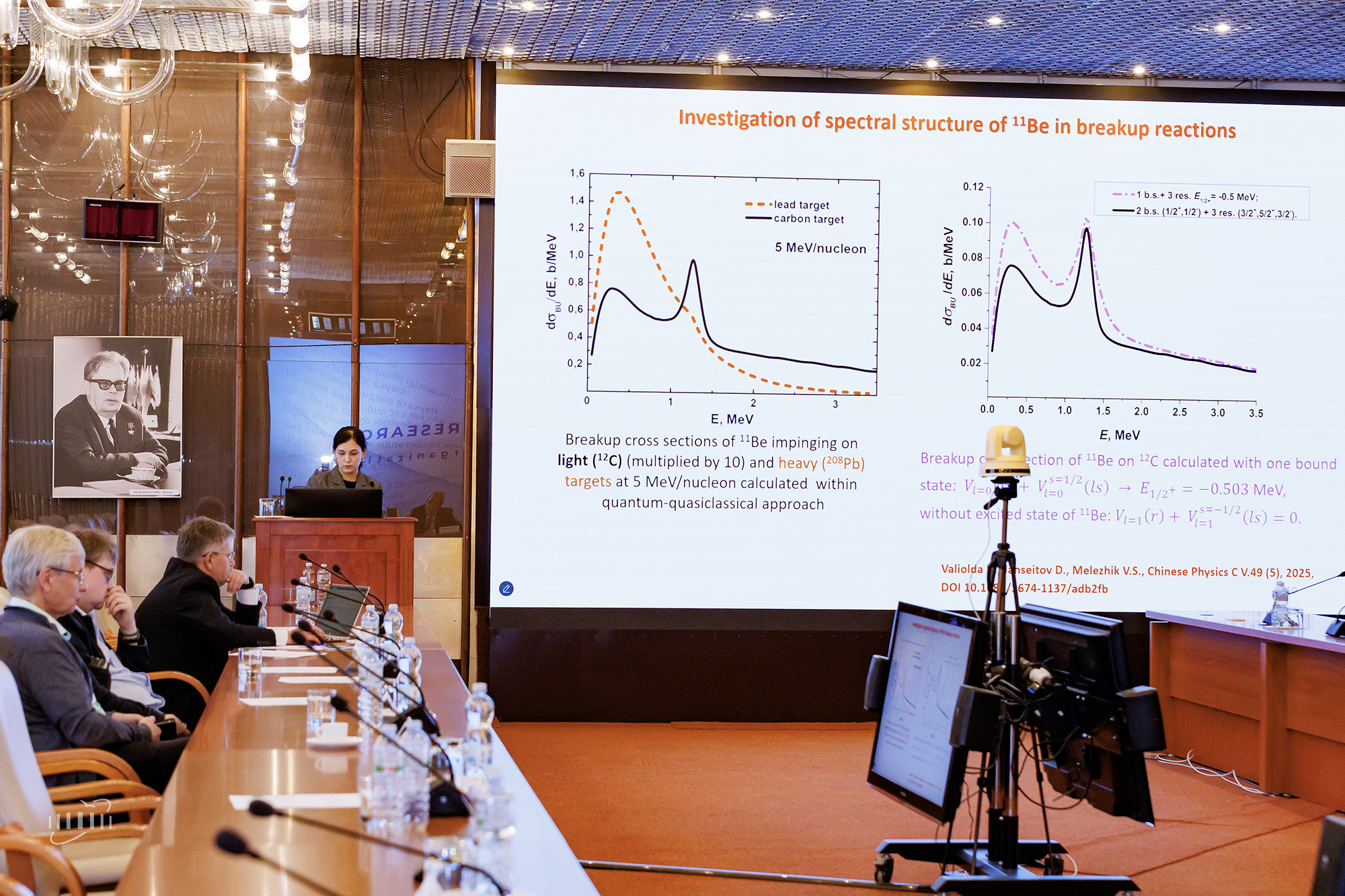
The final item on the first day’s agenda was six short presentations on nuclear physics by young researchers from the Laboratory of Theoretical Physics and the Laboratory of Information Technologies. The committee highly appreciated the quality of the scientific and methodological papers and the way they were presented. Three best posters were selected:
- “Low-energy spectra of nobelium isotopes” – a BLTP research intern Maria Mardyban;
- “Alpha-decay and spontaneous fission of superheavy elements in the DNS approach” – a BLTP researcher Ivan Rogov;
- “Investigation of spectral properties of 11Be in breakup reactions within quantum-quasiclassical approach” – a BLTP researcher Dinara Valiolda.
According to the PAC NP decision, Maria Mardyban will present her work at the 138th session of the JINR Scientific Council, which will take place in September 2025.
On 20 June, members of the Programme Advisory Committee for Nuclear Physics met with representatives of the JINR Directorate. Following the session, the PAC recommendations were adopted, and proposals for the agenda of the next, 62nd session, scheduled for winter 2026, were considered.