PAC PP 62: development of NICA experiments and participation in international projects
News, 25 June 2025
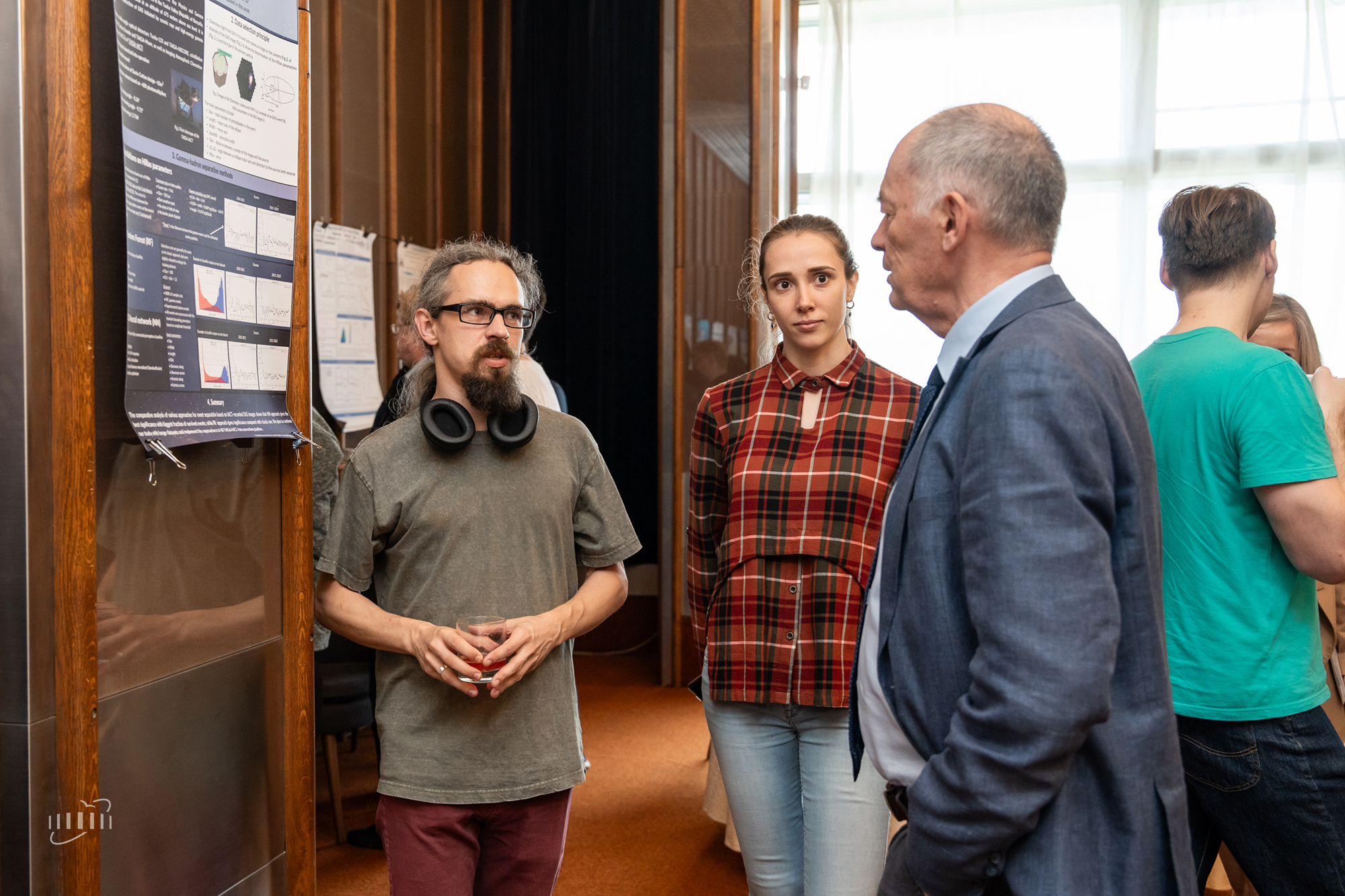
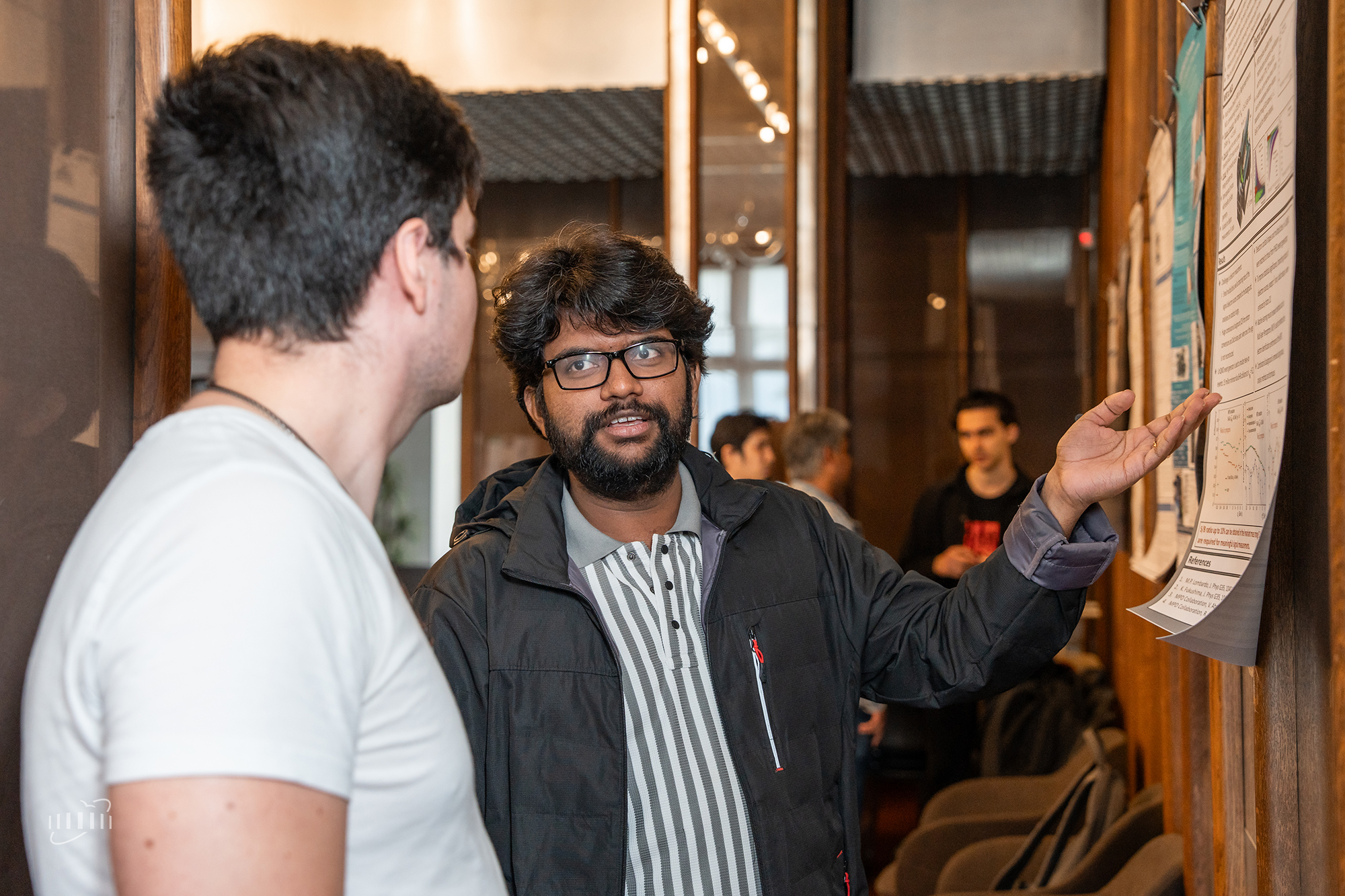
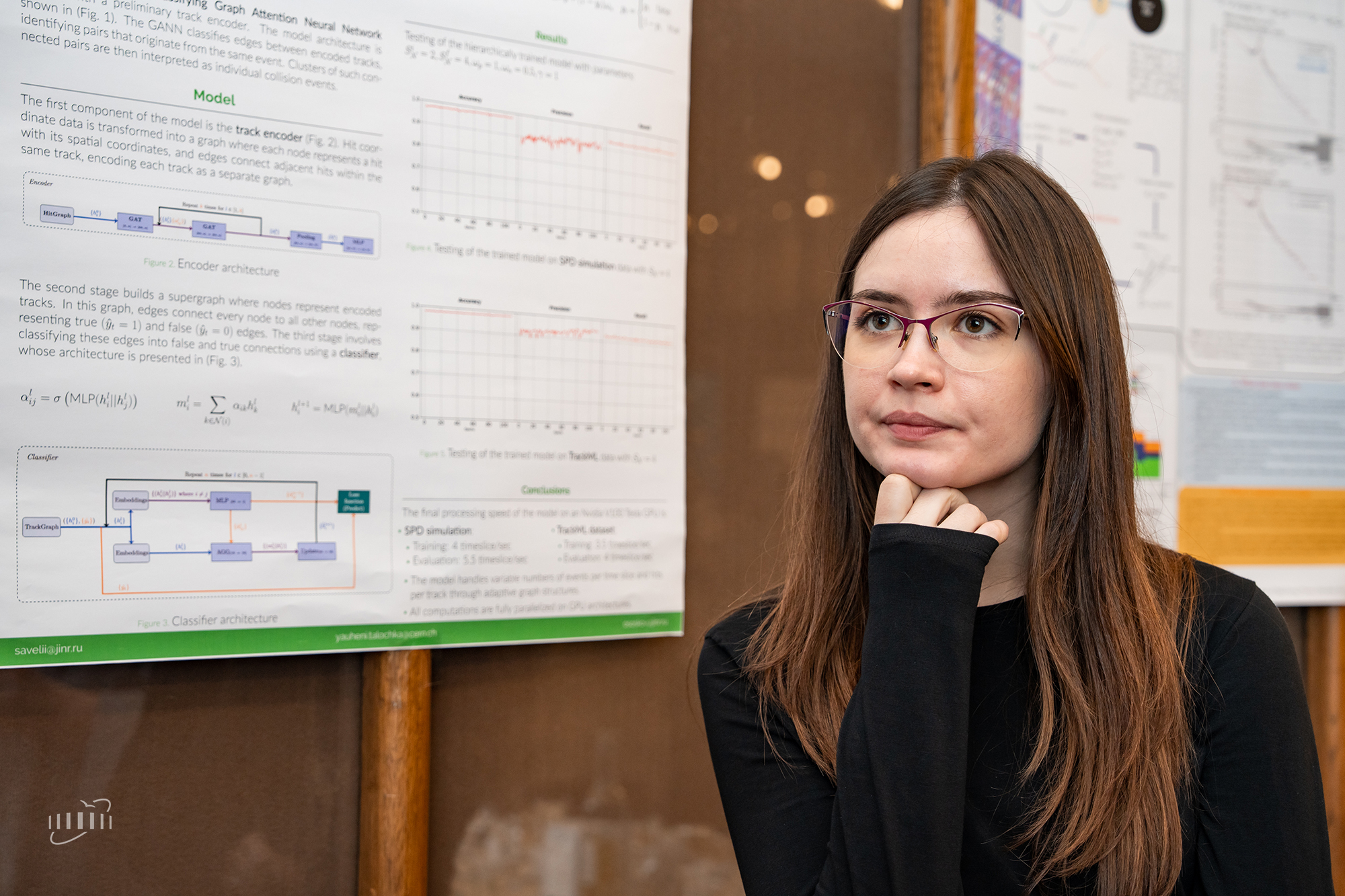
On 23 June 2025, the 62nd meeting of the JINR Programme Advisory Committee for Particle Physics (PAC PP) took place at the JINR International Conference Centre. The PAC members discussed the implementation of the NICA Megascience Project and the results of the MPD, BM@N, and SPD Collaborations. Reports on the work of JINR scientific teams in external international particle physics projects were presented. The event finished with a poster session by young scientists.
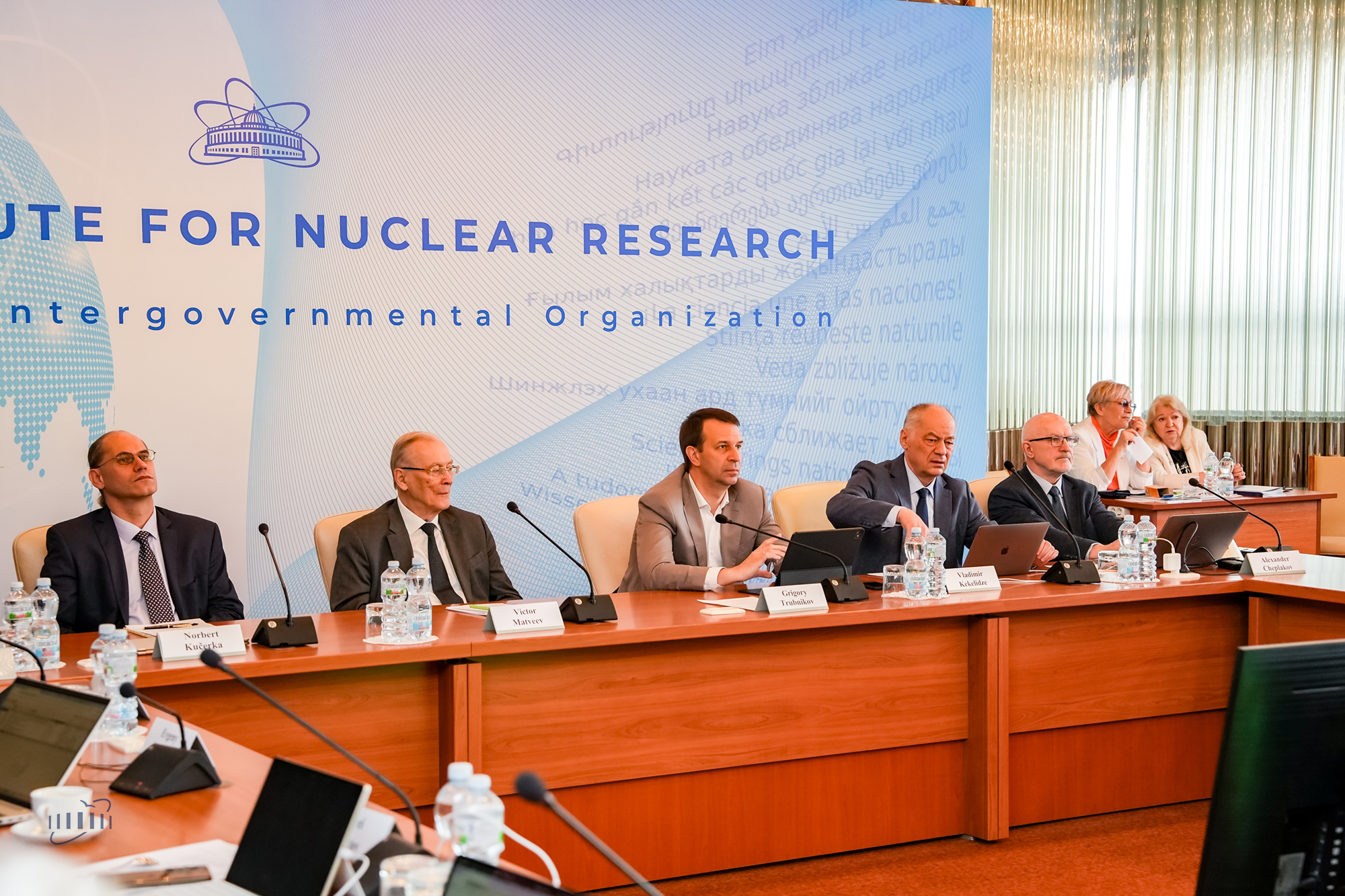

The meeting started with a moment of silence in memory of Doctor Hans Gutbrod (1942 – 2025), one of the pioneers of relativistic heavy ion physics and a member of the JINR Programme Advisory Committee for Particle Physics. He actively supported the Joint Institute and the research programme at the NICA Accelerator Complex. In addition, Hans Gutbrod was a member of the MPD and BM@N Detector Advisory Committees.
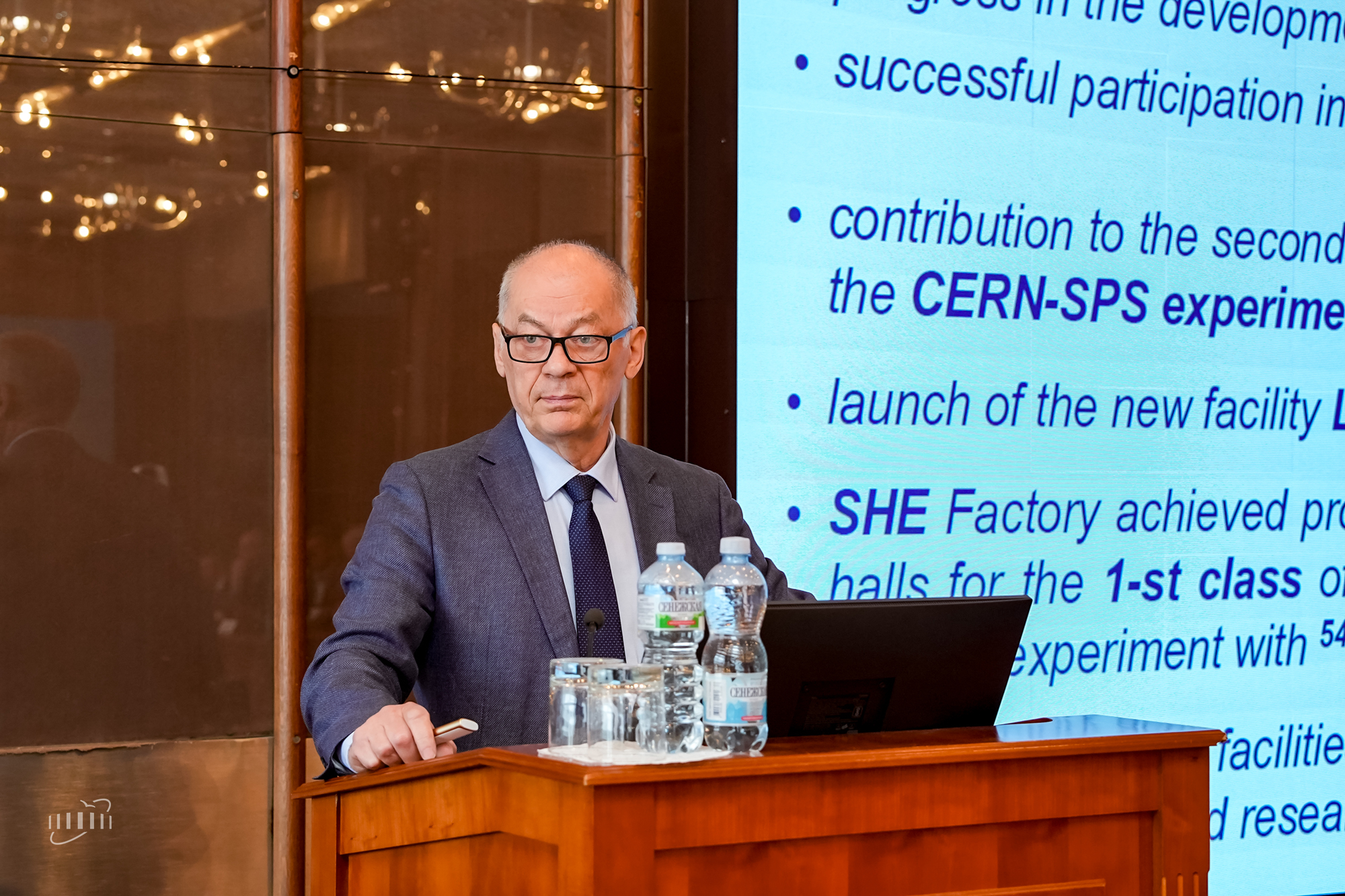
Chair of the PAC for Particle Physics Itzhak Tserruya informed the participants about the implementation of the recommendations of the previous meeting. The Committee members heard a talk by JINR Vice-Director, Academician of the Russian Academy of Sciences Vladimir Kekelidze on the Resolution of the 137th session of the JINR Scientific Council (February 2025) and the decisions of the Committee of Plenipotentiaries of the Governments of the JINR Members States (March 2025).
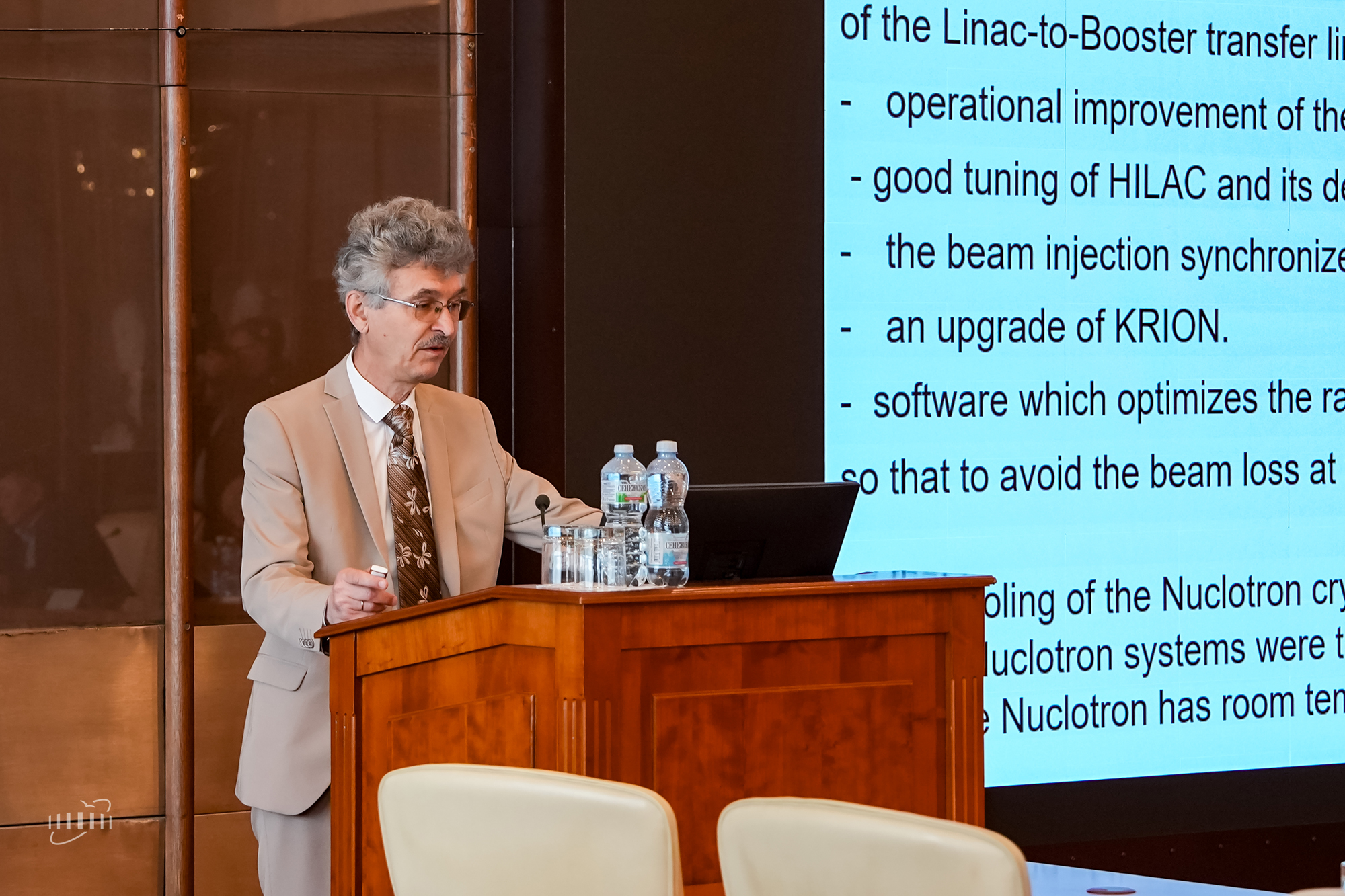
Deputy Head of the VBLHEP JINR Accelerator Department Anatoly Sidorin provided an update on the Nuclotron-NICA Project. He discussed the results of the latest technological run of the NICA Accelerator Complex, which began in January 2025. An important achievement was the successful accumulation of xenon (Xe) ions in the Booster using electron cooling (7·107 ions from 5 pulses). Anatoly Sidorin stressed that this is the first time such a result has been achieved at facilities under construction in the Russian Federation.
In terms of infrastructure development, elements of the Nuclotron fast extraction system are assembled, and its cryomagnetic system is ready for operation. Currently, specialists of the Joint Institute are assembling the Nuclotron-Collider beam line. At the same time, vacuum tests of the cryomagnetic system of the collider are continuing. “We expect all elements of the first branch of the beam transfer line to be ready for beam tests in August,” Anatoly Sidorin said. “A physics run, during which beams will be injected into the collider, is planned to take place before the end of 2025”.
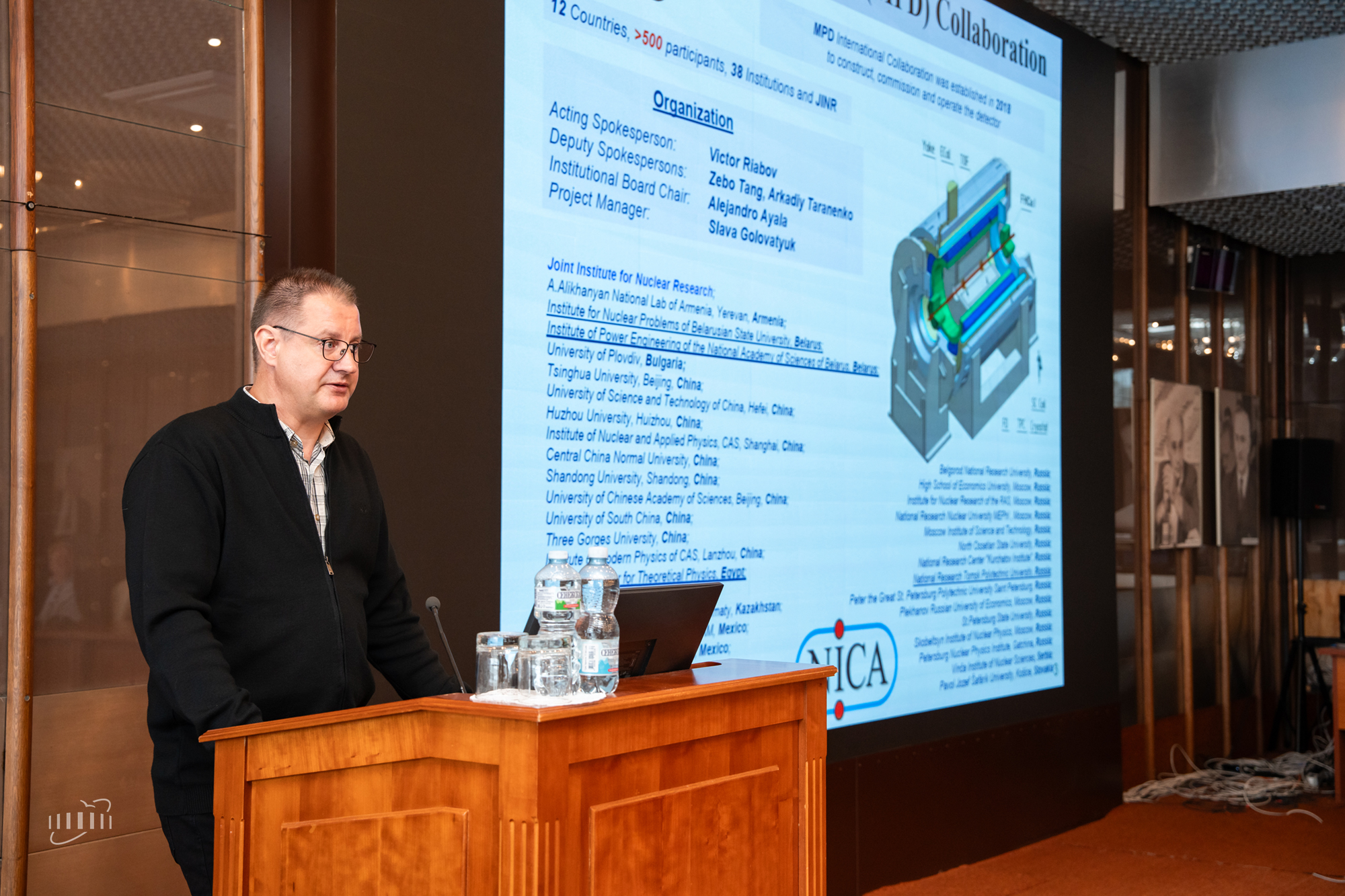
VBLHEP JINR Chief Researcher, MPD Collaboration Spokesperson Victor Riabov discussed the progress of the preparation of the project of the Multi-Purpose Detector.
The next stage of the work, after cooling the detector’s magnet to operating temperatures several times, will be magnetic field measurements. This procedure is scheduled for July–September 2025 and will be carried out after magnetic field mapper elements are delivered from the Budker Institute of Nuclear Physics.
Victor Riabov provided an update on the main MPD subsystems. He noted that the time-of-flight (TOF) system, the forward hadron calorimeter (FHCAL), and the fast forward detector (FFD) modules are ready for operation; a carbon fibre support frame was successfully installed in the solenoid. Preparation of the electromagnetic calorimeter (ECal) and the time projection chamber (TPC) continues according to plan. In addition, MPD specialists are developing concepts for new forward-facing spectrometers to be installed at the second stage of the experiment: a forward tracking detector (FTD) and end-cup time-of-flight (ETOF).
The collaboration participants are implementing a large-scale research programme aimed at finding out what opportunities the MPD Experimental Facility provides for measuring various physical signals both in the colliding-beam mode and in fixed target collisions. In addition, Victor Riabov highlighted the development of software and data analysis methodology for optimising experimental data processing. The Multi-Purpose Detector is scheduled to be put into operation by the end of 2025.
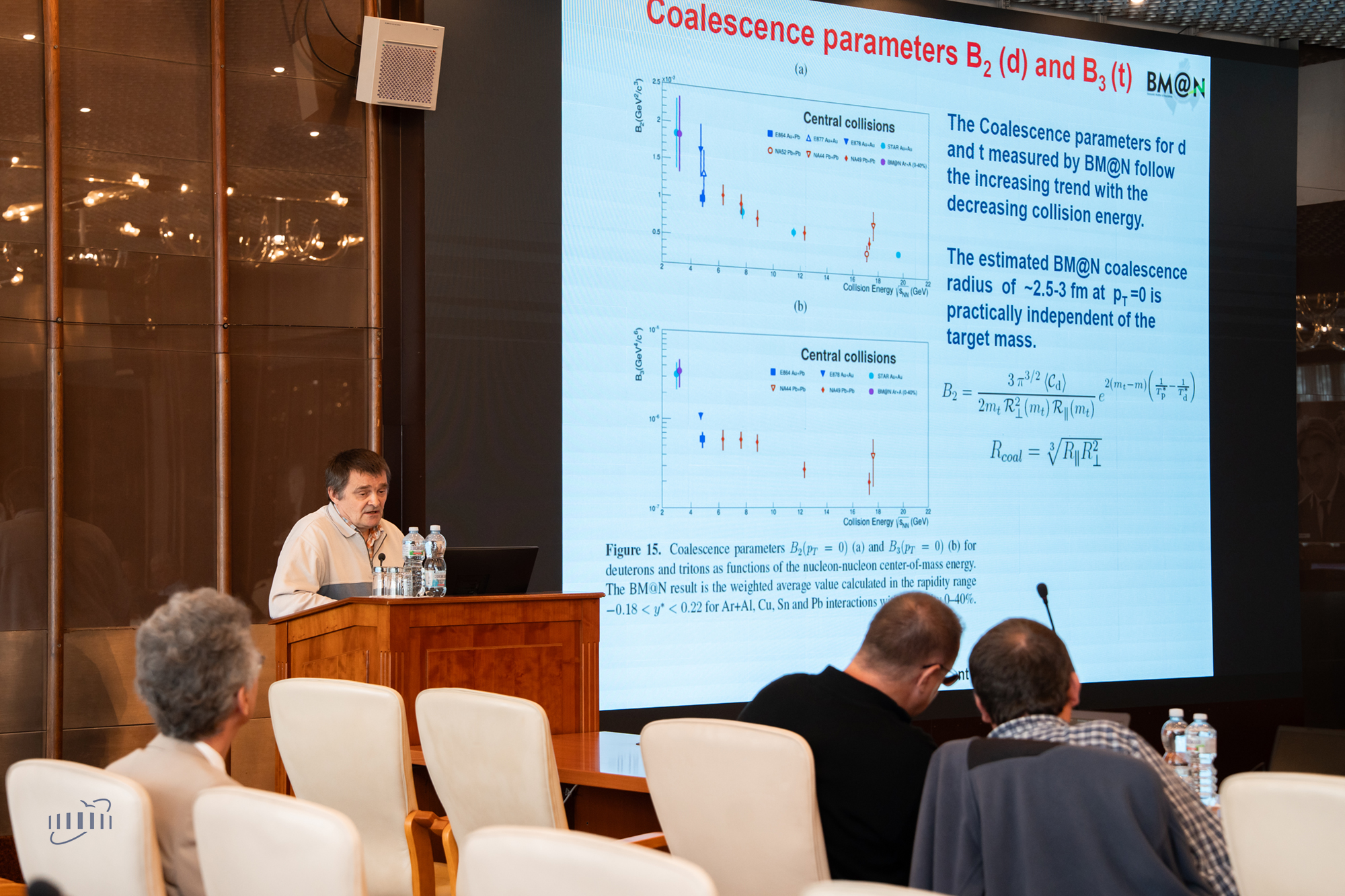
Head of the VBLHEP JINR Scientific and Experimental Department of Baryonic Matter at Nuclotron Mikhail Kapishin provided an overview of the progress of the BM@N Experiment.
The BM@N Collaboration is analysing the processes of generation of Λ-hyperons, K0-mesons, φ-mesons, and light nuclear fragments in the interactions of xenon ions with a caesium iodide (Xe+CsI) target. Scientists have obtained the first preliminary results on directed deuteron flows. Mikhail Kapishin announced that a collaboration article (arXiv:2504.02759) on the production of protons, deuterons, and tritons in nuclear interactions of argon ions at 3.2 AGeV was accepted for publication in the Journal of High Energy Physics (JHEP). The presentation highlighted the work of MLIT and VBLHEP JINR specialists on data reprocessing using improved reconstruction algorithms and updated calibration constants.
Currently, the efforts of the BM@N Collaboration are focused on calibrating the time-of-flight (TOF) system and developing methods for determining centrality in Xe+CsI collisions at a beam energy of 3.8 AGeV. The next physics run is scheduled for 2025: NICA will circulate 2-3 AGeV xenon beams.
DLNP JINR Deputy Director, SPD Collaboration Co-Spokesperson Alexey Guskov discussed the implementation of the Spin Physics Detector (SPD) project at the NICA Collider.
SPD specialists are optimising the detector’s structural system and designing an external platform for hosting power supply systems, cryogenic hardware, and other technological equipment. Other ongoing tasks include the preparation of technological documentation for the production of the facility’s superconducting solenoid and a thermal analysis of its components, crucial for ensuring stable operation under high loads.
In April 2025, the first prototype of a ZDC (Zero-Degree Calorimeter) detector was successfully installed at the second beam crossing point of the NICA Accelerator Complex. The installation of the second calorimeter is planned before the start of the physics run at the collider, during which these detectors will record the first experimental data. To ensure data processing, a separate 7.2 PB EOS storage was allocated at MLIT at JINR, which is sufficient to cover the needs of the SPD Experiment for the next 3-4 years.
Alexey Guskov noted that the SPD Collaboration continues intensive work on the design, development, and creation of detectors and subsystems for the first stage of the experiment, along with updating and expanding its physics programme.
Head of the DLNP Scientific and Experimental Department Yuri Davydov made a proposal to prolong the JINR project to participate in the development of the physics programme and detectors for the future CEPC Electron-Positron Linear Collider (China). He informed the PAC PP members that the preparation of the CEPC project is progressing successfully and is nearing the completion, as the Technical Design Report (TDR) and the establishment of international collaborations are getting finished. The final decision to start constructing the collider is expected in 2026.
The main scientific goals of the CEPC Project:
- precision study of the properties of the Higgs boson;
- study of the properties of Z bosons and physics of top quarks;
- search for new physical phenomena beyond the Standard Model.
“The Joint Institute’s researchers plan to actively participate in forming the CEPC scientific programme, developing software, and conducting R&D for detector systems for future experiments at the collider,” Yuri Davydov emphasised. “Our specialists have extensive experience in solving problems of this scale”.
At the PAC PP meeting, BLTP JINR Sector Head Andrej Arbuzov gave a presentation entitled “Theoretical сalculations for future electron-positron colliders: status and prospects”.
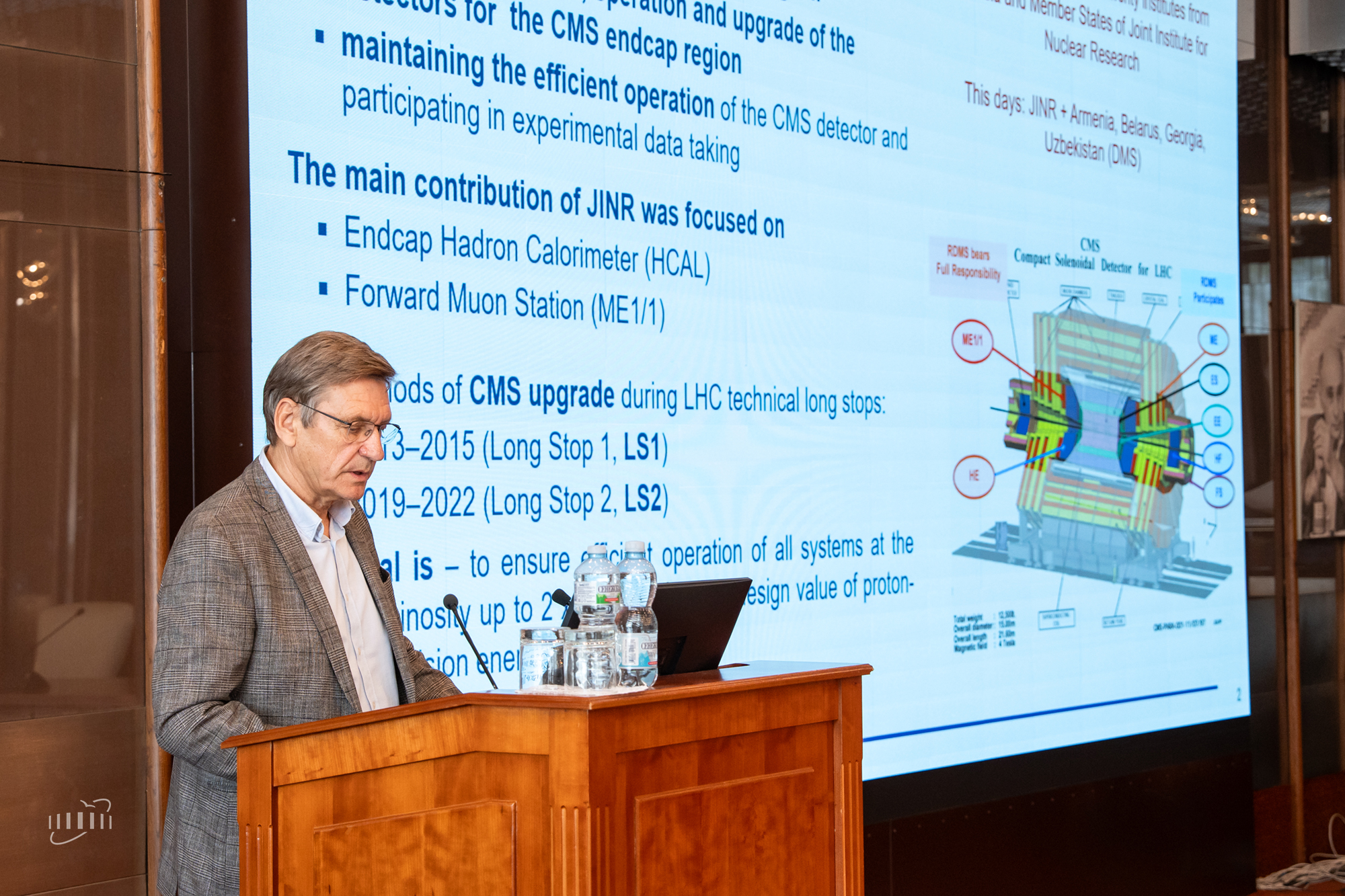
JINR scientific groups continue to actively participate in the implementation of physics experimental programmes at the Large Hadron Collider (LHC) at CERN. Boris Batyunya (ALICE), Ivan Yeletskikh (ATLAS), and Vladimir Karjavine (CMS) gave talks on the results of their work in international collaborations. The PAC recommended prolonging JINR’s participation in these projects for the next 5 years.
During the meeting, the results of poster presentations by young scientists on particle physics research were summarised. The winner of the competition is Sudhir Rode with the poster entitled “Dilepton measurements in MPD Experiment at NICA”. The scientist will present his work at the 138th meeting of the Scientific Council, which will take place in September 2025.
At the end of the event, members of the Programme Advisory Committee for Particle Physics met with representatives of the JINR Directorate. Following the session, the PAC recommendations were adopted, and proposals for the agenda of the next, 63rd session, scheduled for winter 2026, were considered.